
Tech
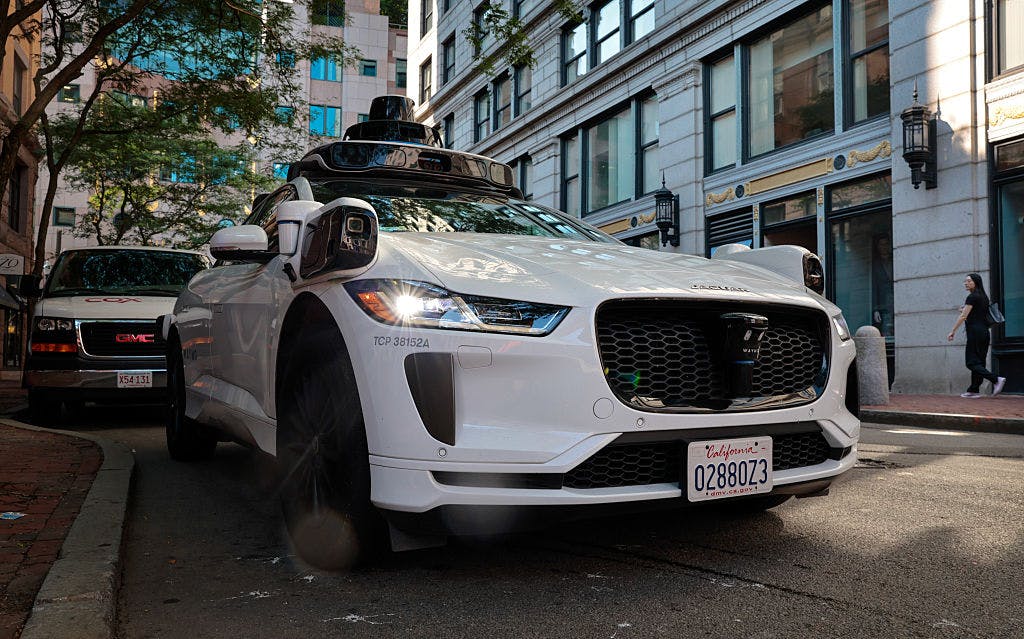
Hey, Waymo, have you tried the Fresh Pond rotary yet?
(Craig F. Walker/Getty Images)

To speed or not to speed? Tesla and Google’s Waymo disagree

Experts say going faster makes accidents more likely and potentially more harmful: “ Do we really want computers to make the decision to put other lives at risk because they want to break traffic rules?”

Google’s Waymo and Tesla are racing to win the driverless taxi market, but only Tesla appears to be going above the speed limit to get there.

A number of Tesla robotaxi videos show the vehicles going five or more miles per hour above the speed limit. Meanwhile, Waymo’s policy is to follow the posted speed limit, though the company says it will go below for construction areas or slightly above to change a lane, for example.

It’s an interesting difference as both companies try to win over the public’s trust in their new — and potentially dangerous — technologies. Tesla influencers who are part of the company’s limited launch have maintained that robotaxis go above the speed limit to match the speed of traffic, a practice they see as safer since it doesn’t disturb the flow of traffic. Tesla’s autonomous technology is trained on real-life drivers, and presumably it’s not screening out speeders in the training data.

The practice of speeding in self-driving Teslas lines up with what the company allows consumers to do in its supervised full self-driving cars. Tesla’s Model Y owner’s manual details a setting called “Max Speed Offset,” which reads:

Max Speed Offset: Set the percentage offset over the currently detected speed limit that Full Self-Driving (Supervised) can drive if it is necessary to drive faster than the speed limit to match the flow of traffic.”

Tesla didn’t respond to requests for comment about the incidents or its speeding policy.

Waymo recently collected data from its coverage areas in Phoenix and San Francisco and found that 33% to 49% of human drivers there were speeding, depending on the road type and location. The company contends that its speed-limit-following vehicles are safer than human drivers, and that speed compliance in those two cities alone could reduce traffic fatalities by 82 deaths annually. (Waymo hasn’t yet released data for its newer Austin market, where Tesla is also operating.)

“I would not be confident that they would see me and that they would detect me.”

Tesla CEO Elon Musk has repeatedly said that Tesla’s full self-driving will be significantly safer than human drivers.

“The standard has to be very high because the moment there’s any kind of accident with an autonomous car, that immediately gets worldwide headlines, even though about 40,000 people die every year in car accidents in the US, and most of them don’t even get mentioned anywhere,” Musk said on an earnings call this year. “But if somebody scrapes a shin with an autonomous car, it’s headline news.”

But when it comes to speeding, there are some hard truths.

Ken Kolosh, statistics manager at the National Safety Council, says that speeding makes accidents more likely and more dangerous when they do happen. The reasons are pure physics: when you’re traveling at a faster speed, it takes longer to stop, so it’s harder to avoid objects — or people — in your path. And higher speeds mean more damage and death.

“Nearly 3 in 10 traffic deaths in 2023 involved speeding — that’s 11,775 people killed, or more than 32 deaths every day,” he told Sherwood News.

The findings are the same over at the National Highway Traffic Safety Administration.

Phil Koopman, an associate professor of electrical and computer engineering at Carnegie Mellon University who specializes in autonomous vehicle safety, says the situation is a little complicated since the speed limit doesn’t always represent the appropriate speed, which varies by road type, condition, and weather, among other variables, but that generally the faster a vehicle drives, the more dangerous it is — even just five miles per hour faster.

Importantly, Koopman also says the comparison between robots and humans speeding doesn’t track because autonomous cars don’t have the same disincentives that people do, like traffic tickets or jail, if they violate the law or hurt someone.

“ Do we really want computers to make the decision to put other lives at risk because they want to break traffic rules?” he said.

When asked if he would personally ride in a Waymo or a Tesla robotaxi, Koopman said he would ride in the former but not the latter. He also said asking which is safer for the rider is the wrong question.

Instead, he pointed to other vehicles, cyclists, and pedestrians as where the concern should lie when considering autonomous vehicles. He said he personally would not walk in front of either.

“I would not be confident that they would see me and that they would detect me,” he said.

More Tech

See all Tech
tech
Tom Jones

Prediction markets have, predictably, been given a boost by the summer of sports

Major platforms like Kalshi and Polymarket have seen huge upticks in users of late, thanks in no small part to what’s felt like a recent sporting smorgasbord, with major competitions across hockey, basketball, and soccer soaking up fans’ time (and spending, clearly) at the outset of summer.

While gaming industry groups may not like it, there’s been a huge change in the methods people are using to put money on the big games, with everyone from fortunate NYC bar owners, to a far less fortunate Spanish supporter, turning to prediction markets to try and turn their sports know-how into cold, hard cash.

According to a new report from Adam Blacker for apptopia, that shift might have been even more seismic than imagined in the wake of the NBA and NHL finals and around the 2026 World Cup kicking off.

While gaming industry groups may not like it, there’s been a huge change in the methods people are using to put money on the big games, with everyone from fortunate NYC bar owners, to a far less fortunate Spanish supporter, turning to prediction markets to try and turn their sports know-how into cold, hard cash.

According to a new report from Adam Blacker for apptopia, that shift might have been even more seismic than imagined in the wake of the NBA and NHL finals and around the 2026 World Cup kicking off.

South by Southwest Conference and Festivals

Gold Tesla Cybercabs are piling up, but they’re not picking up passengers yet

Low-volume production started in April. Now people are noticing them more and more in the wild.

Rani Molla6/15/26
tech
Jon Keegan

Anthropic pulls Fable and Mythos access worldwide after Trump administration bars their use by foreign nationals

Only days after releasing two versions of its next-gen AI model, Anthropic has disabled them for users worldwide.

Anthropic says it received a Friday night order from the Trump administration to suspend access to the models for any foreign national (anywhere in the world) — a group that included some Anthropic employees. In response, the company turned off access to everyone.

Last week, the company released to the public its much-anticipated Claude Fable 5 model (and its restricted version Claude Mythos 5, which is still being tested with trusted partners). Anthropic said in a blog post announcing the action that officials cited national security concerns with the new models, while offering few specific details.

The post said that the government gave the company “verbal evidence of a potential narrow, non-universal jailbreak” of the public Fable 5 model. A jailbreak is a means by which users can evade restrictions built into the code to unlock prohibited functionality. Anthropic downplayed the significance of the attack, and said other major models, such as OpenAI’s GPT-5.5, could also be affected by the technique described.

Fears of these first Mythos-class models being misused are running high, after Anthropic warned the cybersecurity world in May that the advanced cyber capabilities of Mythos have rapidly discovered thousands of vulnerabilities in ubiquitous software, leading to the decision to restrict the full version of the model to a close group of trusted partners for testing.

This morning, Axios reported that Anthropic technical staff have flown to Washington to meet with White House officials to resolve the issue.

The Wall Street Journal is reporting that the Trump administration’s decision to take action against Anthropic was prompted by discussions that Amazon CEO Andy Jassy had with officials, including Treasury Secretary Scott Bessent. According to the report, Amazon researchers said they had been able to evade some of Fable 5’s security restrictions using specific prompts. Amazon is a major investor in Anthropic.

Anthropic is currently suing the US government to fight the Pentagon’s blacklisting of the company on national security grounds.

Last week, the company released to the public its much-anticipated Claude Fable 5 model (and its restricted version Claude Mythos 5, which is still being tested with trusted partners). Anthropic said in a blog post announcing the action that officials cited national security concerns with the new models, while offering few specific details.

The post said that the government gave the company “verbal evidence of a potential narrow, non-universal jailbreak” of the public Fable 5 model. A jailbreak is a means by which users can evade restrictions built into the code to unlock prohibited functionality. Anthropic downplayed the significance of the attack, and said other major models, such as OpenAI’s GPT-5.5, could also be affected by the technique described.

Fears of these first Mythos-class models being misused are running high, after Anthropic warned the cybersecurity world in May that the advanced cyber capabilities of Mythos have rapidly discovered thousands of vulnerabilities in ubiquitous software, leading to the decision to restrict the full version of the model to a close group of trusted partners for testing.

This morning, Axios reported that Anthropic technical staff have flown to Washington to meet with White House officials to resolve the issue.

The Wall Street Journal is reporting that the Trump administration’s decision to take action against Anthropic was prompted by discussions that Amazon CEO Andy Jassy had with officials, including Treasury Secretary Scott Bessent. According to the report, Amazon researchers said they had been able to evade some of Fable 5’s security restrictions using specific prompts. Amazon is a major investor in Anthropic.

Anthropic is currently suing the US government to fight the Pentagon’s blacklisting of the company on national security grounds.

Latest Stories

Sherwood Media, LLC and Chartr Limited produce fresh and unique perspectives on topical financial news and are fully owned subsidiaries of Robinhood Markets, Inc., and any views expressed here do not necessarily reflect the views of any other Robinhood affiliate, including Robinhood Markets, Inc., Robinhood Financial LLC, Robinhood Securities, LLC, Robinhood Crypto, LLC, Robinhood Money, LLC, Robinhood U.K. Ltd, Robinhood Derivatives, LLC, Robinhood Gold, LLC, Robinhood Asset Management, LLC, Robinhood Credit, Inc., Robinhood Ventures DE, LLC and, where applicable, its managed investment vehicles.

