Tech
The Streets of San Francisco, the Waymo way
(Stan Grossfeld/Getty Images)

Waymo announces Chicago and Charlotte expansion as driverless rollout accelerates

The company is currently operating in 10 US cities.

Waymo’s expansion is speeding up.

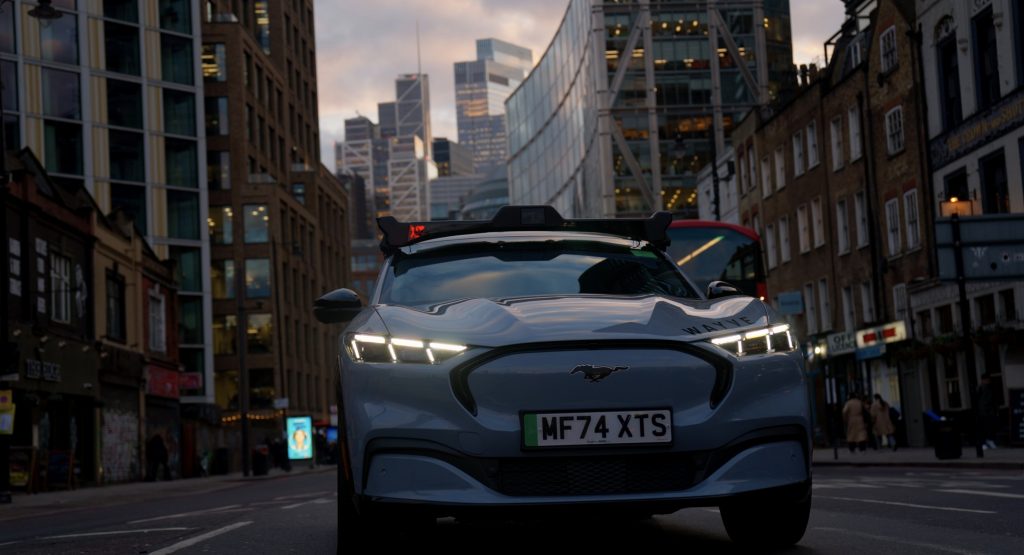
Today the Alphabet subsidiary announced plans to expand its driverless car service to Chicago and Charlotte. As with each new city, it’s starting with manual testing and mapping before progressing to driverless operations and, eventually, a public ride-hailing service. Waymo didn’t provide a timeline for Chicago or Charlotte, but its expansion pace has clearly accelerated.

Waymo first launched fully driverless service to the public in Phoenix in 2020 and expanded slowly in the years that followed. San Francisco became its second public market in 2024, and Atlanta its fifth last summer. Already this year, the company has rolled out service in five additional markets — including Miami and, as of yesterday, Houston, Dallas, San Antonio, and Orlando — though those last four are opening on a “rolling basis.”

The service is currently live in 10 markets, with another 20 on the way, including an expected 2026 launch in London.

The company’s biggest competitor, Tesla, is currently operating a smattering of vehicles in its Austin fleet without a safety monitor onboard. The company has a larger service in which a driver employs supervised Full Self-Driving tech in the Bay Area. Tesla said last month that it plans to expand that service to a half dozen other US cities in the first half of 2026.

More Tech

See all Tech
tech

Amazon, Google, Meta, Microsoft, Oracle will agree to “build, bring, or buy” AI data center power

A month after President Trump called on Big Tech companies to “pay their own way” on data center energy — and a day after Trump pledged as much at the State of the Union — a number of tech’s biggest companies plan to make it official, according to a report from Fox News.

Alphabet, Amazon, Meta, Microsoft, and Oracle, in addition to OpenAI and xAI, plan to sign agreements at a March 4 White House event committing to supply their own electricity for new AI data centers.

"Under this bold initiative, these massive companies will build, bring, or buy their own power supply for new AI data centers, ensuring that Americans’ electricity bills will not increase as demand grows," White House spokeswoman Taylor Rogers told Fox.

Already, Amazon, Microsoft and Meta have committed to as much in recent data center announcements.

Alphabet, Amazon, Meta, Microsoft, and Oracle, in addition to OpenAI and xAI, plan to sign agreements at a March 4 White House event committing to supply their own electricity for new AI data centers.

"Under this bold initiative, these massive companies will build, bring, or buy their own power supply for new AI data centers, ensuring that Americans’ electricity bills will not increase as demand grows," White House spokeswoman Taylor Rogers told Fox.

Already, Amazon, Microsoft and Meta have committed to as much in recent data center announcements.

tech

Uber to roll out robotaxis with Wayve in 10 markets

Uber also has its sights set on 10 robotaxi markets — a milestone that Alphabet subsidiary Waymo reached yesterday.

As part of its latest $1.5 billion funding round, autonomous tech startup Wayve announced that it will be helping to power robotaxis on Uber’s network, with its first launch in London this year. That’s followed by “plans to scale to more than 10 markets globally.”

The companies didn’t specify the vehicle model, but said Wayve’s AI Driver will be deployed in L4-capable vehicles from participating automakers. Uber will own and operate the fleet.

Microsoft, Nvidia, Mercedes-Benz, Nissan, and Stellantis were also part of the fundraise.

Separately, an Uber filing Tuesday showed that newly appointed CFO Balaji Krishnamurthy purchased $1.6 million in company stock.

Uber shares are up about 1% premarket.

The companies didn’t specify the vehicle model, but said Wayve’s AI Driver will be deployed in L4-capable vehicles from participating automakers. Uber will own and operate the fleet.

Microsoft, Nvidia, Mercedes-Benz, Nissan, and Stellantis were also part of the fundraise.

Separately, an Uber filing Tuesday showed that newly appointed CFO Balaji Krishnamurthy purchased $1.6 million in company stock.

Uber shares are up about 1% premarket.

tech

The way different states use ChatGPT could tell us a lot about their economies

Last Friday, OpenAI launched a new public dashboard tracking global non-enterprise messages on ChatGPT sent between the summer of 2024 and the end of 2025.

Among the 118 countries analyzed, the US ranked 25th by number of messages sent per capita, with a little over three-quarters of all conversations clustering around just three subjects: practical guidance (29%), writing (27%), and seeking information (19.6%). Zooming into the state level, it becomes clear that not all regions are using the chatbot in quite the same way.

DC topped the list of ChatGPT messages per capita — echoing patterns seen in the use of Anthropic’s Claude — and it’s not hard to see why. The capital, dense with federal agencies, think tanks, and law firms, runs on drafting documents, from memos and policy briefs to endless email chains. It makes sense, then, that nearly a third (32%) of DC users lean on AI for writing, above the national average of 27%. The pattern holds across other top-ranked states, too: New York (No. 3), California (No. 4), and Washington (No. 8), for instance, all show writing as their top use case.

Flip to the other end of the rankings, where the states that use ChatGPT the least sit, and the picture looks different. In West Virginia (No. 51), South Dakota (No. 48), Mississippi (No. 46), and Arkansas (No. 45), practical guidance is the dominant use case, often accounting for 33% to 35% of all prompts.

tech

xAI’s trade secrets lawsuit against OpenAI dismissed

In September, xAI sued rival OpenAI, accusing the company of stealing trade secrets by hiring away key employees.

After a key employee was poached by OpenAI, xAI filed its lawsuit in Northern California federal court, alleging that the company was after its “secret sauce” — the methods by which xAI was able to build data centers so quickly.

Today Judge Rita Lin dismissed the case, citing a lack of any direct accusations against OpenAI itself. In the order dismissing the case, Lin wrote:

“The sole defendant in this lawsuit is OpenAI, whom xAI accuses of misappropriating its trade secrets. But xAI does not point to any misconduct by OpenAI. Instead, it points to eight former xAI employees who left for OpenAI at around the same time.”

The judge said that xAI is allowed to file an amended complaint if it wants to pursue the case, but must do so by March 17.

Today Judge Rita Lin dismissed the case, citing a lack of any direct accusations against OpenAI itself. In the order dismissing the case, Lin wrote:

“The sole defendant in this lawsuit is OpenAI, whom xAI accuses of misappropriating its trade secrets. But xAI does not point to any misconduct by OpenAI. Instead, it points to eight former xAI employees who left for OpenAI at around the same time.”

The judge said that xAI is allowed to file an amended complaint if it wants to pursue the case, but must do so by March 17.

Latest Stories

Sherwood Media, LLC produces fresh and unique perspectives on topical financial news and is a fully owned subsidiary of Robinhood Markets, Inc., and any views expressed here do not necessarily reflect the views of any other Robinhood affiliate, including Robinhood Markets, Inc., Robinhood Financial LLC, Robinhood Securities, LLC, Robinhood Crypto, LLC, or Robinhood Money, LLC.