


Waymo’s now serving more than 500,000 paid robotaxi rides every week
The Alphabet-owned company grew its ridership more than tenfold in less than two years.
Per the company’s post on X last Thursday, Google-owned Waymo is now providing 500,000 paid robotaxi rides every week, an eye-popping figure that’s slowly turning the street-side attraction into a daily scenery in some 10 cities in the US.
Great reporting from TechCrunch captures the scale and speed of Waymo’s journey. Back in May 2024, that number was a mere 50,000, but thanks to a rapid expansion to new markets in Austin, Atlanta, Miami, Dallas, Houston, San Antonio, and Orlando, the company is now doing half a million rides a week. That’s about 50 rides per minute.
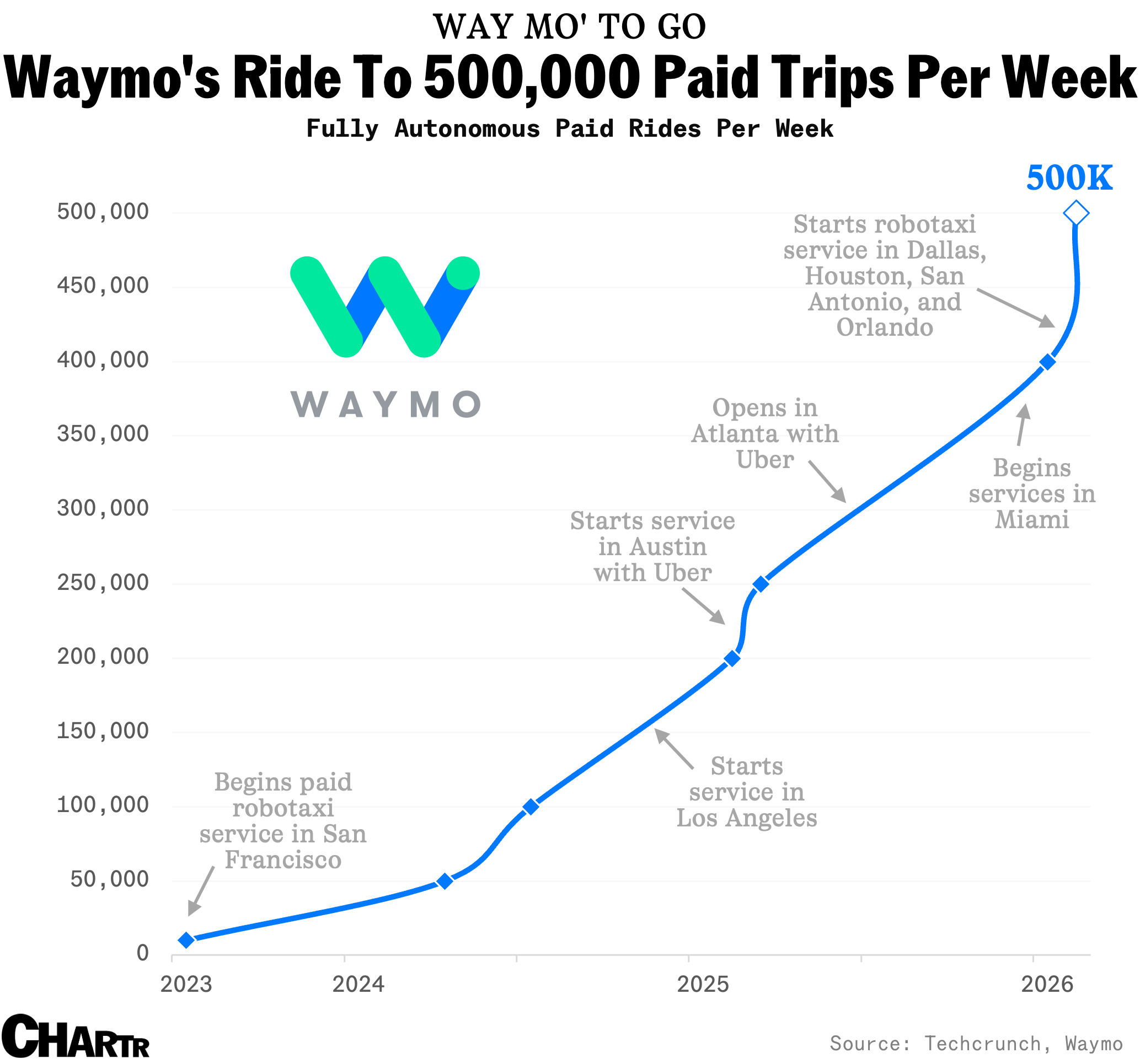
In terms of mileage, Waymo reached an astonishing 171 million cumulative miles by the end of last year, or some “200 lifetimes of driving,” per the company. Its robotaxi fleet has grown to more than 3,000 vehicles as of December 2025, and might even size up 18x if reports of Hyundai looking to supply Waymo with 50,000 cars becomes a dream come true.
Operating as a stand-alone entity, but owned by Google and YouTube owner Alphabet, Waymo has the deep pockets needed to invest in the expensive autonomous driving technology, raising $16 billion back in February, valuing it at $126 billion and putting it miles ahead of independent, smaller competitors like Wayve or Pony AI. In February, CEO Tekedra Mawakana said she expects the company to hit 1 million weekly paid rides this year.
Way mo’ to go
Waymo’s growing presence in the get-people-somewhere game is hard to ignore for companies like Uber. For now, the two are working together, with Uber providing exclusive access to Waymo vehicles in cities like Austin and Atlanta through its widely popular app.
But that mutually beneficial relationship could become an existential threat for Uber if people continue to adopt robotaxis at this pace. JPMorgan analysts expect Waymo to account for 7% of the entire US ride-share market by 2030, “taking some share from Uber and Lyft,” adding that such an estimate “could still be conservative.”


.gif)