


The US beef industry looks a little unsteady — but Americans are still bullish on steak
While US steakhouses are soaring in popularity, tariffs are threatening to cleave the wider world of American beef.
America’s relationship with its leading red meat is long, storied, and often tender — though at present “US beef” could likely be taken for a comment on geopolitical relations as much as a reference to the nation’s favorite cattle product.
Westward-moving settlers fought Native Americans for pastures in the 19th century, giving way to “The Cattle Kingdom,” which then opened the floodgates for big industrialized beef in the 1900s. For as long as there’s been Hollywood, there’s been cowboys and their cattle, and there’s nothing that says “America” quite like a cheeseburger. But after decades of grilling, grinding, searing, and stewing, the US beef industry hit a slight fork in the road.
Till the cows come home
Against a backdrop of international tariffs, including significant agricultural import taxes, America is facing a beef deficit. While the country had been a net exporter of beef as recently as 2022, a national cattle shortfall in the last few years has seen the US become more reliant on imports to contain beef prices, as outlined in a recent Economist article.
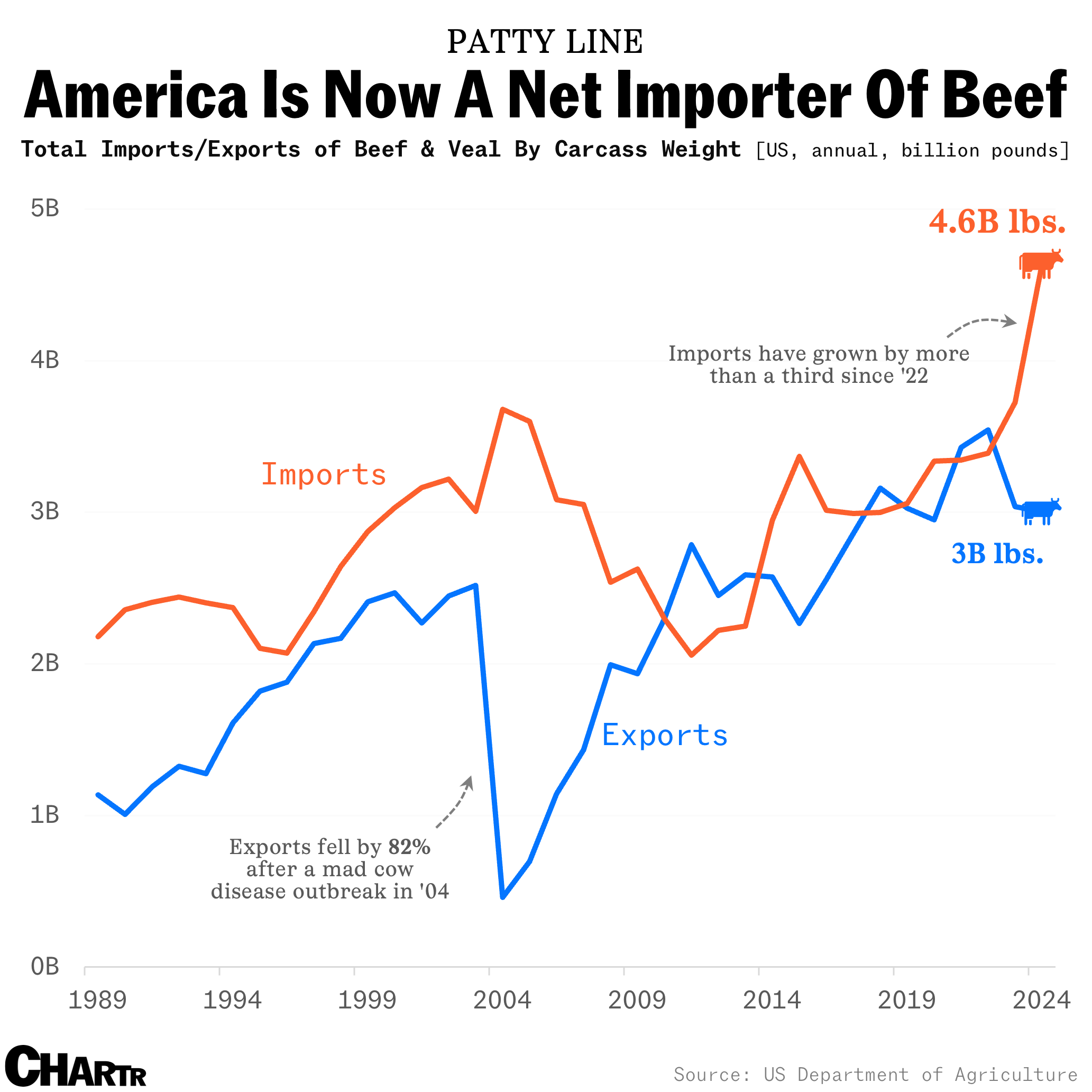
According to historical data from the Department of Agriculture, beef and veal imports to the US by carcass weight have increased by more than a third (37%) in the last two years, reaching a total of 4.6 billion pounds last year. Meanwhile, US beef exports have fallen 15% over the same period. With countries like China already halting beef imports from the US and calling on major exporters like Australia to fill in the gaps, the deficit might only widen.
Steaks are high
Even before tariffs and other nations threatening to cut back on America’s choicest cuts, the US beef industry was already struggling to manage its supply. The nation’s beef herd reached its lowest level since 1951 last February, brought on by drought, feed price hikes, and various economic factors, while domestic beef production fell from its 2022 peak of 28.4 billion pounds to ~27 billion pounds last year.
In tandem with inflation, this has all seen the cost of beef surge in recent years. December data from the Bureau of Labor Statistics shows ground beef and sirloin steak prices were up 17% and 15%, respectively, from two years before. Naturally, you’d think sky-high prices and uncertain supply chains would deter US consumers from a product, particularly with recession fears looming. However, it seems that America’s appetite for beef is still very much alive and well, especially when heading out to eat.
Roadhouse
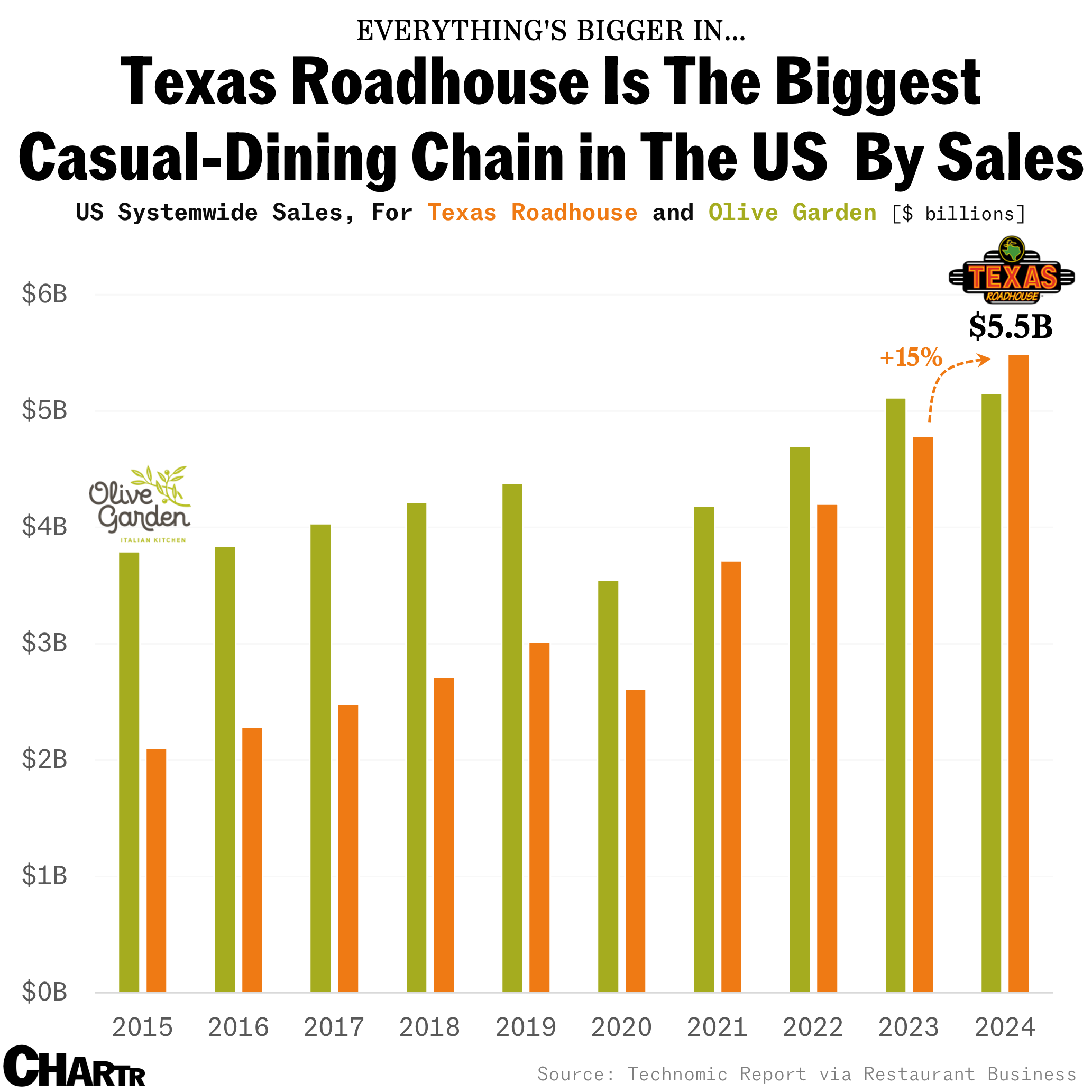
Last year, Texas Roadhouse, a 664-unit steakhouse (which is actually based in Louisville, Kentucky), became the biggest casual-dining chain in the US, according to a Technomic report released earlier this month.
After years of searing-hot growth, including adding 26 new restaurants to its roster in the last year alone, Texas Roadhouse’s US systemwide sales jumped almost 15% to $5.5 billion in 2024 — knocking Darden Restaurants-owned, 934-unit-strong Olive Garden off the top spot, a position it’s held since 2018.
Chain reaction
Still, the report wasn’t all bad news for Darden Restaurants: its very own beef specialist LongHorn Steakhouse reportedly saw sales soar 7.2% last year. In fact, per CNBC, the chain is the “only brand in its parent company’s portfolio to consistently post positive same-store sales growth over the past few years,” reporting that visits to LongHorn Steakhouse and Texas Roadhouse increased by 4.3% and 7.2%, respectively, in 2024, even as foot traffic for full service restaurants shrunk by 0.2%.
While good business strategies and managerial focus have contributed to the success of both of these chains, it appears that Americans more broadly are homing in on steak and other beef products. Even with rocketing costs, consumer demand for beef has remained consistently high… and demand for premium offerings like steak have even boomed following the pandemic. Value steakhouse chains are at the intersection, touting the advantage of keeping prices low by buying meat in bulk, often directly from suppliers.
Top cuts
While many diners probably go to steakhouses for the atmosphere (wood furnishings and padded booths are all but scientifically proven to make a sirloin taste better — even if the legendary floor peanuts are no more), the quality of meat has become more important to US consumers, wherever they buy it.
A study published in the scientific journal Appetite last December on meat consumption found that when considering factors influencing their meat purchasing, 85% of consumers considered quality as important, with taste coming in as the second-most-important factor. On the other hand, price was only considered important by 61% of respondents, with 9% deeming it not important at all.
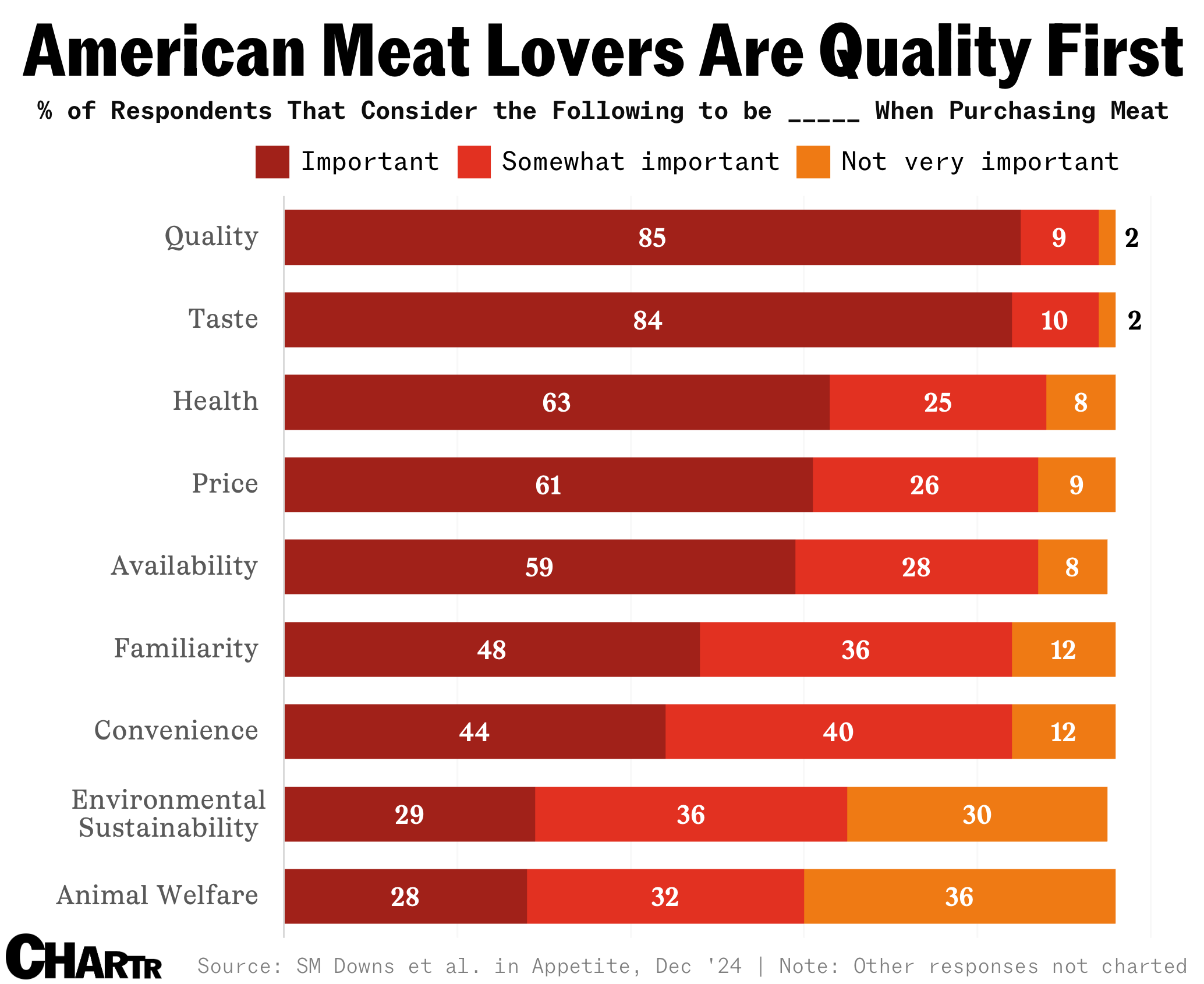
The emphasis on quality and taste goes some way in explaining why US consumers are still hungry for beef despite its elevated price — and, to that point, why so many are opting to fork out for elevated cuts of beef at steakhouses. But even though beef remains integral to American gastronomy, chicken is still king in the US meat market.
Counting chickens
At the same time that domestic beef production has slumped, US poultry production has only been growing, reaching ~47 billion pounds in 2024, per USDA data. Indeed, with supply increasing as grain prices have declined, consumer demand for the meat has been propped up by food companies going all-in on chicken.
Where does this leave US beef? Though many poultry businesses have become more profitable on average than beef businesses, America’s taste for chicken doesn’t seem to whet its appetite for beef — especially when consumers are looking for the kind of premium experience that only a high-quality steak can offer. So, while chicken dinner remains a winner for the average US household, tariff-squeezed beef may become more of a special occasion splurge in years to come.