Business
Oatly
(Jakub Porzycki/Getty Images)

Americans are losing the taste for plant-based milk — and Oatly is feeling the pain

The Swedish company was once worth $17 billion. Now, sales are going backward and the company is doing all it can to squeeze out growth.

There were some red-hot IPOs in the class of 2021, with Oatly, Roblox, Rivian, Robinhood, Bumble, and Coinbase all debuting on the public markets. But, while the last of those names has just been inducted into Corporate America’s flagship index, the S&P 500, Oatly’s journey couldn’t have been more underwhelming.

Long gone are the days when Oatly’s product was so sought after that it had its own online black market for the blue-grayish carton.

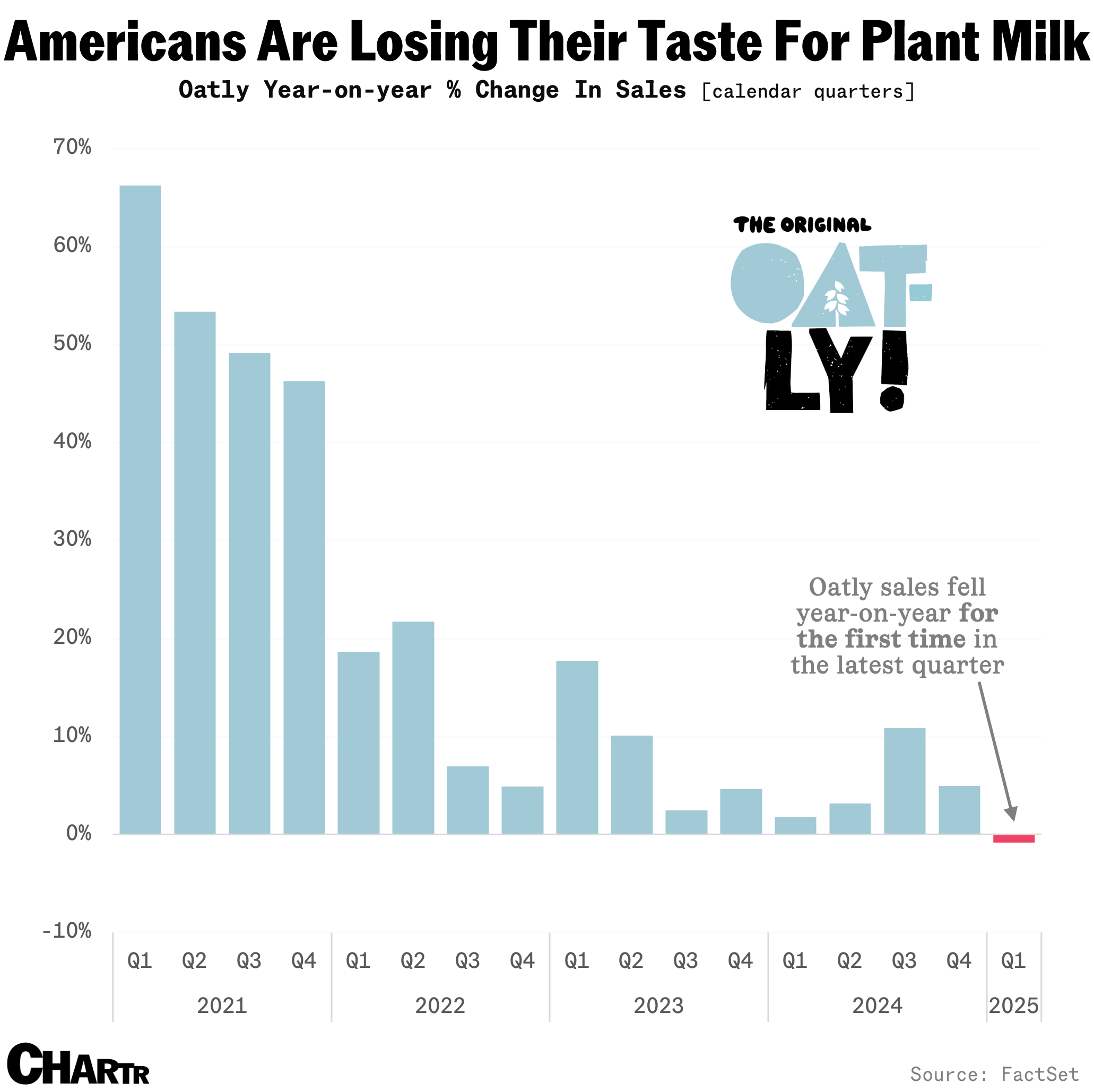
Riding an alt-milk wave, Oatly’s revenues nearly doubled every year from 2015 to 2020 — but shares of the Swedish milk maker are down some 98% from their 2021 peak, and in the latest quarter, Oatly’s growth finally went subzero. 
Oatly sales growth
Sherwood News

Now, Oatly is doubling down on its sustainable credentials, publishing a new “Sustainability Plan” yesterday, which includes “updated emissions reduction targets” and wider goals for “Nature, People and Nutrition.”

But winning over climate-conscious consumers might not be enough, as Oatly has been squeezed from all sides in recent years.

Get oat of here

Major campaigns to prevent plant-based products from even using the word milk have dogged the industry for a decade — the UK courts said no, the FDA said yes — and have only recently come to an end. Meanwhile, Big Dairy has splashed into oat territory, with brands like Planet Oat, from dairy giant HP Hood, eating into Oatly’s market share.

Consumers are also getting fussier over the nutritional value of milk alternatives, searching for brands with more protein and fewer sweeteners and artificial ingredients.

On top of all of that, after spending decades experimenting with everything from soy to almond to oat to pistachio, regular milk is making a comeback. Indeed, traditional milk sales saw their first uptick in consumption since 2009 last year, and are still up 3.5% for the past year to May, per USDA and Nielsen IQ data. Sales of plant-based milk, however, dropped some 8.4% for the two years to May.

More Business

See all Business
The entrance of Allbirds seen from Hayes St. in San Francisco, Calif.

Allbirds, the once buzzy multibillion-dollar sneaker startup, is selling up for $39 million

That’s less than 1% of its peak market cap about four years ago.

Tom Jones3/31/26
business

JetBlue is raising its bag fees as fuel costs squeeze airlines

JetBlue will reportedly hike its bag fees, as the cost of jet fuel continues to climb amid the war in Iran. It’s the latest example of carriers finding ways to push rising costs onto travelers.

Last week, United Airlines CEO Scott Kirby said that if fuel prices remain elevated, fares would need to rise another 20% for his airline to break even this year.

As CNBC reported, when one airline raises fees, others tend to follow.

Earlier this month, JetBlue hiked its first-quarter outlook for operating revenue per seat mile to between 5% and 7%, saying that strong Q1 demand helped “partially offset additional expenses realized from operational disruptions and rising fuel costs.” Now, the carrier appears to be making moves to further boost revenue to offset those costs.

Earlier on Monday, JetBlue rival Alaska Air lowered its Q1 profit forecast. The refining margins for the carrier’s cheapest fuel option — sourced from Singapore and representing about 20% of Alaska’s overall supply — have spiked 400% since February.

JetBlue did not immediately respond to a request for comment.

As CNBC reported, when one airline raises fees, others tend to follow.

Earlier this month, JetBlue hiked its first-quarter outlook for operating revenue per seat mile to between 5% and 7%, saying that strong Q1 demand helped “partially offset additional expenses realized from operational disruptions and rising fuel costs.” Now, the carrier appears to be making moves to further boost revenue to offset those costs.

Earlier on Monday, JetBlue rival Alaska Air lowered its Q1 profit forecast. The refining margins for the carrier’s cheapest fuel option — sourced from Singapore and representing about 20% of Alaska’s overall supply — have spiked 400% since February.

JetBlue did not immediately respond to a request for comment.

Latest Stories

Sherwood Media, LLC produces fresh and unique perspectives on topical financial news and is a fully owned subsidiary of Robinhood Markets, Inc., and any views expressed here do not necessarily reflect the views of any other Robinhood affiliate, including Robinhood Markets, Inc., Robinhood Financial LLC, Robinhood Securities, LLC, Robinhood Crypto, LLC, Robinhood Derivatives, LLC, or Robinhood Money, LLC. Futures and event contracts are offered through Robinhood Derivatives, LLC.