Business
Black gold goes green: Norway's sovereign wealth fund is getting greener

Black gold goes green: Norway's sovereign wealth fund is getting greener

Black gold goes green

This week, Norway’s sovereign wealth fund announced that it would require the companies it invests in to reach net-zero emissions by 2050.

As a country with just 0.06% of the world’s population this might not sound like a big carbon coup, but it is. At the latest count Norway’s sovereign wealth fund — by far the biggest in the world — had net assets of around $1.2 trillion. That’s a national piggy bank worth approximately $220k (USD) for every single man, woman and child in the country.

Built on taxes and revenue from Norway’s substantial oil and gas industry, the fund has ballooned into a behemoth of the investing world since the first transfer was made by the country's government in 1996. Those substantial deposits got the fund started, but now more than half of the fund's net value comes from the return on its investments, rather than deposits into the fund.

Visualized above are the ~5,400 of the fund's equity investments that at the end of last year had a market value of more than $10m. The fund is estimated to own around 1.3% of the global stock market, with investments in broad swathes of the market across big tech, big oil, big banks and big everything — and that's not even mentioning the other ~30% of the portfolio that's in fixed income and real estate.

The irony that a fund built on oil and gas revenue is now pushing for net-zero is hard to ignore. However, as one of the world's largest investing entities, the Norwegian sovereign fund can exert genuine pressure on major companies to clean up their act — or see their shares dumped.

More Business

See all Business
business

Paramount reportedly receives $24 billion from Gulf funds to back its Warner Bros. takeover

Three Middle East sovereign wealth funds have agreed to back Paramount’s takeover of Warner Bros. Discovery to the tune of roughly $24 billion, according to Wall Street Journal reporting.

The company’s triumph over Netflix in the bidding war came thanks in part to financial backing from Oracle cofounder Larry Ellison, billionaire father of Paramount CEO David Ellison.

Saudi Arabia’s PIF, which last year led the $55 billion deal to take Electronic Arts private, will provide about $10 billion in the deal. The Qatar Investment Authority and Abu Dhabi’s L’imad Holding Co. is also involved.

According to the WSJ, the funds will not receive voting rights in the combined Paramount-Warner company. Those working on the deal don’t expect the Gulf funds’ involvement to spark any additional regulatory reviews.

The company’s triumph over Netflix in the bidding war came thanks in part to financial backing from Oracle cofounder Larry Ellison, billionaire father of Paramount CEO David Ellison.

Saudi Arabia’s PIF, which last year led the $55 billion deal to take Electronic Arts private, will provide about $10 billion in the deal. The Qatar Investment Authority and Abu Dhabi’s L’imad Holding Co. is also involved.

According to the WSJ, the funds will not receive voting rights in the combined Paramount-Warner company. Those working on the deal don’t expect the Gulf funds’ involvement to spark any additional regulatory reviews.

The entrance of Allbirds seen from Hayes St. in San Francisco, Calif.

Allbirds, the once buzzy multibillion-dollar sneaker startup, is selling up for $39 million

That’s less than 1% of its peak market cap about four years ago.

Tom Jones3/31/26
business

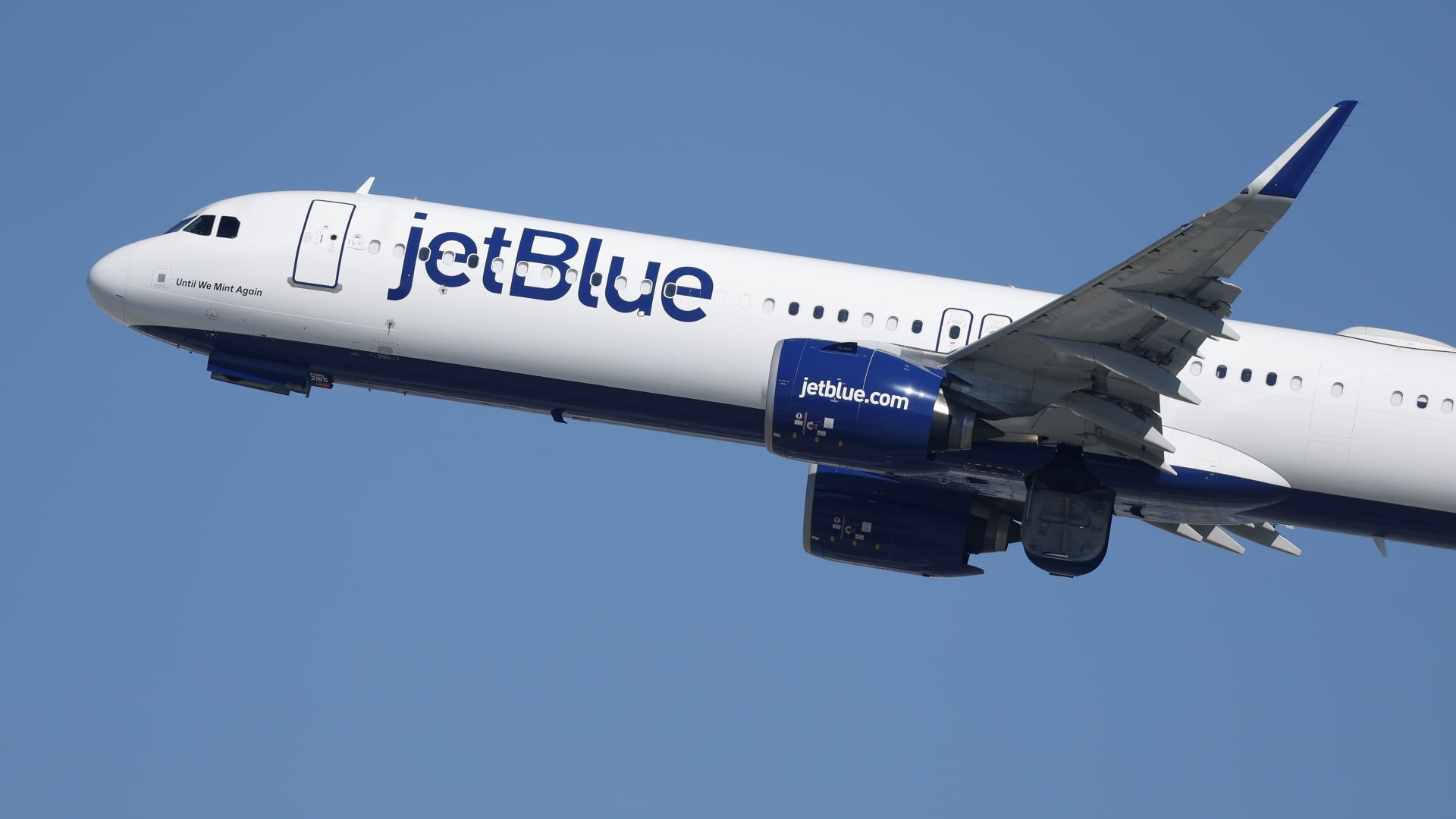
JetBlue is raising its bag fees as fuel costs squeeze airlines

JetBlue will reportedly hike its bag fees, as the cost of jet fuel continues to climb amid the war in Iran. It’s the latest example of carriers finding ways to push rising costs onto travelers.

Last week, United Airlines CEO Scott Kirby said that if fuel prices remain elevated, fares would need to rise another 20% for his airline to break even this year.

As CNBC reported, when one airline raises fees, others tend to follow.

Earlier this month, JetBlue hiked its first-quarter outlook for operating revenue per seat mile to between 5% and 7%, saying that strong Q1 demand helped “partially offset additional expenses realized from operational disruptions and rising fuel costs.” Now, the carrier appears to be making moves to further boost revenue to offset those costs.

Earlier on Monday, JetBlue rival Alaska Air lowered its Q1 profit forecast. The refining margins for the carrier’s cheapest fuel option — sourced from Singapore and representing about 20% of Alaska’s overall supply — have spiked 400% since February.

JetBlue did not immediately respond to a request for comment.

As CNBC reported, when one airline raises fees, others tend to follow.

Earlier this month, JetBlue hiked its first-quarter outlook for operating revenue per seat mile to between 5% and 7%, saying that strong Q1 demand helped “partially offset additional expenses realized from operational disruptions and rising fuel costs.” Now, the carrier appears to be making moves to further boost revenue to offset those costs.

Earlier on Monday, JetBlue rival Alaska Air lowered its Q1 profit forecast. The refining margins for the carrier’s cheapest fuel option — sourced from Singapore and representing about 20% of Alaska’s overall supply — have spiked 400% since February.

JetBlue did not immediately respond to a request for comment.

Latest Stories

Sherwood Media, LLC produces fresh and unique perspectives on topical financial news and is a fully owned subsidiary of Robinhood Markets, Inc., and any views expressed here do not necessarily reflect the views of any other Robinhood affiliate, including Robinhood Markets, Inc., Robinhood Financial LLC, Robinhood Securities, LLC, Robinhood Crypto, LLC, Robinhood Derivatives, LLC, or Robinhood Money, LLC. Futures and event contracts are offered through Robinhood Derivatives, LLC.