Business
3D rendered pack of dollars on vibrant background. Illustration of home finances. Stack of money top view digital illustration. Pixel art dollar on red background with copy space. Finance and economy concept.
Getty Images
ON THE RECORD

BNPL loans will now count toward Americans’ credit scores

While it’s a chance to build credit for some, it might penalize those already on shaky ground.

Hyunsoo Rim

On Monday, Fair Isaac Corp., the company behind the FICO credit scores used by 90% of US lenders, announced the fall launch of two new scoring models that, for the first time, factor in buy now, pay later loans. The move gives lenders a way to assess a fast-growing form of borrowing that has long operated outside the reach of traditional credit scores and reports.

Why now?

Put simply, it’s just become too big to ignore. Per eMarketer, over 86 million Americans used BNPL services last year — nearly double the number in 2021 — with shoppers now relying on it for everything from groceries to travel to dining out. And, while it may have started as a niche option for luxury splurges, today the heaviest users aren’t the most financially comfortable.
BNPL FICO scores
Sherwood News

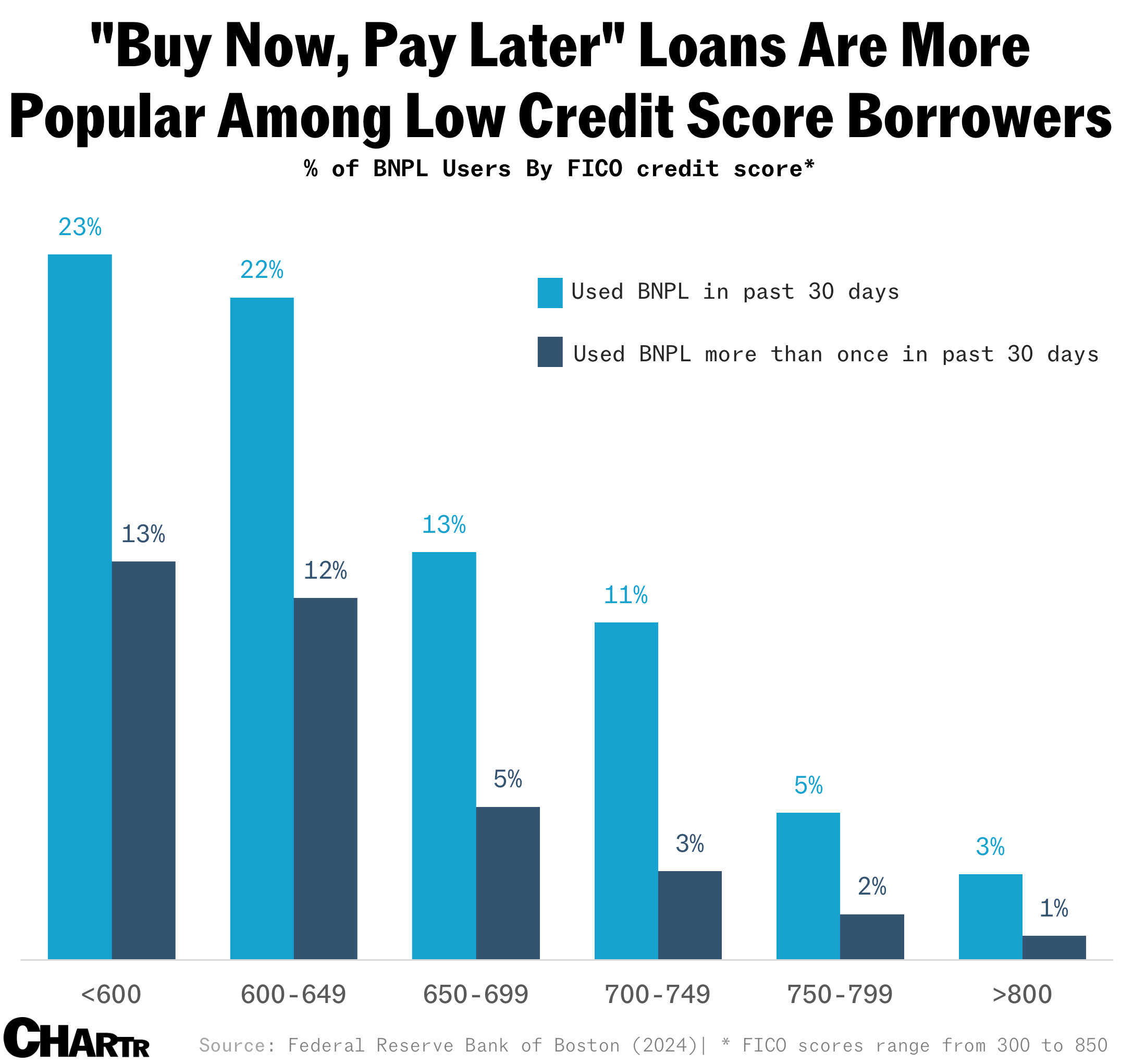
According to a 2024 analysis by the Boston Fed, nearly one in four Americans with FICO scores under 600 have used BNPL, compared to just 2.8% of the 800-plus club, those with near perfect credit. Meanwhile, a May report from the Federal Reserve found that 40% of low-income BNPL users paid late, compared to just 13% of higher-income households.

For people already on the financial edge, the new dimension to their credit scores may hurt more than help — though one FICO-Affirm study from February found that most heavy BNPL users didn’t see their FICO scores worsen once BNPL loans were taken into account.

More Business

See all Business
The entrance of Allbirds seen from Hayes St. in San Francisco, Calif.

Allbirds, the once buzzy multibillion-dollar sneaker startup, is selling up for $39 million

That’s less than 1% of its peak market cap about four years ago.

Tom Jones3/31/26
business

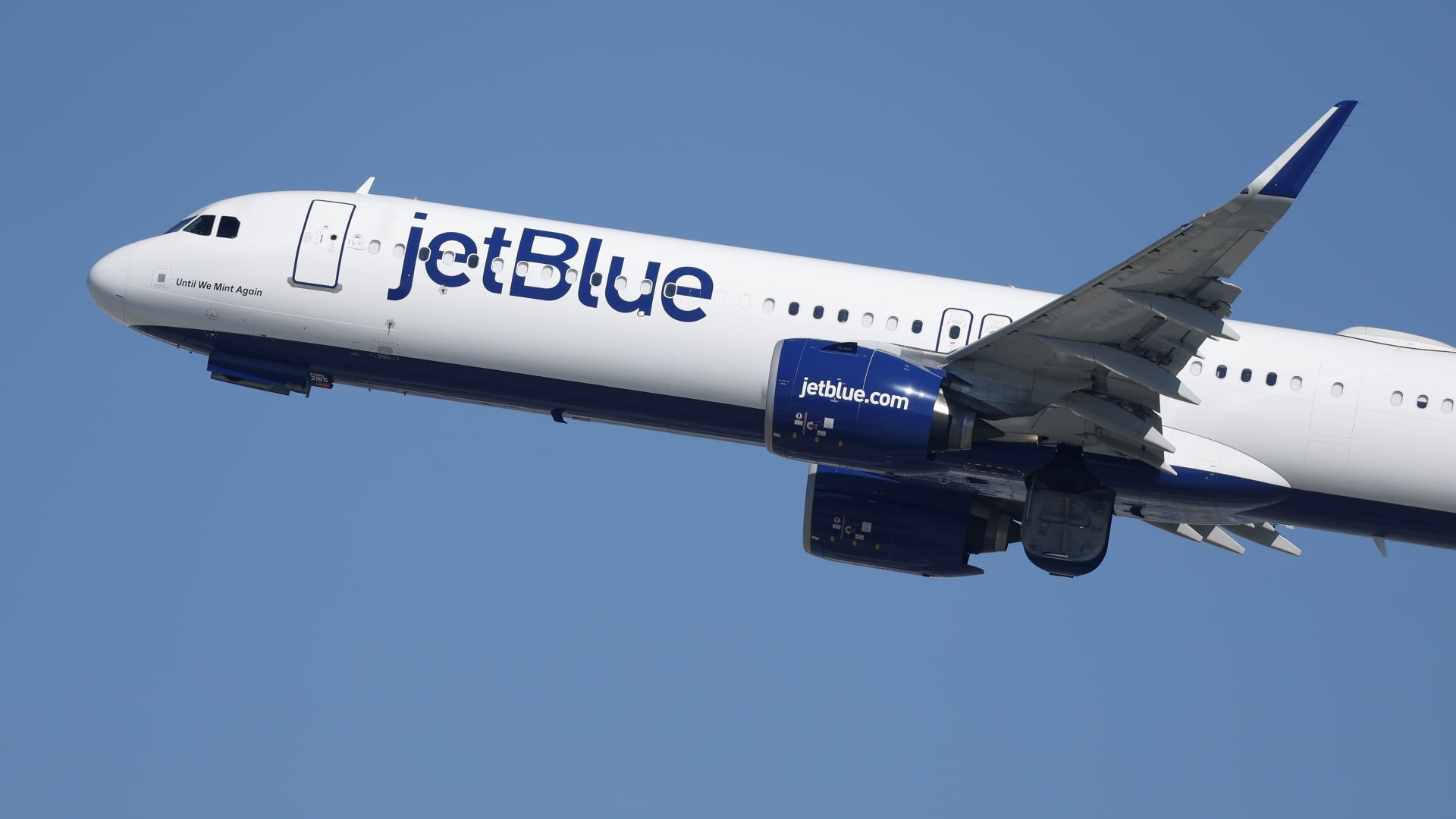
JetBlue is raising its bag fees as fuel costs squeeze airlines

JetBlue will reportedly hike its bag fees, as the cost of jet fuel continues to climb amid the war in Iran. It’s the latest example of carriers finding ways to push rising costs onto travelers.

Last week, United Airlines CEO Scott Kirby said that if fuel prices remain elevated, fares would need to rise another 20% for his airline to break even this year.

As CNBC reported, when one airline raises fees, others tend to follow.

Earlier this month, JetBlue hiked its first-quarter outlook for operating revenue per seat mile to between 5% and 7%, saying that strong Q1 demand helped “partially offset additional expenses realized from operational disruptions and rising fuel costs.” Now, the carrier appears to be making moves to further boost revenue to offset those costs.

Earlier on Monday, JetBlue rival Alaska Air lowered its Q1 profit forecast. The refining margins for the carrier’s cheapest fuel option — sourced from Singapore and representing about 20% of Alaska’s overall supply — have spiked 400% since February.

JetBlue did not immediately respond to a request for comment.

As CNBC reported, when one airline raises fees, others tend to follow.

Earlier this month, JetBlue hiked its first-quarter outlook for operating revenue per seat mile to between 5% and 7%, saying that strong Q1 demand helped “partially offset additional expenses realized from operational disruptions and rising fuel costs.” Now, the carrier appears to be making moves to further boost revenue to offset those costs.

Earlier on Monday, JetBlue rival Alaska Air lowered its Q1 profit forecast. The refining margins for the carrier’s cheapest fuel option — sourced from Singapore and representing about 20% of Alaska’s overall supply — have spiked 400% since February.

JetBlue did not immediately respond to a request for comment.

Latest Stories

Sherwood Media, LLC produces fresh and unique perspectives on topical financial news and is a fully owned subsidiary of Robinhood Markets, Inc., and any views expressed here do not necessarily reflect the views of any other Robinhood affiliate, including Robinhood Markets, Inc., Robinhood Financial LLC, Robinhood Securities, LLC, Robinhood Crypto, LLC, Robinhood Derivatives, LLC, or Robinhood Money, LLC. Futures and event contracts are offered through Robinhood Derivatives, LLC.