Business
US-POLITICS-ECONOMY-CONGRESS-BANKING
Citigroup CEO Jane Fraser (Saul LOEB/Getty Images)
Weird Money

Citi can’t risk laying more people off. So it will cut pay and scrap promotions until they leave willingly

The bank is finding new and creative ways to pay less for workers.

Jack Raines

One of the more interesting labor trends of 2024 has been companies attempting to cut costs by decreasing headcounts without actually laying anyone off. Back in September, for example, Amazon’s CEO Andy Jassy announced that, starting in January 2025, all employees would have to return to the office for a full five days per week “the way we were before the onset of COVID.” However, this return-to-office mandate didn’t necessarily apply to all employees. Workers who had already received approved Remote Work Exceptions could keep their perk:

Before the pandemic, it was not a given that folks could work remotely two days a week, and that will also be true moving forward—our expectation is that people will be in the office outside of extenuating circumstances (like the ones mentioned above) or if you already have a Remote Work Exception approved through your s-team leader.

At the time, I noted that while Jassy said the return-to-office move was rooted in improving company “culture,” a word that was used 11 times, another goal was likely resignations. Jassy also noted he wanted the ratio of individual contributors to managers to increase by at least 15% by the end of Q1. There are two ways to accomplish this: gain contributors or lose managers. To quote myself:

The simplest way to remove managers is through layoffs, but layoffs create poor optics. Mandating a five-day return-to-office will naturally cause some employees to lay themselves off, providing the desired outcome without the unpleasantness of job cuts.

Tell everyone to come back to the office (except those who don’t have to come back to the office, of course), and some folks will leave on their own volition. Bureaucracy reduced. Yesterday, the Financial Times reported something similar going on at Citi: the bank has reduced the number of employees that will receive promotions and raises by 75% this year:

Managers have been told that as many as 2,000 Citi employees could receive a bump to their pay and title in the next month, down from about 8,000 in previous rounds, four people familiar with the decisions said, cautioning that those decisions are not final.

Additionally, some employees may even face pay reductions:

Managers have been told to assess staff and decide whether some should be moved to lower tiers, resulting in lower pay, said one person familiar with the matter.

The reduction in promotions coincides with a slowdown in layoffs. As noted in the FT piece, at the end of last year, Citi planned to layoff 20,000 employees, but job cuts flattened out at 10,000, with CFO Mark Mason citing “regulatory scrutiny” as a factor holding back more cuts.

What was this “regulatory scrutiny”? The bank has struggled to adequately train employees in risk, compliance, and data roles. US bank regulators fined Citi $136 million in July 2024 for making “insufficient progress” toward fixing its own internal data-management issues that led to it accidentally wiring $900 million to creditors in 2020. For context, in 2020, Citi was serving as an administrative agent for cosmetics company Revlon as it navigated bankruptcy. In an attempt to make an interest payment to creditors, Citi accidentally wired Revlon’s creditors $900 million, 10x more than it intended, paying off Revlon’s entire 2016 loan in the process. The cause of the mishap? A Citi employee fat-fingered the wrong loan amount to pay. Citi was fined $400 million by regulators at the time, and it took the bank two years of legal battles to get all of its money back from creditors.

Per an internal analysis reported on by Reuters, Citi is grappling with “insufficient compliance risk management skills,” and the bank’s initial job cuts may have hindered its efforts to address this problem.

Basically, Citi keeps getting fined by the government for poor internal risk management, and it may have laid off workers in critical departments related to its poor internal risk management, and in September, its CFO hinted that all the regulatory problems are impacting its ability to make further layoffs.

But Citi also wants to reduce headcount costs (hence its initial plan to cut jobs). So when you want to reduce headcount costs, but you can’t reduce headcount, your only solution is to pay your headcount less, which, I would imagine, has a side effect: some disgruntled employees will probably leave. Layoffs, without having to do layoffs.

More Business

See all Business
business
Tom Jones

Prime Day is here again and Amazon’s subscription service has never been more popular

Well, it’s that time of year again: many have made their wish lists, people are scraping together the money they’ve saved to pick out a perfect gift, some are presumably leaving out refreshments for the weary delivery drivers and, more and more, drones.

It’s Amazon Prime Day — meaning that it’s the second day of the four-day promotional event that Amazon still calls Prime Day — of course, and it’s even come early this year, with the company bringing the period into late June from July, when it’s been traditionally held for the last five years.

The Prime Age

Alongside the eyes and endless clicks that the arbitrary stream of listicles on “The Best Prime Day Deals” that almost every media outlet pours into, Amazon will also be cheering the fact that there’s now more Prime users than ever before to devour the retailer and its sellers’ sometimes-contested “discounts.” Indeed, according to the latest annual estimates from Consumer Intelligence Research Partners (CIRP), there were just over 200 million American shoppers using Amazon’s massive subscription service at the end of 2025.

business

Electronic Arts launches a platform to put more ads in its games

Video game publishing giant EA launched a new platform on Monday designed to make the process of selling immersive ad space in its popular games easier.

The company says the platform, called EA Advertising, allows brands to “integrate directly into gameplay through dynamic, real-time placements, from stadium signage to custom in-game content.”

More so than other studios, EA has incorporated advertising into its most popular titles. As Kotaku points out, the company’s ad efforts stretch as far back as 2006. Several of its sports franchises already feature partnerships with brands like Visa, Lowe’s, Red Bull, and PepsiCo.

In-game advertising hasn’t exactly been embraced by fans, but industry experts expect it to ramp up as companies seek more revenue to offset higher games budgets and surging memory costs. EA rival Take-Two has taken a different approach, with CEO Strauss Zelnick recently saying the company was “not at risk of doing brand partnerships” in the forthcoming “Grand Theft Auto VI,” and that ads in full-price games seems “unfair.”

The $55 billion deal to take EA private, led by Saudi Arabia’s Public Investment Fund, is set to close at the end of this month. Being the largest leveraged buyout in history, EA will likely look for more ways to boost revenue to cover interest payments.

More so than other studios, EA has incorporated advertising into its most popular titles. As Kotaku points out, the company’s ad efforts stretch as far back as 2006. Several of its sports franchises already feature partnerships with brands like Visa, Lowe’s, Red Bull, and PepsiCo.

In-game advertising hasn’t exactly been embraced by fans, but industry experts expect it to ramp up as companies seek more revenue to offset higher games budgets and surging memory costs. EA rival Take-Two has taken a different approach, with CEO Strauss Zelnick recently saying the company was “not at risk of doing brand partnerships” in the forthcoming “Grand Theft Auto VI,” and that ads in full-price games seems “unfair.”

The $55 billion deal to take EA private, led by Saudi Arabia’s Public Investment Fund, is set to close at the end of this month. Being the largest leveraged buyout in history, EA will likely look for more ways to boost revenue to cover interest payments.

business

JM Smucker says it sold $1 billion worth of Uncrustables in FY2026

After years of booming sandwich sales, JM Smucker has finally earned a billion-dollar crust.

On Tuesday, the company reported results for fiscal year 2026, highlighting better-than-expected profits driven by higher prices for coffee and sweet baked goods. However, at another point on the earnings call, CEO Mark Smucker pointed to one particularly jammy figure: in line with previous forecasts, the company sold $1 billion worth of its (almost always) crustless sandwiches, Uncrustables, in the last year alone.

business

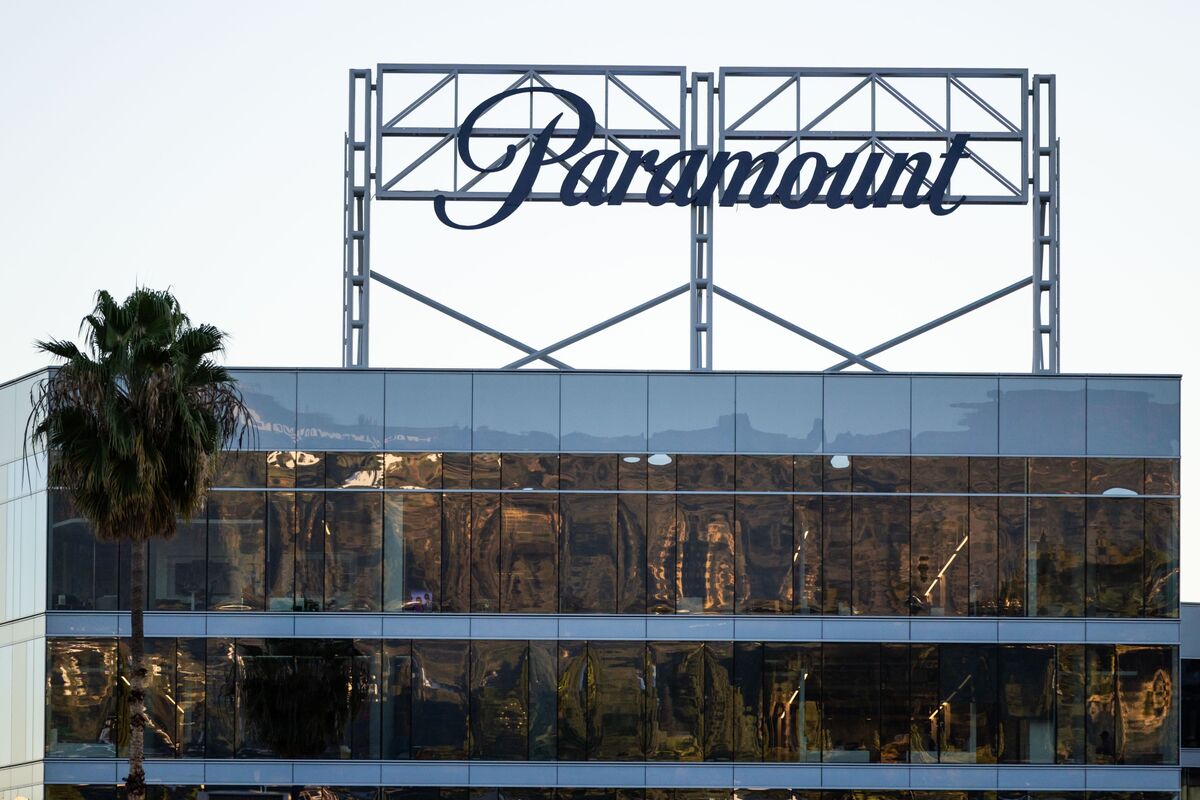
Paramount reportedly offers concessions to resolve multistate antitrust investigation

Paramount has reportedly offered up some concessions in an effort to prevent an antitrust lawsuit by California and about 10 other states, according to Bloomberg reporting on Monday.

Reuters first reported on the potential suit from a group of unnamed states last week, which could throw a wrench in Paramount’s plans to buy rival Warner Bros. Discovery in a Hollywood megamerger.

The list of concessions is unknown, though Bloomberg previously reported that Paramount is open to divesting some of its kids TV assets to appease EU regulators.

Late last month, reports said US regulators appeared likely to approve the $110 billion merger, following a meeting between Paramount CEO David Ellison and DOJ antitrust staffers.

The list of concessions is unknown, though Bloomberg previously reported that Paramount is open to divesting some of its kids TV assets to appease EU regulators.

Late last month, reports said US regulators appeared likely to approve the $110 billion merger, following a meeting between Paramount CEO David Ellison and DOJ antitrust staffers.

$98B ⛽

The IATA released its latest financial outlook for the airline industry over the weekend, forecasting a $98 billion jump in the sector’s collective fuel bill. The world’s largest trade group representing airlines expects the oil spike to halve profits by 49% from last year to $23 billion.

The group also expects profit margins to halve year over year, falling from 2025’s 4.2% to 2%. Still, revenue is expected to climb to $1.17 trillion from $1.07 trillion.

A surge in the cost of jet fuel has rocked US and global airlines this year, leading Delta Air Lines, United Airlines, American Airlines, Southwest Airlines, JetBlue, and others to raise fares and ancillary charges like bag fees. Low-cost carriers, which operate on smaller margins, have been squeezed the hardest, resulting in Spirit’s shutdown.

“It’s a tough year for all airlines, especially those whose balance sheets had not yet recovered from COVID. And, of course, for those operating in the Gulf,” said IATA Director General Willie Walsh, who added that demand is holding up and about half of passengers expect to spend more on travel this year. “That bodes well for a strong northern summer peak season. The big unknown is how long travelers and shippers can tolerate the higher costs of connectivity.”

Latest Stories

Sherwood Media, LLC and Chartr Limited produce fresh and unique perspectives on topical financial news and are fully owned subsidiaries of Robinhood Markets, Inc., and any views expressed here do not necessarily reflect the views of any other Robinhood affiliate, including Robinhood Markets, Inc., Robinhood Financial LLC, Robinhood Securities, LLC, Robinhood Crypto, LLC, Robinhood Money, LLC, Robinhood U.K. Ltd, Robinhood Derivatives, LLC, Robinhood Gold, LLC, Robinhood Asset Management, LLC, Robinhood Credit, Inc., Robinhood Ventures DE, LLC and, where applicable, its managed investment vehicles.