Business
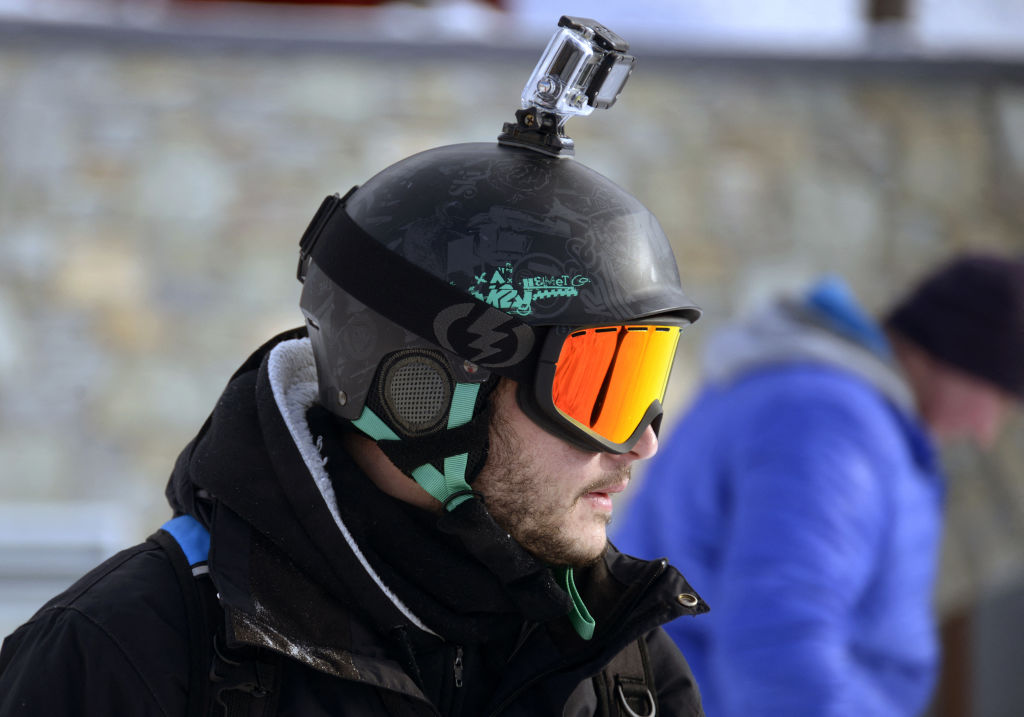
Shoes Fair Düsseldorf
Photo by Fabian Strauch via Getty Images
FOAM ALONE

Crocs keeps crushing it, but HeyDude isn’t stepping up

Crocs spent billions on HeyDude, but sales at the brand have gone backwards pretty much ever since

Claire Yubin Oh

It’s been a good few years to be in the ugly-comfy shoe business. That’s particularly true if your company’s name is Crocs, Inc. — which saw sales boom over the last decade, giving it enough financial firepower to spend $2.5 billion acquiring one of its up and coming rivals, HeyDude, the start of a potential multi-brand shoe empire.

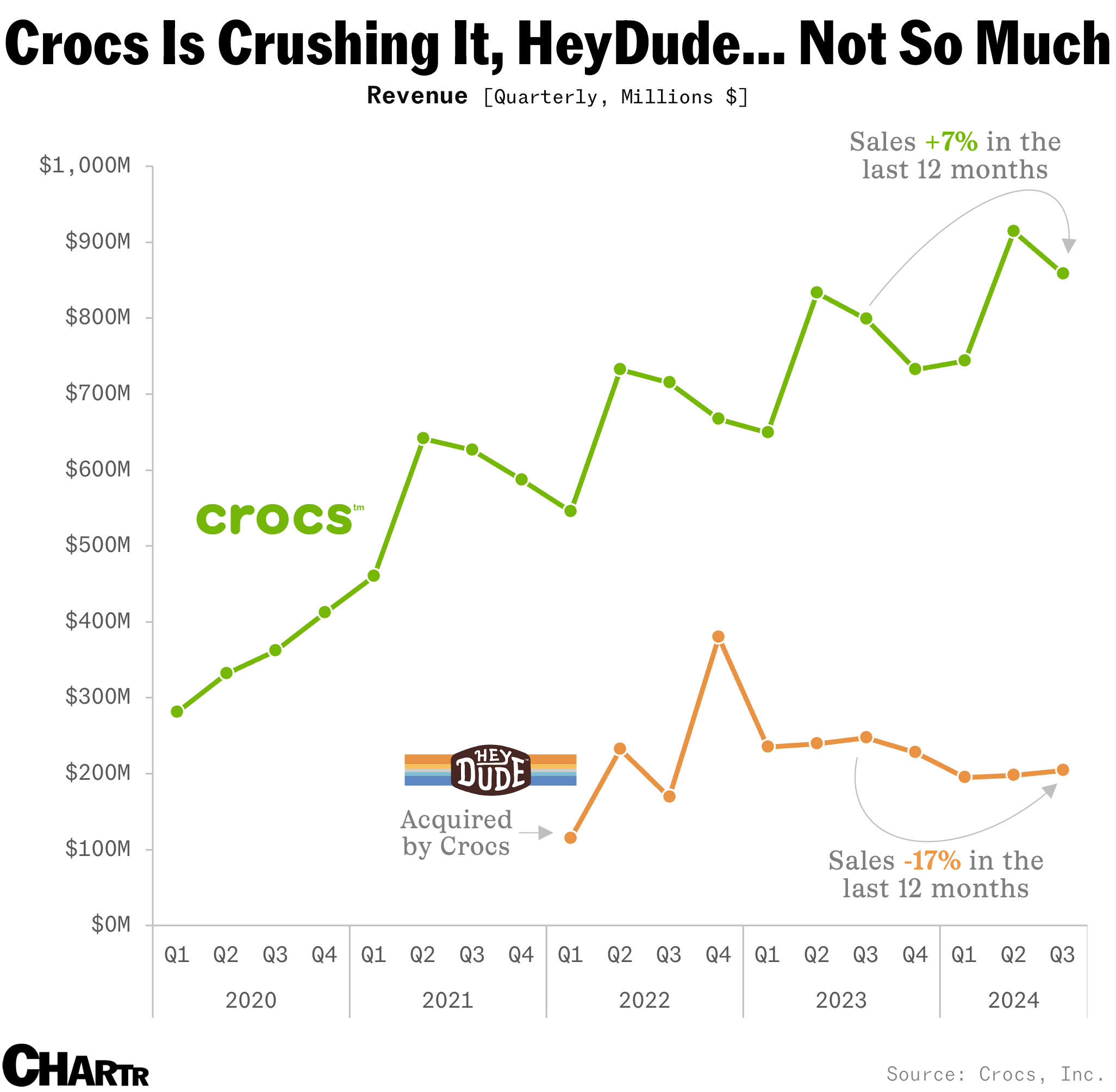
But, while Crocs keeps finding new customers to sell its foam clogs to, HeyDude continues to drag.
Crocs chart
Sherwood News

Like almost every quarter since its acquisition in 2022, Crocs Inc.’s earnings call, released Tuesday, revealed that HeyDude’s revenues had slipped by more than 17% to $204 million, whilst the Crocs original brand added another 7% in sales.

Beyond the $1.9 million FTC settlement that had thousands of customers demanding refunds for the already struggling brand, HeyDude has acquired a particular online reputation – that its shoes are not only a bit ugly (like Crocs), but also they're not even that comfortable (unlike Crocs). And splurging vast sums of marketing budget on signing stars like Sydney Sweeney, the new ambassador for the brand who can be seen jumping into lakes in a recent promotional video, doesn't seem to be helping yet.

Noting the weakness, Crocs, Inc. CEO Andrew Rees added in a press release that the company is now “resetting” its full-year outlook for the loafer brand – a clear shift from his previously “extremely bullish” expectations last quarter.

Meanwhile, Crocs sales continue to push higher, thanks to the brand’s loyal jibbitz-loving customer base and its experimental collaborations, ranging from luxury designers like Balenciaga to Pringles. Crocs shares fell ~19% on Tuesday after the results. 

More Business

See all Business
business

Netflix is down amid reports it’s leading the Warner Bros. bidding war as Paramount cries foul

Netflix’s charm offensive appears to be working.

Netflix is reportedly emerging as the leader in the bidding war for Warner Bros. Discovery after second-round bids this week, edging out entertainment juggernaut rivals Comcast and Paramount Skydance.

Investors don’t appear psyched by the streaming leader’s turn of fortune: the stock is down on Thursday morning, a day after closing down nearly 5% following reports that scooping up HBO Max wouldn’t necessarily result in a big market share boost.

Paramount, which has reportedly made five bids for Warner Bros. Discovery, doesn’t love the current state of play, either. The company sent WBD a letter questioning the “fairness and adequacy” of the process, highlighting reports that WBD’s board favors Netflix and is resisting Paramount.

Any offer would be subject to regulatory approval — a fact that may have weighed against Netflix’s offer given that cofounder Reed Hastings’ politics are vocally to the left, very much at odds with the current regulatory regime. Paramount seems confident in its ability to get approval, reportedly boosting its breakup fee to $5 billion should its potential acquisition fall apart in the regulatory process.

Investors don’t appear psyched by the streaming leader’s turn of fortune: the stock is down on Thursday morning, a day after closing down nearly 5% following reports that scooping up HBO Max wouldn’t necessarily result in a big market share boost.

Paramount, which has reportedly made five bids for Warner Bros. Discovery, doesn’t love the current state of play, either. The company sent WBD a letter questioning the “fairness and adequacy” of the process, highlighting reports that WBD’s board favors Netflix and is resisting Paramount.

Any offer would be subject to regulatory approval — a fact that may have weighed against Netflix’s offer given that cofounder Reed Hastings’ politics are vocally to the left, very much at odds with the current regulatory regime. Paramount seems confident in its ability to get approval, reportedly boosting its breakup fee to $5 billion should its potential acquisition fall apart in the regulatory process.

business

Delta says the government shutdown will cost it $200 million in Q4

The 43-day government shutdown that ended last month will result in a $200 million ding for Delta Air Lines, the airline said in a filing on Wednesday.

That’s about $100,000 per shutdown-related canceled flight. (Delta previously said it canceled more than 2,000 flights due to FAA flight reductions.) When the company reports its fourth-quarter earnings, the shutdown will lop off about $0.25 per share.

Delta initially stayed calm about the shutdown, with CEO Ed Bastian stating in early October that the company was running smoothly and hadn’t seen any impacts at all. One historically long shutdown later, Delta wasn’t able to remain untouched.

The skies have since cleared, though, and Delta’s filing states that booking growth has “returned to initial expectations following a temporary softening in November.”

Delta’s shares were up over 2% as of Wednesday’s market open.

Delta initially stayed calm about the shutdown, with CEO Ed Bastian stating in early October that the company was running smoothly and hadn’t seen any impacts at all. One historically long shutdown later, Delta wasn’t able to remain untouched.

The skies have since cleared, though, and Delta’s filing states that booking growth has “returned to initial expectations following a temporary softening in November.”

Delta’s shares were up over 2% as of Wednesday’s market open.

Latest Stories

Sherwood Media, LLC produces fresh and unique perspectives on topical financial news and is a fully owned subsidiary of Robinhood Markets, Inc., and any views expressed here do not necessarily reflect the views of any other Robinhood affiliate, including Robinhood Markets, Inc., Robinhood Financial LLC, Robinhood Securities, LLC, Robinhood Crypto, LLC, or Robinhood Money, LLC.