
Business
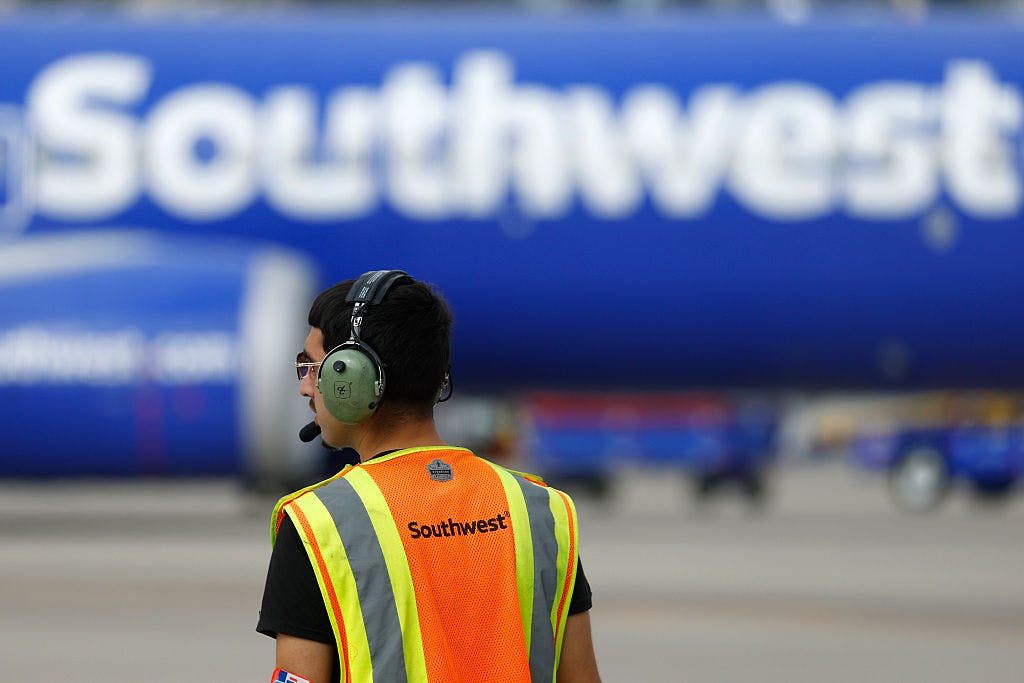
Southwest Airlines At San Diego International Airport
(Kevin Carter/Getty Images)

Southwest stopped fuel hedging a year ago. Whoops.

It’s been a year since Southwest said it would end its fuel-hedging program. Oil’s moves this year make that decision look like a mistake.

Almost a year ago to the day, Southwest Airlines ended its multi-decade practice of hedging fuel costs, becoming the final major US airline to end the exercise.

Now, a historic jet fuel margin squeeze because of the US war in Iran is highlighting the downside risk of that decision for Southwest and every other major American airline.

Fuel hedging can insulate airlines against volatile swings in fuel prices. The practice famously helped Southwest in particular, including saving it $1.3 billion in 2008 amid a fuel surge during the global financial crisis, and $1.2 billion in 2022 during another spike as Russia invaded Ukraine.

But the practice can also lock carriers into higher fuel costs during drops in oil prices, which is why carriers like American Airlines, United Airlines, and Delta Air Lines stopped doing it about 10 years ago. JetBlue stepped away from hedging in 2021, and Alaska Air suspended its program in 2024.

Now, those decisions are being called into question, with US jet fuel prices up 87% this year, according to the Argus US jet fuel index. Airline shares have been pummeled in March, with carriers shedding billions of dollars in market cap.

Without hedges, airlines are expected to hike airfares quickly — as they historically do when oil prices surge. Last week, United CEO Scott Kirby said fare increases would “probably start quick.”

Getting ahead of criticism around the airline’s lack of hedging, Kirby also said that “no one hedges anymore” and “even if you do, hedging the crack spread is really hard to do.”

More industrywide cost-saving strategies may come soon. The 2008 spike in oil costs coincided with the widespread adoption of bag fees by American carriers. In the years following the 2022 surge, budget carriers shifted heavily into the business of catering toward wealthier travelers who don’t change their plans as quickly when fares climb.

More Business

See all Business
business

Paramount reportedly offers concessions to resolve multistate antitrust investigation

Paramount has reportedly offered up some concessions in an effort to prevent an antitrust lawsuit by California and about 10 other states, according to Bloomberg reporting on Monday.

Reuters first reported on the potential suit from a group of unnamed states last week, which could throw a wrench in Paramount’s plans to buy rival Warner Bros. Discovery in a Hollywood megamerger.

The list of concessions is unknown, though Bloomberg previously reported that Paramount is open to divesting some of its kids TV assets to appease EU regulators.

Late last month, reports said US regulators appeared likely to approve the $110 billion merger, following a meeting between Paramount CEO David Ellison and DOJ antitrust staffers.

The list of concessions is unknown, though Bloomberg previously reported that Paramount is open to divesting some of its kids TV assets to appease EU regulators.

Late last month, reports said US regulators appeared likely to approve the $110 billion merger, following a meeting between Paramount CEO David Ellison and DOJ antitrust staffers.

$98B ⛽

The IATA released its latest financial outlook for the airline industry over the weekend, forecasting a $98 billion jump in the sector’s collective fuel bill. The world’s largest trade group representing airlines expects the oil spike to halve profits by 49% from last year to $23 billion.

The group also expects profit margins to halve year over year, falling from 2025’s 4.2% to 2%. Still, revenue is expected to climb to $1.17 trillion from $1.07 trillion.

A surge in the cost of jet fuel has rocked US and global airlines this year, leading Delta Air Lines, United Airlines, American Airlines, Southwest Airlines, JetBlue, and others to raise fares and ancillary charges like bag fees. Low-cost carriers, which operate on smaller margins, have been squeezed the hardest, resulting in Spirit’s shutdown.

“It’s a tough year for all airlines, especially those whose balance sheets had not yet recovered from COVID. And, of course, for those operating in the Gulf,” said IATA Director General Willie Walsh, who added that demand is holding up and about half of passengers expect to spend more on travel this year. “That bodes well for a strong northern summer peak season. The big unknown is how long travelers and shippers can tolerate the higher costs of connectivity.”

Hollywood Exteriors And Landmarks - 2025

1 year into the Switch 2, we might’ve seen the top of the console market

The Switch 2 launched on this day in 2025. Amid a rough year for consoles, Nintendo has logged a good one.

business

GM has reportedly rehired more than 100 former Cruise employees, 18 months after shuttering the robotaxi unit

GM has rehired more than 100 employees it let go early last year when it shuttered Cruise, its former robotaxi business, according to reporting by The Information.

The hiring spree, which also includes employees from Nvidia and Uber, is geared toward ramping up GM’s plans for personal-use self-driving vehicles and not robotaxis. The former had been the focus of Cruise, prior to GM shuttering it in 2024.

Reporting last fall revealed that GM was attempting to rehire some former Cruise employees, but the scope of that effort wasn’t clear. More than 1,000 employees were laid off when the automaker scrapped Cruise, which it invested $10 billion into.

Google’s Waymo, Cruise’s former chief rival, is now worth $126 billion after a $16 billion funding round earlier this year. The company says it’s serving 500,000 paid robotaxi rides per week in the US.

Reporting last fall revealed that GM was attempting to rehire some former Cruise employees, but the scope of that effort wasn’t clear. More than 1,000 employees were laid off when the automaker scrapped Cruise, which it invested $10 billion into.

Google’s Waymo, Cruise’s former chief rival, is now worth $126 billion after a $16 billion funding round earlier this year. The company says it’s serving 500,000 paid robotaxi rides per week in the US.

Latest Stories

Sherwood Media, LLC and Chartr Limited produce fresh and unique perspectives on topical financial news and are fully owned subsidiaries of Robinhood Markets, Inc., and any views expressed here do not necessarily reflect the views of any other Robinhood affiliate, including Robinhood Markets, Inc., Robinhood Financial LLC, Robinhood Securities, LLC, Robinhood Crypto, LLC, Robinhood Money, LLC, Robinhood U.K. Ltd, Robinhood Derivatives, LLC, Robinhood Gold, LLC, Robinhood Asset Management, LLC, Robinhood Credit, Inc., Robinhood Ventures DE, LLC and, where applicable, its managed investment vehicles.
