
Business
Handbag empire: French companies dominate luxury market

Handbag empire: French companies dominate luxury market

**A certain je ne sais quoi**‍

Silicon Valley has tech. Germany’s auto industry is second to none. Scandinavia is known for its design. But when it comes to luxury, no-one does it quite like the **French.**‍

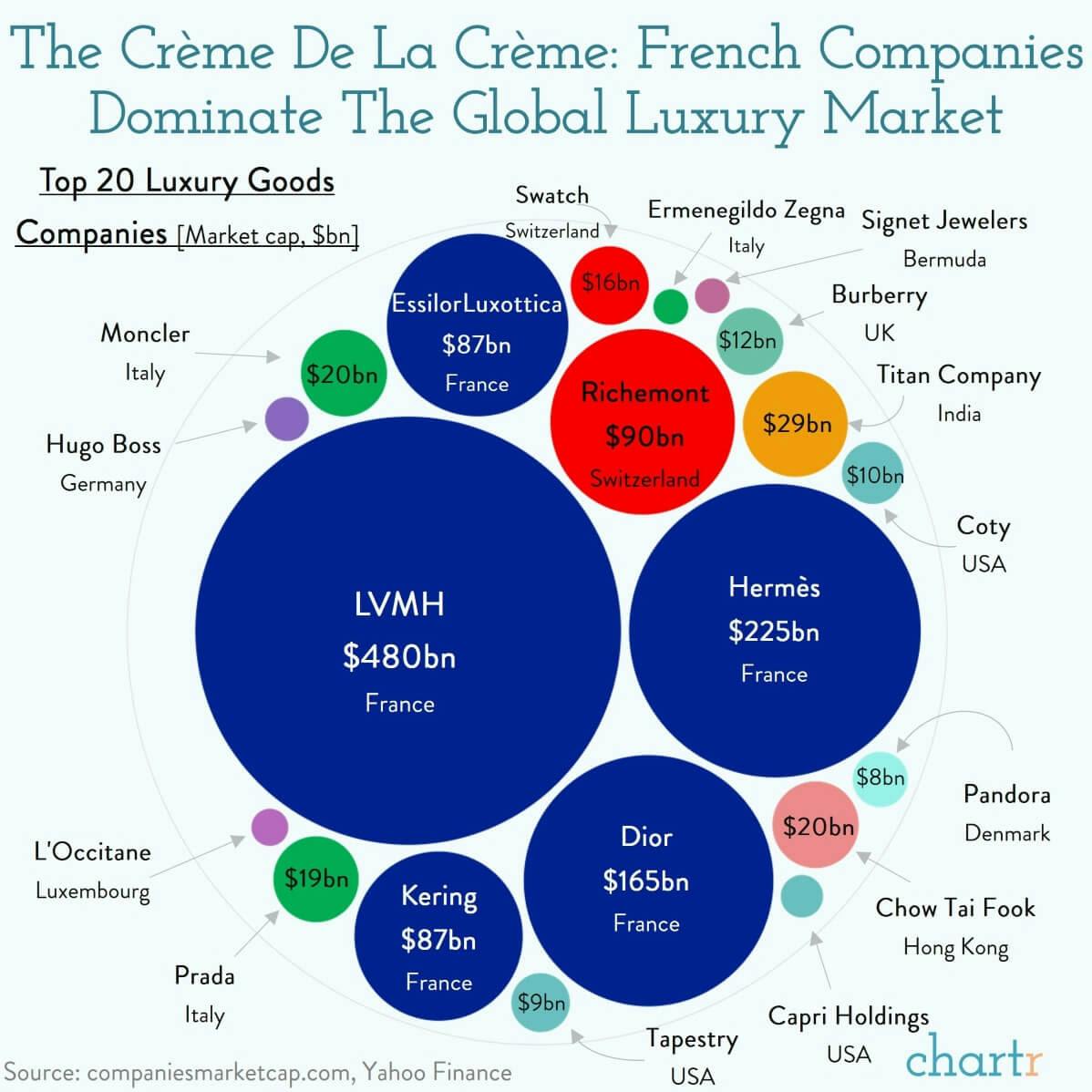
LVMH, Hermès, Dior, EssilorLuxottica, and Kering, all French, have a combined market cap of over €1 trillion, accounting for approximately 80% of the top 20 largest public luxury companies' total value. And, despite the wider malaise, those companies have seen their value soar. LVMH shares have gained 52%, Kering is up 18%, EssilorLuxottica is up 15% and Hermès has jumped 84% — helping to propel Paris's stock exchange to the largest in Europe, taking the crown from London.

French luxury has a long and storied history, dating back to the middle ages with luxury shoes, but it was arguably in the courts of King Louis XIV where haute couture was born. During Louis’ long reign French textile and jewelry industries boomed, with a strong insistence on only using French materials. In the 17th and 18th centuries the country began manufacturing high-end mirrors, symbols of opulence at the time, but it wasn't until after the July Revolution in 1830, and the rise of a middle class in France, that the first now recognizable names in luxury began to emerge. Hermès was founded in 1837, followed by Cartier in 1847 and Louis Vuitton in 1854.

Handbag empire

Since then, the country’s luxury industry has gone from strength to strength. A study from 2012 found that, out of the 270 “prestige” luxury brands in the world, a whopping 130 were French — collectively accounting for a quarter of all luxury sales. While other luxury brands from around the world, namely German’s Hugo Boss, Italian Prada and American Tapestry, which owns Coach and Kate Spade, have struggled recently, French luxury brands have shone.

Indeed, Hermès — known for its silk scarves and iconic Birkin bags — is now worth an astonishing €209bn. That’s more than 20x the value of French carmaker Renault and almost 10x what tyre manufacturer Michelin is worth. But, even Hermès pales in comparison to the true giant of French luxury: LVMH — a company that’s made its CEO Bernard Arnault the richest person on the planet.

More Business

See all Business
business

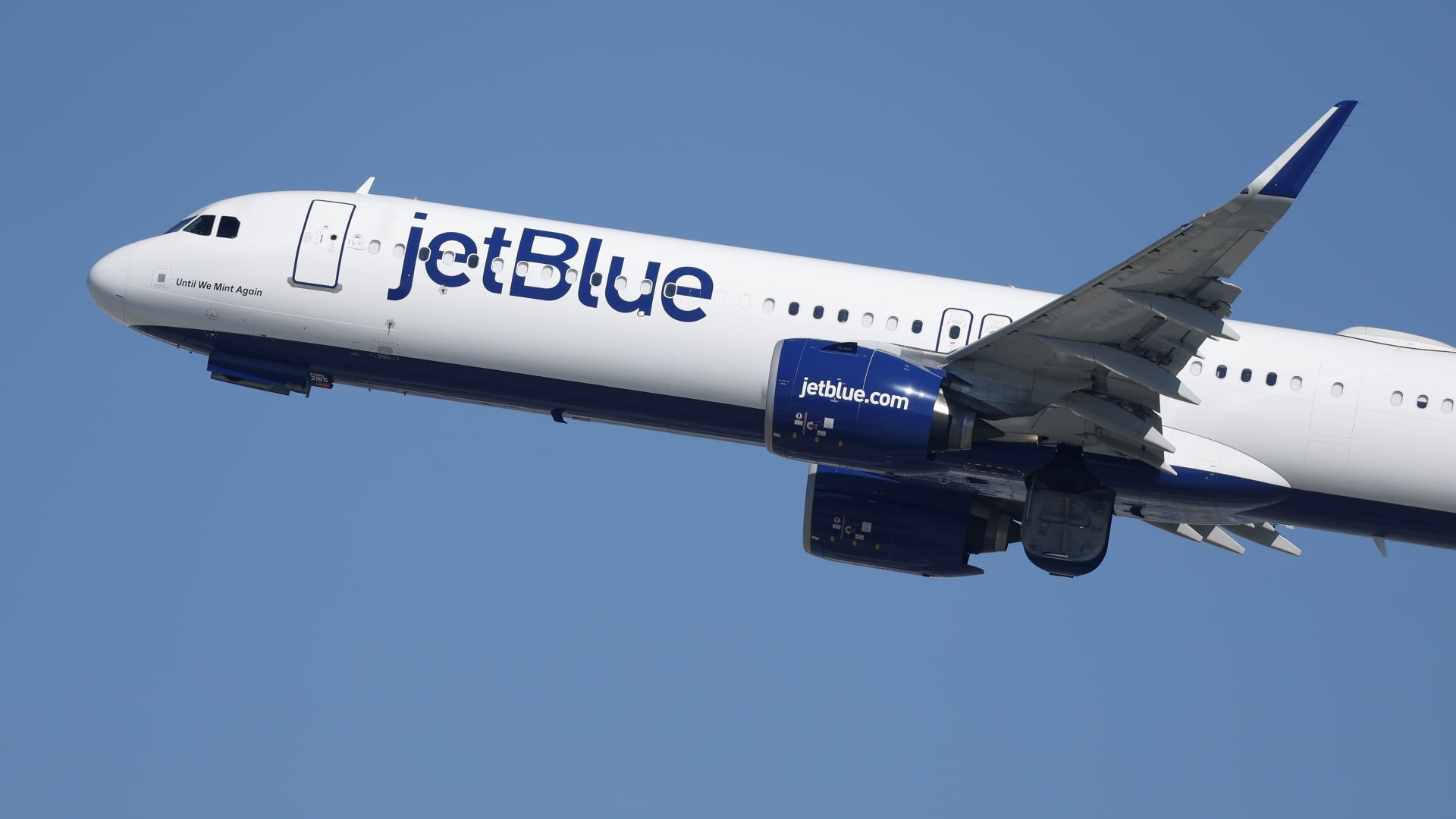
JetBlue is raising its bag fees as fuel costs squeeze airlines

JetBlue will reportedly hike its bag fees, as the cost of jet fuel continues to climb amid the war in Iran. It’s the latest example of carriers finding ways to push rising costs onto travelers.

Last week, United Airlines CEO Scott Kirby said that if fuel prices remain elevated, fares would need to rise another 20% for his airline to break even this year.

As CNBC reported, when one airline raises fees, others tend to follow.

Earlier this month, JetBlue hiked its first-quarter outlook for operating revenue per seat mile to between 5% and 7%, saying that strong Q1 demand helped “partially offset additional expenses realized from operational disruptions and rising fuel costs.” Now, the carrier appears to be making moves to further boost revenue to offset those costs.

Earlier on Monday, JetBlue rival Alaska Air lowered its Q1 profit forecast. The refining margins for the carrier’s cheapest fuel option — sourced from Singapore and representing about 20% of Alaska’s overall supply — have spiked 400% since February.

JetBlue did not immediately respond to a request for comment.

As CNBC reported, when one airline raises fees, others tend to follow.

Earlier this month, JetBlue hiked its first-quarter outlook for operating revenue per seat mile to between 5% and 7%, saying that strong Q1 demand helped “partially offset additional expenses realized from operational disruptions and rising fuel costs.” Now, the carrier appears to be making moves to further boost revenue to offset those costs.

Earlier on Monday, JetBlue rival Alaska Air lowered its Q1 profit forecast. The refining margins for the carrier’s cheapest fuel option — sourced from Singapore and representing about 20% of Alaska’s overall supply — have spiked 400% since February.

JetBlue did not immediately respond to a request for comment.

business

Netflix is hiking its prices again

Netflix is raising its subscription prices for the fourth time in four years, a move first spotted by Android Authority.

Per Netflix’s US pricing page, the cost of an ad-supported plan is climbing $1 to $8.99 per month, while the cost of a standard ad-free plan is going up $2 to $19.99 per month. The premium tier has also risen $2 to $26.99 per month.

The streamer last raised its subscription costs more than a year ago in January 2025. It also hiked prices in 2023, 2022, 2020, and 2019. Netflix shares climbed about 2% on the news.

“Our approach remains the same: we continue offering a range of prices and plans to meet a variety of needs, and as we deliver more value to our members we are updating our prices to enable us to reinvest in quality entertainment and improve their experience by updating our prices,” said a Netflix spokesperson, in a statement to Sherwood News.

The streamer last raised its subscription costs more than a year ago in January 2025. It also hiked prices in 2023, 2022, 2020, and 2019. Netflix shares climbed about 2% on the news.

“Our approach remains the same: we continue offering a range of prices and plans to meet a variety of needs, and as we deliver more value to our members we are updating our prices to enable us to reinvest in quality entertainment and improve their experience by updating our prices,” said a Netflix spokesperson, in a statement to Sherwood News.

Latest Stories

Sherwood Media, LLC produces fresh and unique perspectives on topical financial news and is a fully owned subsidiary of Robinhood Markets, Inc., and any views expressed here do not necessarily reflect the views of any other Robinhood affiliate, including Robinhood Markets, Inc., Robinhood Financial LLC, Robinhood Securities, LLC, Robinhood Crypto, LLC, Robinhood Derivatives, LLC, or Robinhood Money, LLC. Futures and event contracts are offered through Robinhood Derivatives, LLC.