Business
US-HEALTH-VAPING-JUUL
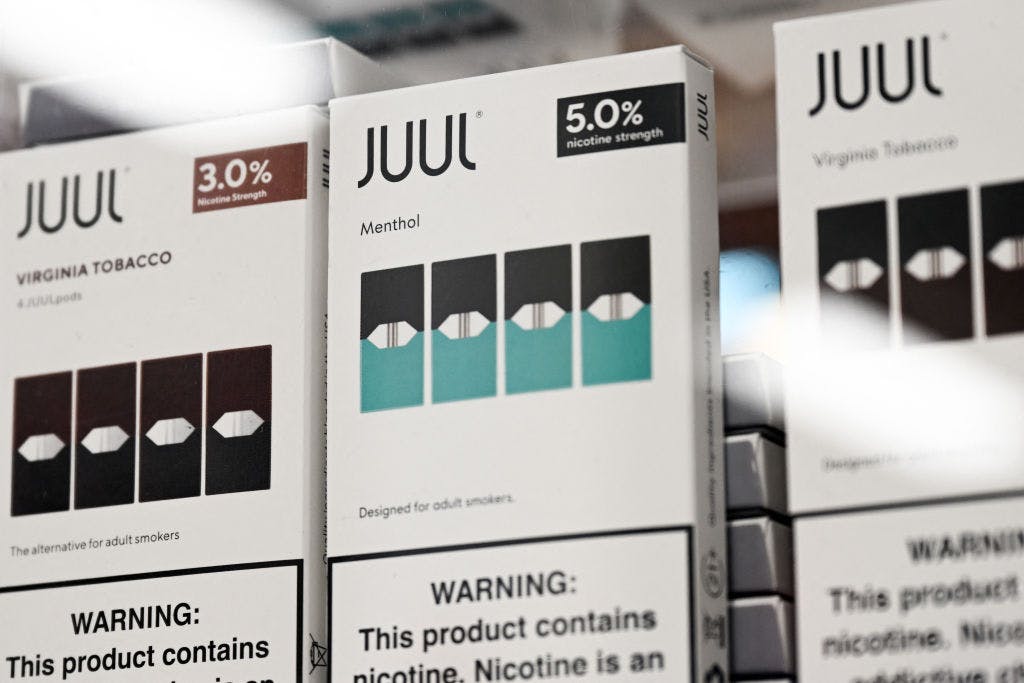
Juul Labs Inc. vaping e-cigarettes (Patrick T. Fallon/Getty Images)
Weird Money

Four-figure Juul settlements are the hot new social-media trend

As part of a $200 million+ settlement, Juul has been Venmoing former customers thousands of dollars.

Jack Raines

While researching (read: scrolling through X mindlessly) yesterday, I came across some interesting screenshots showing that folks were receiving four-figure Venmo payments from “Juul Labs, Inc. Settlement Administrator.”

A class-action lawsuit was filed against Juul and tobacco company Altria, which bought 35% of Juul Labs for $12.8 billion in 2018, with the plaintiffs alleging that Altria and Juul had led consumers to overpay for Juul products by misleading them about the products’ addictiveness and safety, and that Juul products were unlawfully marketed to minors.

In 2022, Juul agreed to a $245 million settlement, and earlier in 2024, Altria agreed to a $45 million settlement. After fees and taxes, this worked out to $201.9 million being paid out to verified claimants, and on October 18, 2024, those payments started to be distributed, hence the screenshots I saw floating around social media.

According to the BBC, 14 million people tried to claim a share of the settlement, but ultimately, about 842,000 claims were officially validated, averaging out to a ~$240 payout per person. However, as you can see from the screenshots, many of these settlements are more than a magnitude greater than $240, so I decided to look into how exactly this settlement worked. The details are just fantastic.

First, claimants had to submit proofs of purchase, which included date of birth, month and year of a claimant’s first Juul purchase, their frequency of purchase, proof of identification, payment information, and, for claims over $300, proof of purchase via receipts. Claimants who were approved were then allocated “points” based on their age and the years in which they made their purchases, and the total settlement would be distributed pro rata based on claimants’ points.

Claimants who purchased between 2019 and 2022 would get one point, claimants who purchased between 2015 and 2018 would get two points, and “Youth Purchases,” which meant any made by an individual whose first purchase occurred before their 18th birthday, were worth four points.

So if you were a 17-year-old in 2016 who bought, and consequently got hooked on, Juuls, and you continued to buy said Juuls through college, all of your purchases got a 4x point multiplier. Not bad! Unfortunately, there were a few factors that limited the total payouts one could receive:

First, “no Retail Expenditure used to assign Points may exceed $1600 per year,” and second, there was a payment cap for claimants equal to 150% of eligible retail expenditures, or 300% of expenditures in the case of Youth Purchases. However, the largest hypothetical payout from this settlement is still pretty good.

Using the settlement’s class-payment cap, if a 17-year-old in 2015 bought at least $1,600 of Juuls and Juul accessories, and proceeded to do so every year through age 24 in 2022, they could, hypothetically, receive $38,400 (300% times $1,600 per year for eight years). It’s unlikely that anyone received that amount, given that expenditures used to assign points couldn’t exceed $1,600 per year, and the distributions were paid out pro rata based on points, but it is possible.

The logic behind this settlement fascinates me. As someone who was in college between the years of 2015 and 2019, I had plenty of friends (not me) whod bought Juuls, and not a single one of them was shocked to find out that Juul may have been less healthy than advertised. They were smoking flavored nicotine from a battery-powered Wii remote. Also, the rationale that someone who bought a Juul in 2015 at age 17 would still be eligible for a 4x higher distribution on their purchases from 2022 at age 24 is fantastic, too.

Still, I wish the class-payment cap didn’t exist, so we could see how large some of these distributions would have been. In our social-media age where dopamine is more valuable than gold, folks all over TikTok and X are chasing engagement by showing off their $3,000 Juul Venmo payments. You have to think that, somewhere, an upper-class 17-year-old in 2015 with access to an Amex black card was dropping $20,000+ on Juuls every year, and I would love to see the viral TikTok of a Juul settlement whale sharing their $200,000+ Juul payout for social-media clout.

For now, it looks like we’ll have to settle for (no pun intended) the $3,000 TikTok reaction videos.

More Business

See all Business
business

Demis Hassabis, Google DeepMind’s CEO and founder, was also an early Anthropic investor

A chess prodigy and an actual a knight of the realm in the UK, it’s perhaps no surprise that Demis Hassabis has made some strategic moves about his exposure to AI upside. According to people familiar with the matter, the influential AI architect became an angel investor in Anthropic, currently behind many of the leading AI models, per Arena AI leaderboards.

The Nobel Prize winner’s position in the Claude creator was previously undisclosed and, per the Financial Times, highlights Hassabis’ “growing influence across the AI industry.”

Google, which bought DeepMind, the company that Hassabis cofounded and heads to this day, for a reported ~$400 million in 2014, is also a key Anthropic investor. The tech giant reportedly plans to invest up to $40 billion in the AI company as part of the mutually beneficial relationship the pair have forged, with reports that Anthropic has committed to spending $200 billion in the other direction on Google’s cloud services over the next five years.

Im playing all sides, so I always come out on top

In addition to his financial support for Anthropic, Hassabis has also invested in a range of AI startups launched by colleagues, such as Inflection AI, a company set up by DeepMind cofounder Mustafa Suleyman (who is now CEO of Microsoft AI), as well as efforts from other collaborators, like David Silver’s Ineffable Intelligence.

Hassabis also emerged as a recurring figure on the fringes of the recent Elon Musk v. Sam Altman trial, cropping up repeatedly in testimonies and court documents and appearing to live, as The Verge put it, “rent-free” in Musk’s head.

Founded in 2021, Anthropic has recently raised funding at a reported $900 billion valuation, sending it soaring ahead of competitor OpenAI.

The Nobel Prize winner’s position in the Claude creator was previously undisclosed and, per the Financial Times, highlights Hassabis’ “growing influence across the AI industry.”

Google, which bought DeepMind, the company that Hassabis cofounded and heads to this day, for a reported ~$400 million in 2014, is also a key Anthropic investor. The tech giant reportedly plans to invest up to $40 billion in the AI company as part of the mutually beneficial relationship the pair have forged, with reports that Anthropic has committed to spending $200 billion in the other direction on Google’s cloud services over the next five years.

Im playing all sides, so I always come out on top

In addition to his financial support for Anthropic, Hassabis has also invested in a range of AI startups launched by colleagues, such as Inflection AI, a company set up by DeepMind cofounder Mustafa Suleyman (who is now CEO of Microsoft AI), as well as efforts from other collaborators, like David Silver’s Ineffable Intelligence.

Hassabis also emerged as a recurring figure on the fringes of the recent Elon Musk v. Sam Altman trial, cropping up repeatedly in testimonies and court documents and appearing to live, as The Verge put it, “rent-free” in Musk’s head.

Founded in 2021, Anthropic has recently raised funding at a reported $900 billion valuation, sending it soaring ahead of competitor OpenAI.

business

Jury rules against Musk in lawsuit against OpenAI and Altman

Jurors in Tesla CEO Elon Musk’s lawsuit against Sam Altman, Greg Brockman, and OpenAI found the defendants not liable on all claims on Monday.

In a unanimous verdict reached after less than two hours of deliberation, the Oakland jury found that Musk had waited too long to bring his case forward, exceeding the statute of limitations.

Musk had alleged that OpenAI abandoned its founding mission as a nonprofit dedicated to developing AI for humanity and instead became a profit-driven company closely tied to Microsoft.

The verdict caps off a three-week blockbuster tech trial that could have seen Altman and Brockman removed from OpenAI leadership.

Musk had alleged that OpenAI abandoned its founding mission as a nonprofit dedicated to developing AI for humanity and instead became a profit-driven company closely tied to Microsoft.

The verdict caps off a three-week blockbuster tech trial that could have seen Altman and Brockman removed from OpenAI leadership.

Latest Stories

Sherwood Media, LLC and Chartr Limited produce fresh and unique perspectives on topical financial news and are fully owned subsidiaries of Robinhood Markets, Inc., and any views expressed here do not necessarily reflect the views of any other Robinhood affiliate, including Robinhood Markets, Inc., Robinhood Financial LLC, Robinhood Securities, LLC, Robinhood Crypto, LLC, Robinhood Money, LLC, Robinhood U.K. Ltd, Robinhood Derivatives, LLC, Robinhood Gold, LLC, Robinhood Asset Management, LLC, Robinhood Credit, Inc., Robinhood Ventures DE, LLC and, where applicable, its managed investment vehicles.