
Business
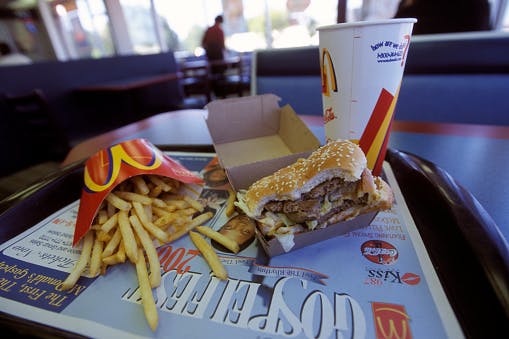
McDonald's Meal
(Getty images)

McDonald’s says meat packers are greedflating the price of beef

The fast-food giant is claiming that meat packers have colluded to artificially raise the price of beef. But the US is actually dealing with a cattle shortage.

McDonald’s didn’t want to raise the price of a Big Mac beyond recognition and turn their back on their value-focused consumer base. It was the meat-packing companies that made them do it! 

That’s what the fast-food giant is alleging in a lawsuit filed Friday, accusing nine major American meat-packers – among them Tyson, JBS, and Cargill – of artificially inflating the price of beef.

The legal spat comes at a turning point for McDonald's.

The average price of a McDonald’s menu item is up 40% since 2019. That has caused its customer base, which has come to rely on it for a cheap meal, to pull back. The Golden Arches have tried to lure them back through value meals

McDonald’s said the companies started their scheme in 2015 when their profit margins on beef began to shrink. They all agreed to reduce their slaughter volumes and reduce the supply of beef, which would push up prices and improve margins, even amid high demand, McDonald’s alleges.  

“In a competitive environment, absent a conspiracy, [the meat-packers] would compete to secure as much cattle as possible to expand profitable production,” McDonald’s alleged in its lawsuit. “Instead, [the meat-packers] continued to collude to limit slaughter volumes despite market conditions that encouraged market participants to increase, not decrease, slaughter volumes.”

But actually, there is less cattle supply than there used to be, which economists generally attribute as the reason beef prices have soared.

Meat-packers like Tyson and JBS buy cattle from farmers then process it to products sold in supermarkets or to restaurants like McDonald’s. Tyson and JBS (the only two public companies listed in the complaint) have consistently cited a shortage in the supply of cattle for their higher beef prices.

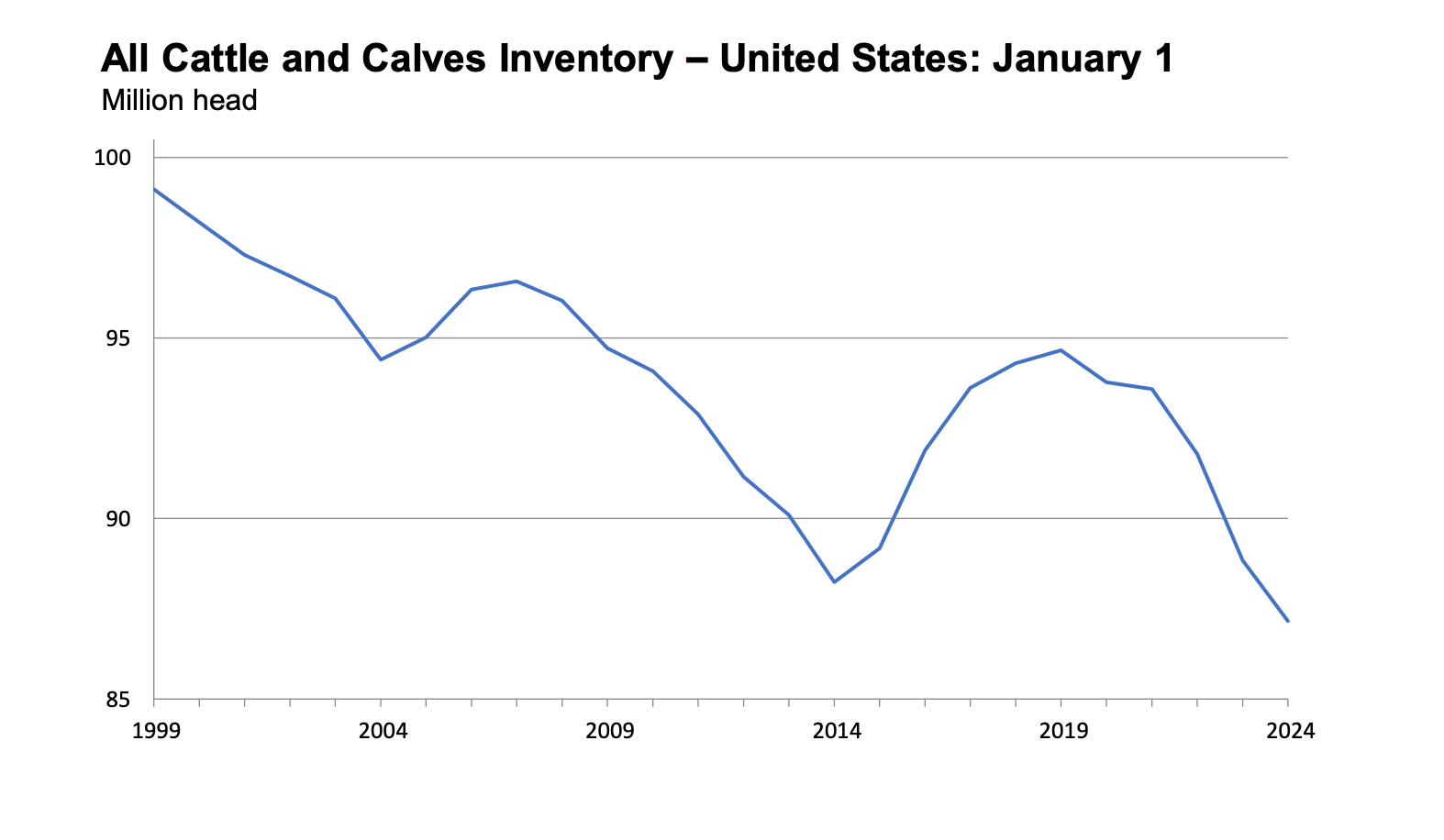
That’s in line with the American Farm Bureau Federation’s explanation, which is that beef prices have gone sky-high because cattle inventory has gone down and the market isn’t giving farmers incentives to grow their herds.

Persistent drought, high interest, and an aging farmer population are among the reasons it’s become harder for farmers to grow their herds. Cattle inventories are down to a fraction of what they were a generation ago, according to the Department of Agriculture.
Screenshot 2024-10-08 at 10.48.00 AM
Source: USDA

The handful of meat-packing companies listed in the lawsuit control the vast majority of the meat market in the US, and they have been accused of anticompetitive practices in the past.

In 2022, JBS agreed to a $52.5 million settlement in one claim from direct purchasers accusing it of price-fixing. Ranchers also unsuccessfully sued meatpackers, who they claimed artificially depressed the price they are paid for their cattle.

More Business

See all Business
business

Netflix is down amid reports it’s leading the Warner Bros. bidding war as Paramount cries foul

Netflix’s charm offensive appears to be working.

Netflix is reportedly emerging as the leader in the bidding war for Warner Bros. Discovery after second-round bids this week, edging out entertainment juggernaut rivals Comcast and Paramount Skydance.

Investors don’t appear psyched by the streaming leader’s turn of fortune: the stock is down on Thursday morning, a day after closing down nearly 5% following reports that scooping up HBO Max wouldn’t necessarily result in a big market share boost.

Paramount, which has reportedly made five bids for Warner Bros. Discovery, doesn’t love the current state of play, either. The company sent WBD a letter questioning the “fairness and adequacy” of the process, highlighting reports that WBD’s board favors Netflix and is resisting Paramount.

Any offer would be subject to regulatory approval — a fact that may have weighed against Netflix’s offer given that cofounder Reed Hastings’ politics are vocally to the left, very much at odds with the current regulatory regime. Paramount seems confident in its ability to get approval, reportedly boosting its breakup fee to $5 billion should its potential acquisition fall apart in the regulatory process.

Investors don’t appear psyched by the streaming leader’s turn of fortune: the stock is down on Thursday morning, a day after closing down nearly 5% following reports that scooping up HBO Max wouldn’t necessarily result in a big market share boost.

Paramount, which has reportedly made five bids for Warner Bros. Discovery, doesn’t love the current state of play, either. The company sent WBD a letter questioning the “fairness and adequacy” of the process, highlighting reports that WBD’s board favors Netflix and is resisting Paramount.

Any offer would be subject to regulatory approval — a fact that may have weighed against Netflix’s offer given that cofounder Reed Hastings’ politics are vocally to the left, very much at odds with the current regulatory regime. Paramount seems confident in its ability to get approval, reportedly boosting its breakup fee to $5 billion should its potential acquisition fall apart in the regulatory process.

business

Delta says the government shutdown will cost it $200 million in Q4

The 43-day government shutdown that ended last month will result in a $200 million ding for Delta Air Lines, the airline said in a filing on Wednesday.

That’s about $100,000 per shutdown-related canceled flight. (Delta previously said it canceled more than 2,000 flights due to FAA flight reductions.) When the company reports its fourth-quarter earnings, the shutdown will lop off about $0.25 per share.

Delta initially stayed calm about the shutdown, with CEO Ed Bastian stating in early October that the company was running smoothly and hadn’t seen any impacts at all. One historically long shutdown later, Delta wasn’t able to remain untouched.

The skies have since cleared, though, and Delta’s filing states that booking growth has “returned to initial expectations following a temporary softening in November.”

Delta’s shares were up over 2% as of Wednesday’s market open.

Delta initially stayed calm about the shutdown, with CEO Ed Bastian stating in early October that the company was running smoothly and hadn’t seen any impacts at all. One historically long shutdown later, Delta wasn’t able to remain untouched.

The skies have since cleared, though, and Delta’s filing states that booking growth has “returned to initial expectations following a temporary softening in November.”

Delta’s shares were up over 2% as of Wednesday’s market open.

Latest Stories

Sherwood Media, LLC produces fresh and unique perspectives on topical financial news and is a fully owned subsidiary of Robinhood Markets, Inc., and any views expressed here do not necessarily reflect the views of any other Robinhood affiliate, including Robinhood Markets, Inc., Robinhood Financial LLC, Robinhood Securities, LLC, Robinhood Crypto, LLC, or Robinhood Money, LLC.