Business
Space race: Blue Origin just won a major contract with NASA

Space race: Blue Origin just won a major contract with NASA

Artemis

On Friday, NASA announced that it had selected a group led by Jeff Bezos' space company, Blue Origin, to develop a moon lander for the Artemis program. The project will cost more than $7bn in total, with the NASA contract worth $3.5bn and Blue Origin contributing more than $3.4bn in order to build the 50-foot-tall spacecraft.

The Artemis program, led by NASA with its partners in Europe, Japan and Canada, has one main goal; to get astronauts back on the moon — a feat not accomplished since Apollo 17 more than 5 decades ago. Artemis is well underway following the successful Artemis I mission in 2022, which saw an uncrewed Orion spacecraft orbit the moon. The mission is set to be replicated in 2024, this time with a crew onboard.

Private launch

NASA's decision to award the contract to Blue Origin's team, which includes collaboration with industry giants like Lockheed Martin and Boeing, comes after two deals with Elon Musk's SpaceX for its Starship lander. Indeed, the latest deal is indicative of a more commercially collaborative NASA that has been increasing its reliance on the private sector, licensing a record-breaking 79 commercial launches last year.

SpaceX being chosen ahead of Blue Origin sparked court drama in 2021 as Bezos' company sued the US government for unfairly favoring Musk's company, claiming it would have been better to have chosen two companies. With the latest news, SpaceX — which has done more private launches than any other company — is now slated to conduct the inaugural lunar landing for Artemis in late 2025. Blue Origin crews will have to wait until 2029 for the Artemis V mission.

More Business

See all Business
The entrance of Allbirds seen from Hayes St. in San Francisco, Calif.

Allbirds, the once buzzy multibillion-dollar sneaker startup, is selling up for $39 million

That’s less than 1% of its peak market cap about four years ago.

business

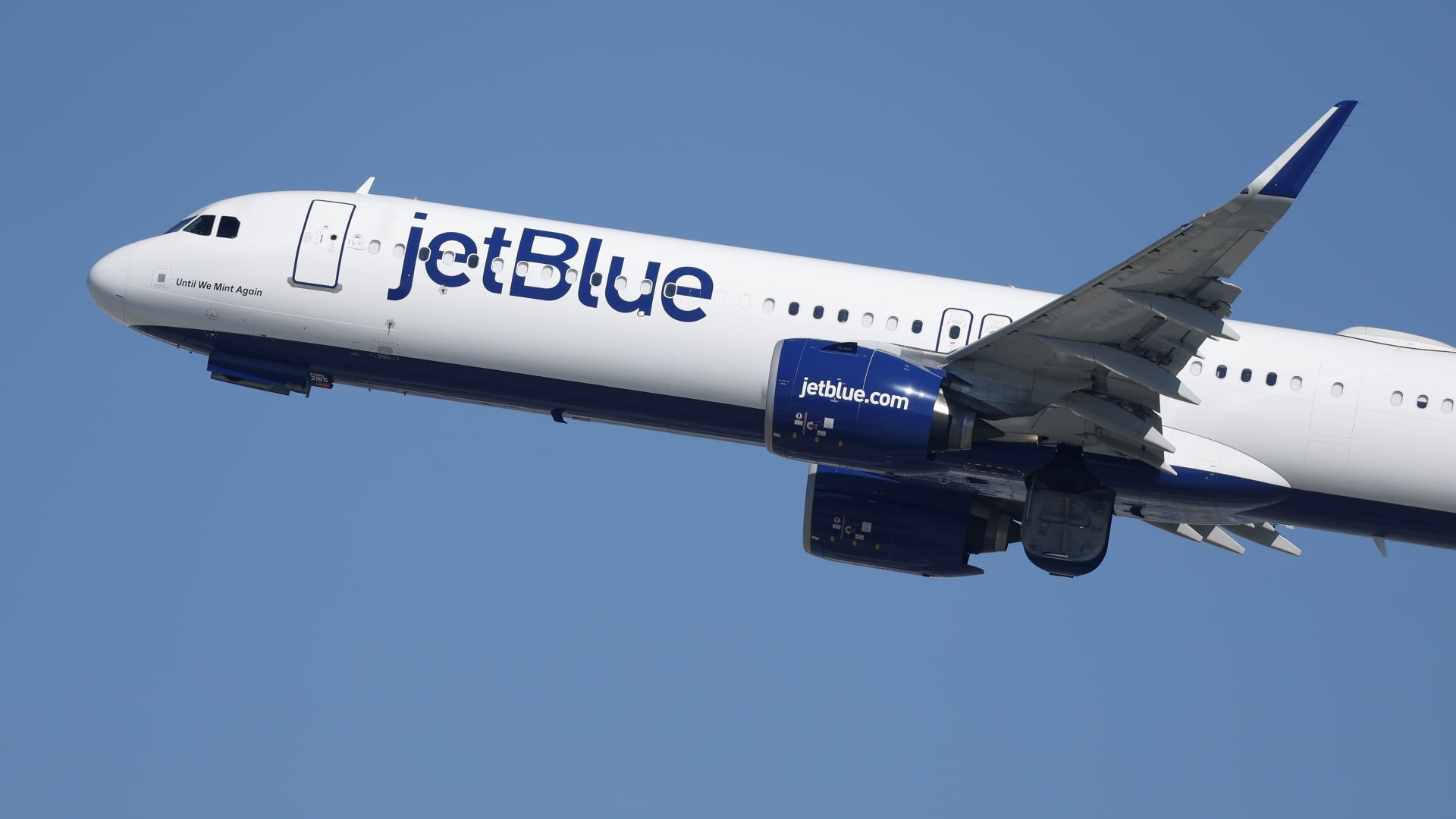
JetBlue is raising its bag fees as fuel costs squeeze airlines

JetBlue will reportedly hike its bag fees, as the cost of jet fuel continues to climb amid the war in Iran. It’s the latest example of carriers finding ways to push rising costs onto travelers.

Last week, United Airlines CEO Scott Kirby said that if fuel prices remain elevated, fares would need to rise another 20% for his airline to break even this year.

As CNBC reported, when one airline raises fees, others tend to follow.

Earlier this month, JetBlue hiked its first-quarter outlook for operating revenue per seat mile to between 5% and 7%, saying that strong Q1 demand helped “partially offset additional expenses realized from operational disruptions and rising fuel costs.” Now, the carrier appears to be making moves to further boost revenue to offset those costs.

Earlier on Monday, JetBlue rival Alaska Air lowered its Q1 profit forecast. The refining margins for the carrier’s cheapest fuel option — sourced from Singapore and representing about 20% of Alaska’s overall supply — have spiked 400% since February.

JetBlue did not immediately respond to a request for comment.

As CNBC reported, when one airline raises fees, others tend to follow.

Earlier this month, JetBlue hiked its first-quarter outlook for operating revenue per seat mile to between 5% and 7%, saying that strong Q1 demand helped “partially offset additional expenses realized from operational disruptions and rising fuel costs.” Now, the carrier appears to be making moves to further boost revenue to offset those costs.

Earlier on Monday, JetBlue rival Alaska Air lowered its Q1 profit forecast. The refining margins for the carrier’s cheapest fuel option — sourced from Singapore and representing about 20% of Alaska’s overall supply — have spiked 400% since February.

JetBlue did not immediately respond to a request for comment.

Latest Stories

Sherwood Media, LLC produces fresh and unique perspectives on topical financial news and is a fully owned subsidiary of Robinhood Markets, Inc., and any views expressed here do not necessarily reflect the views of any other Robinhood affiliate, including Robinhood Markets, Inc., Robinhood Financial LLC, Robinhood Securities, LLC, Robinhood Crypto, LLC, Robinhood Derivatives, LLC, or Robinhood Money, LLC. Futures and event contracts are offered through Robinhood Derivatives, LLC.