


Nike’s stock is dunking on the market this week as analysts anticipate new restocking cycle
The Shoe Dog is still chipping away at its inventory pile, while gently rebalancing away from direct-to-consumer.
Companies with cultural cache like Nike are often in the spotlight. Right now, a much-hyped collaboration with Kim Kardashian, a viral marketing campaign, a top-prize Premier League payout, and, you guessed it, a series of train heists amounting to almost $2 million worth of sneakers being shoe-lifted in the US last year are all keeping the Swoosh in the headlines.
But there’s another reason the company is attracting attention this week. The footwear and apparel giant’s stock has been dunking on the wider market, just as fear has set into some investors’ minds, with Nike’s stock gaining 6% over the last five days while the S&P 500 Index has shed ~3%. That’s a welcome respite for Nike shareholders, who have endured the stock plummeting by more than 50% since peaking in November 2021, with its worst day ever in June 2024.
Analysts cited by Barron’s on Monday raised their price target for Nike due to its “strong margin and earnings recovery opportunity,” off the back of the brand’s massive excess inventory pile being progressively cleared. Indeed, investors are hoping that the aggressive discounts in last year’s holiday sales will pave the way for a restocking cycle of more desirable new releases, by continuing to whittle down the mountain of unsold shoes that were once on its books.
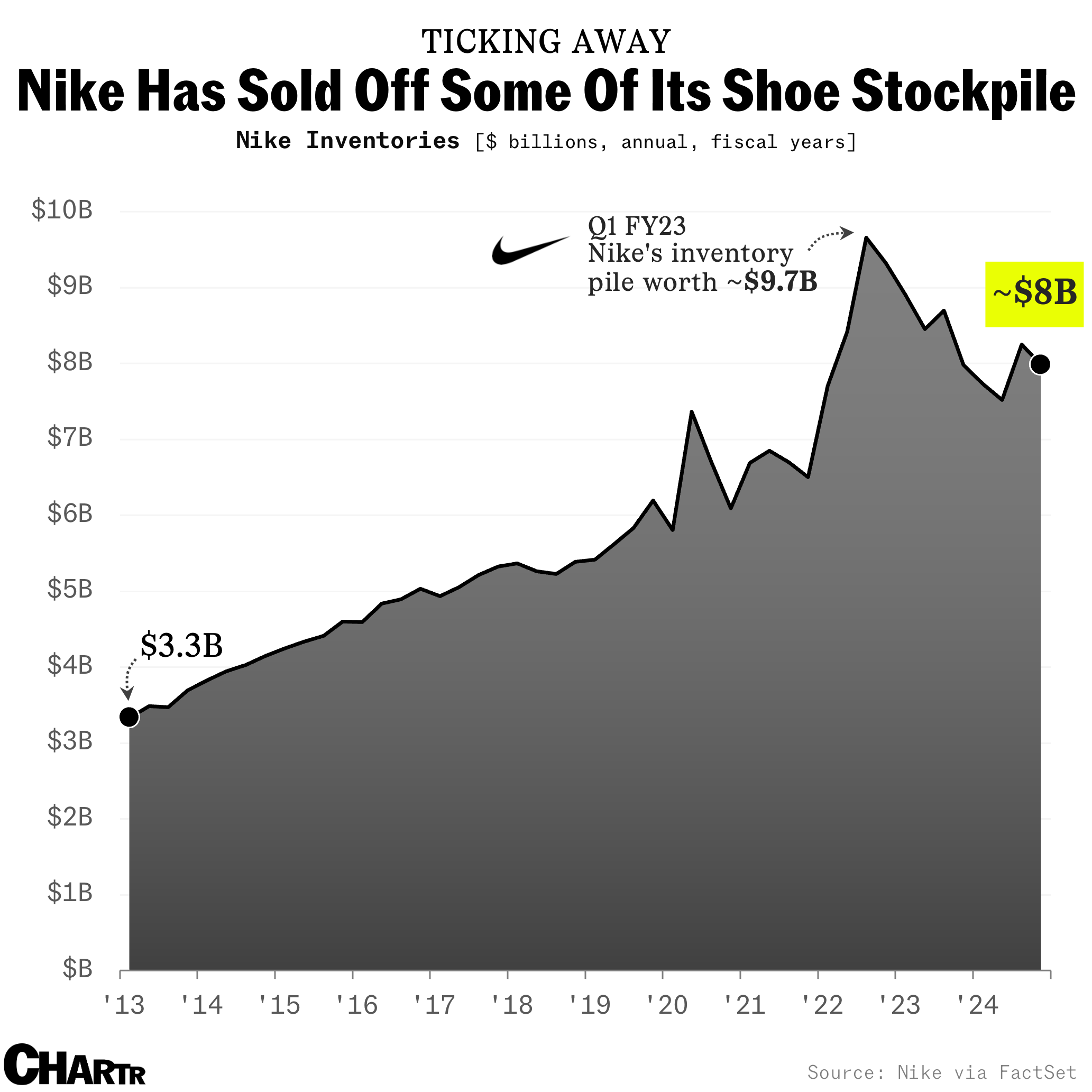
Last October, when Nike veteran Elliott Hill took the helm of the legacy sneaker brand, he had a mammoth task on his hands: not only keeping a lid on inventory — worth $8 billion at the latest count in Q2 FY25 — an issue that’s been plaguing the brand since 2022, when dwindling consumer demand for legacy designs like Jordans and Dunks flagged behind production… but also rebalancing the company’s direct-to-consumer push.
Just sell it
Back in 2017, Nike announced that it would be slashing a significant number of its retail partners to double down on its DTC offerings, which gave the brand higher profit margin than wholesalers, as well as better control over distribution. For a spell, the plan worked. DTC revenues more than doubled in the next five years, amounting to ~$19 billion in fiscal year 2022 (42% of total sales). Now, though, Nike’s direct sales have flatlined, and the company is hoping purchases made through retailers like Foot Locker and Dick’s Sporting Goods can pick up some of the slack.
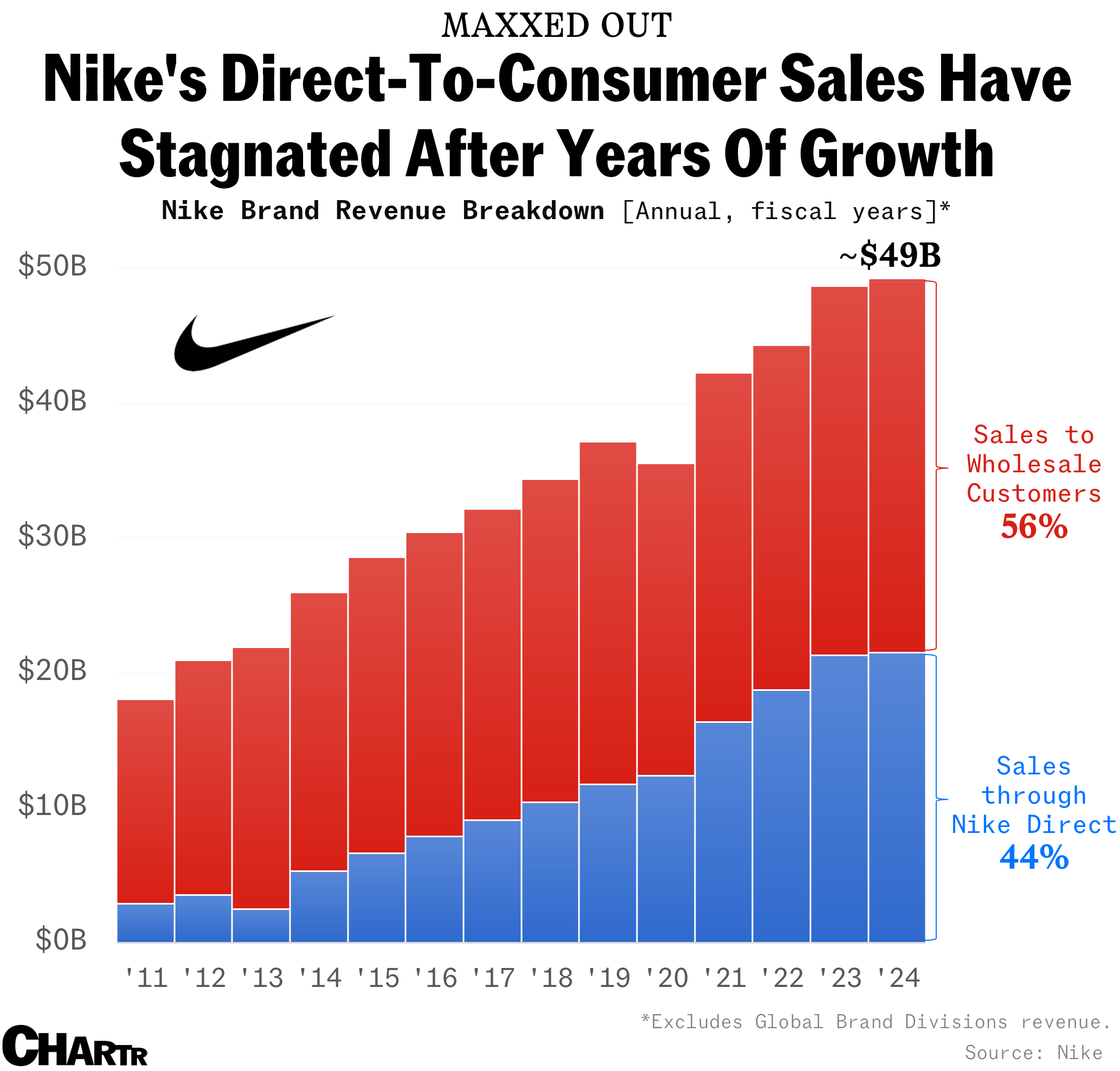
Nike failed to account for wholesale’s edge over DTC: pocket-squeezed shoppers love nothing more than a good deal, more often found away from Nike.com. With other running shoes like Hoka also catching up after a pandemic boost, the latest quarterly earnings call saw Hill outline the need for “unwavering commitment” to wholesale partners and providing a “more premium NIKE Direct” service — on top of chipping away at the inventory pile in order to deliver that all-important “newness in product.” This week, at least, investors are buying that story.


