
Business
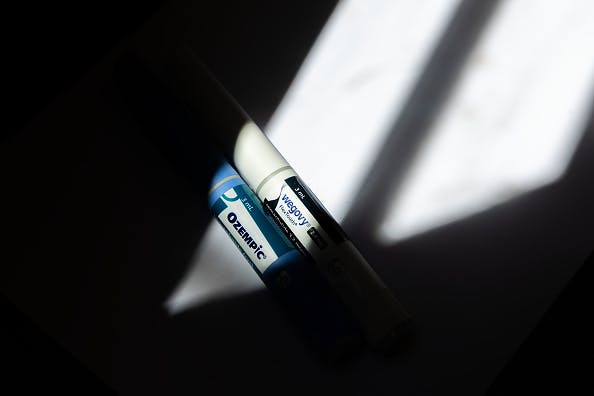
Ozempic vs Wegovy
(Steve Christo-Corbis/Getty Images)

Meds made by Novo Nordisk, Pfizer, Eli Lilly among those up for Medicare price negotiations

The 15 drugs include GLP-1s like Ozempic and Wegovy and were used by over 5 million Americans.

Ozempic is among the new slate of medications that will be subject to price negotiations for Medicare, the Department of Health and Human Services said Friday.

The Inflation Reduction Act of 2022 gave HHS the power to negotiate prices with drug manufacturers for medications covered under Medicare, a government health-insurance program for seniors. Medicare has negotiated prices for 10 drugs so far.

PhRMA, an industry trade organization, has long opposed Medicare price negotiations. In a Friday statement, the group called the price negotiations “dangerous” and said it stifles innovations. Major drugmakers have also sued the government to end the program.

The 15 drugs selected for price negotiations announced on Friday were used by 5.3 million people covered by Medicare between November 2023 and October 2024 and cost the government $41 billion, HHS said. Those medications are:

  • Ozempic; Rybelsus; Wegovy: various brand names for semaglutide, a popular weight-loss medication made by Novo Nordisk

  • Trelegy Ellipta: an inhaler made by GlaxoSmithKline. 

  • Xtandi: a medication that treats prostate cancer produced by Pfizer

  • Pomalyst: made by Bristol Myers Squibb and used to treat a blood cancer and a cancer that develops in people with HIV.

  • Ibrance: a breast-cancer treatment made by Pfizer. 

  • Ofev: a medication used to treat lung cancer made by Boehringer Ingelheim.

  • Linzess: treats IBS and constipation, made by Ironwood and AbbVie.

  • Calquence: treats certain types of blood cancers, made by AstraZeneca.

  • Austedo; Austedo XR: treats tardive dyskinesia or Huntington’s disease, made by Teva Pharmaceuticals. 

  • Breo Ellipta: an inhaler used for the maintenance treatment of asthma and chronic obstructive pulmonary disease, made by GSK. 

  • Tradjenta: used to treat Type 2 diabetes, made by Boehringer Ingelheim and Eli Lilly

  • Xifaxan: used to treat traveler’s diarrhea and IBS, made by Bausch Health. 

  • Vraylar: used to trade schizophrenia and bipolar disorder, made by AbbVie.

  • Janumet; Janumet XR: used to treat Type 2 diabetes, made by Merck & Co.

  • Otezla: used to treat certain types of psoriasis and psoriatic arthritis, made by Amgen. 

More Business

See all Business
Family Watching Baseball On Tv

Netflix and Disney+ probably only added ad-tier subscribers this year, says Morgan Stanley

As streaming prices climb, ad-free subscribers are becoming a rarity.

Aldi Grand Opening

Discount stores are having a moment in America, drawing high- and low-income consumers alike

Everyone loves a deal in 2025 — and Aldi, Walmart, and Dollar Tree are all cashing in.

Millie Giles12/17/25
business

Report: OpenAI won’t pay a dime in cash for its 3-year licensing deal for Disney IP

More financial details behind the landmark deal that will grant OpenAI three years of access to Disney intellectual property are coming out, and they’re pretty surprising.

The deal will reportedly see OpenAI pay zero dollars in licensing fees, instead compensating Disney in stock warrants. It was previously reported that Disney would invest $1 billion into OpenAI as part of the agreement.

It’s very abnormal for Disney to grant anyone access to its massive IP library without a cash payment, and the entertainment juggernaut has been known to strike down even crocheted Etsy Yodas for infringing on its turf. In its fiscal year 2025, Disney booked more than $10 billion in revenue from licensing fees across merchandising, television, and theatrical distribution.

It’s very abnormal for Disney to grant anyone access to its massive IP library without a cash payment, and the entertainment juggernaut has been known to strike down even crocheted Etsy Yodas for infringing on its turf. In its fiscal year 2025, Disney booked more than $10 billion in revenue from licensing fees across merchandising, television, and theatrical distribution.

business

Ford says it will take $19.5 billion in charges in a massive EV write-down

The EV business has marked a long stretch of losing for Ford, and today the automaker announced it will take $19.5 billion in charges tied, for the most part, to its EV division.

Ford said it’s launching a battery energy storage business, leveraging battery plants in Kentucky and Michigan to “provide solutions for energy infrastructure and growing data center demand.”

According to Ford, the changes will drive Ford’s electrified division to profitability by 2029. The company will stop making its electric F-150, the Lightning, and instead shift to an “extended-range electric vehicle” that includes a gas-powered generator.

The Detroit automaker also raised its adjusted earnings before interest and taxes outlook to “about $7 billion” from a range of $6 billion to $6.5 billion.

Ford’s write-down is one of the largest taken by a company as legacy automakers scale back on EVs, giving EV-only automakers a market share boost.

Latest Stories

Sherwood Media, LLC produces fresh and unique perspectives on topical financial news and is a fully owned subsidiary of Robinhood Markets, Inc., and any views expressed here do not necessarily reflect the views of any other Robinhood affiliate, including Robinhood Markets, Inc., Robinhood Financial LLC, Robinhood Securities, LLC, Robinhood Crypto, LLC, or Robinhood Money, LLC.