Business
GettyImages-1817371209
(Getty Images)
Ay Ay Ay

Number of S&P 500 companies mentioning AI hits record

Companies of all kinds are finding ways to talk about AI on earnings calls.

Rani Molla

AI AI AI — it’s all big companies can talk about these days. About 40% of S&P 500 discussed AI on their earnings calls this past quarter — up from 1% five years ago, according to data from FactSet.

That’s no surprise as on Wall Street right now, AI = money. Companies “pursuing or enabling” AI technology have outperformed the equal weight S&P 500 by nearly 20 percentage points this year, according to an analysis by Goldman Sachs. What’s doing even better? Energy companies, which are riding high off of AI’s immense energy needs.

Mentions were most common among information tech, communication services, and energy companies, according to Goldman. But it’s certainly not isolated to those industries. Companies of all kinds are getting into the AI mix, including consumer discretionary, financial, industrial, and real estate.

“Companies primarily cite AI as an efficiency gain rather than a revenue driver,” according to a note from Morgan Stanley. "Early beneficiaries from an efficiency standpoint are primarily in Software and Internet though the future opportunity spans a wide range of industries.” So even if AI is not a direct part of their business, companies want to use it internally to be more productive.

That means pretty much every other major company is leaning into AI. Facebook belabored how the metaverse is actually AI. Chip maker Nvidia discussed the many ways AI’s helping them mint money. Walmart mentioned how AI is improving product searches and letting people exit Sam’s Club without waiting in line to get their receipts checked. Yum! Brands apparently has “more than 40 AI initiatives in progress across the company,” including voice AI at Taco Bell drive-thrus.

More Business

See all Business
business

Paramount reportedly receives $24 billion from Gulf funds to back its Warner Bros. takeover

Three Middle East sovereign wealth funds have agreed to back Paramount’s takeover of Warner Bros. Discovery to the tune of roughly $24 billion, according to Wall Street Journal reporting.

The company’s triumph over Netflix in the bidding war came thanks in part to financial backing from Oracle cofounder Larry Ellison, billionaire father of Paramount CEO David Ellison.

Saudi Arabia’s PIF, which last year led the $55 billion deal to take Electronic Arts private, will provide about $10 billion in the deal. The Qatar Investment Authority and Abu Dhabi’s L’imad Holding Co. is also involved.

According to the WSJ, the funds will not receive voting rights in the combined Paramount-Warner company. Those working on the deal don’t expect the Gulf funds’ involvement to spark any additional regulatory reviews.

The company’s triumph over Netflix in the bidding war came thanks in part to financial backing from Oracle cofounder Larry Ellison, billionaire father of Paramount CEO David Ellison.

Saudi Arabia’s PIF, which last year led the $55 billion deal to take Electronic Arts private, will provide about $10 billion in the deal. The Qatar Investment Authority and Abu Dhabi’s L’imad Holding Co. is also involved.

According to the WSJ, the funds will not receive voting rights in the combined Paramount-Warner company. Those working on the deal don’t expect the Gulf funds’ involvement to spark any additional regulatory reviews.

The entrance of Allbirds seen from Hayes St. in San Francisco, Calif.

Allbirds, the once buzzy multibillion-dollar sneaker startup, is selling up for $39 million

That’s less than 1% of its peak market cap about four years ago.

Tom Jones3/31/26
business

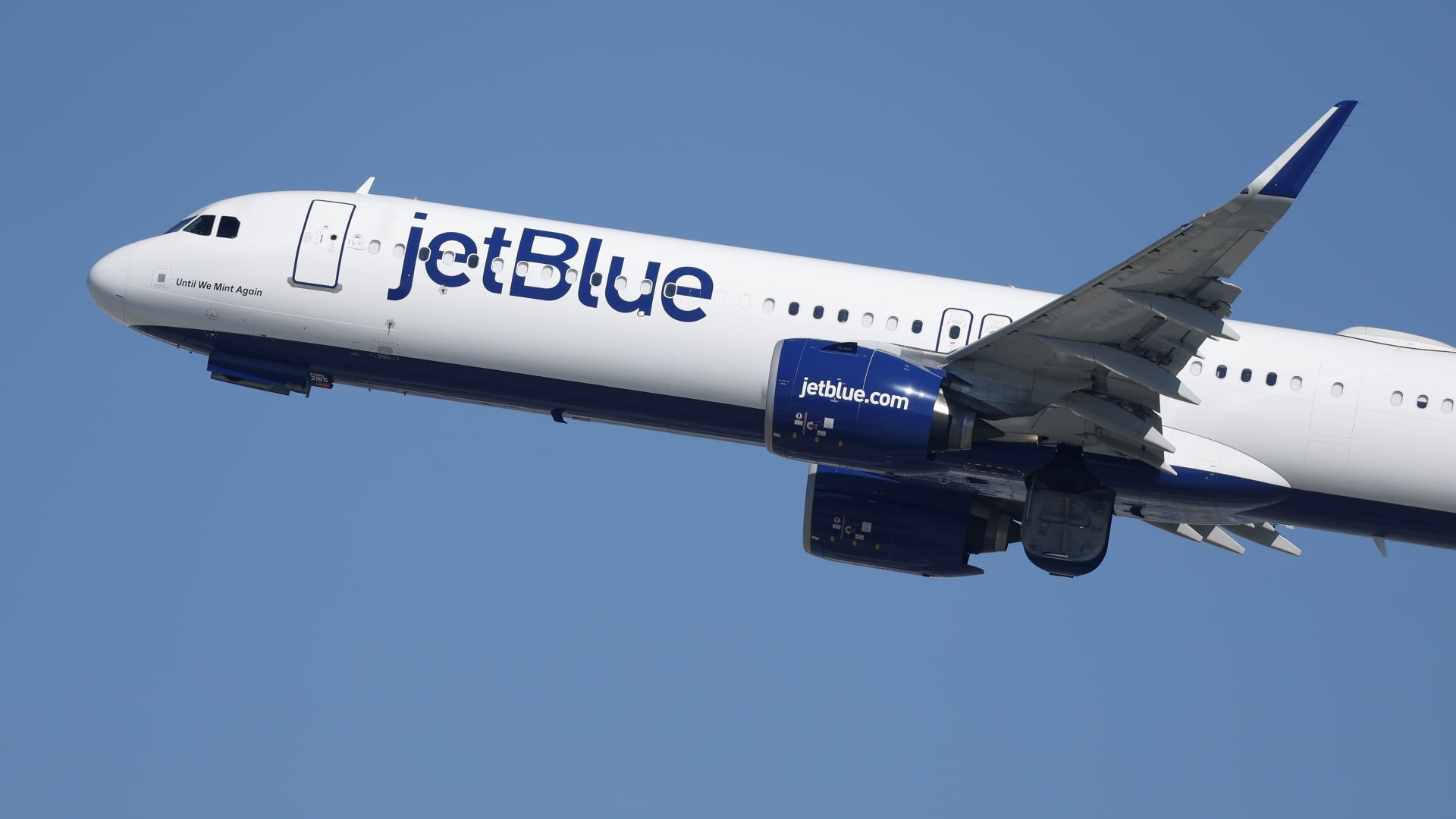
JetBlue is raising its bag fees as fuel costs squeeze airlines

JetBlue will reportedly hike its bag fees, as the cost of jet fuel continues to climb amid the war in Iran. It’s the latest example of carriers finding ways to push rising costs onto travelers.

Last week, United Airlines CEO Scott Kirby said that if fuel prices remain elevated, fares would need to rise another 20% for his airline to break even this year.

As CNBC reported, when one airline raises fees, others tend to follow.

Earlier this month, JetBlue hiked its first-quarter outlook for operating revenue per seat mile to between 5% and 7%, saying that strong Q1 demand helped “partially offset additional expenses realized from operational disruptions and rising fuel costs.” Now, the carrier appears to be making moves to further boost revenue to offset those costs.

Earlier on Monday, JetBlue rival Alaska Air lowered its Q1 profit forecast. The refining margins for the carrier’s cheapest fuel option — sourced from Singapore and representing about 20% of Alaska’s overall supply — have spiked 400% since February.

JetBlue did not immediately respond to a request for comment.

As CNBC reported, when one airline raises fees, others tend to follow.

Earlier this month, JetBlue hiked its first-quarter outlook for operating revenue per seat mile to between 5% and 7%, saying that strong Q1 demand helped “partially offset additional expenses realized from operational disruptions and rising fuel costs.” Now, the carrier appears to be making moves to further boost revenue to offset those costs.

Earlier on Monday, JetBlue rival Alaska Air lowered its Q1 profit forecast. The refining margins for the carrier’s cheapest fuel option — sourced from Singapore and representing about 20% of Alaska’s overall supply — have spiked 400% since February.

JetBlue did not immediately respond to a request for comment.

Latest Stories

Sherwood Media, LLC produces fresh and unique perspectives on topical financial news and is a fully owned subsidiary of Robinhood Markets, Inc., and any views expressed here do not necessarily reflect the views of any other Robinhood affiliate, including Robinhood Markets, Inc., Robinhood Financial LLC, Robinhood Securities, LLC, Robinhood Crypto, LLC, Robinhood Derivatives, LLC, or Robinhood Money, LLC. Futures and event contracts are offered through Robinhood Derivatives, LLC.