Business
The economics of cruises

The largest cruise company in the world is back in the black, but profit margins aren’t quite what they used to be

On Monday, the world’s largest cruise company, Carnival Corp., announced that it’s retiring one of its flagship enterprises — P&O Cruises Australia — and folding it into the wider Carnival Cruises brand.

The boats that rocked

Carnival said the move should help further optimize “the company's brand portfolio creating operational efficiencies”... which is just the kind of corporate jargon that investors love. In turn, the company’s shares rose 6% yesterday amidst a strong day for cruise stocks in general — an industry that, after nearly collapsing 4 years ago, has sailed back into profitable territory and is seeking to cut costs wherever it can.

Indeed, 2023 was the first fiscal year since the pandemic that Carnival Corp. reported an operating profit (~$2B), after accruing cumulative operating losses of more than $20B between 2020-2022. So, if you were one of Carnival’s 12.5 million passengers last year, where exactly did your money go?
The economics of a cruise

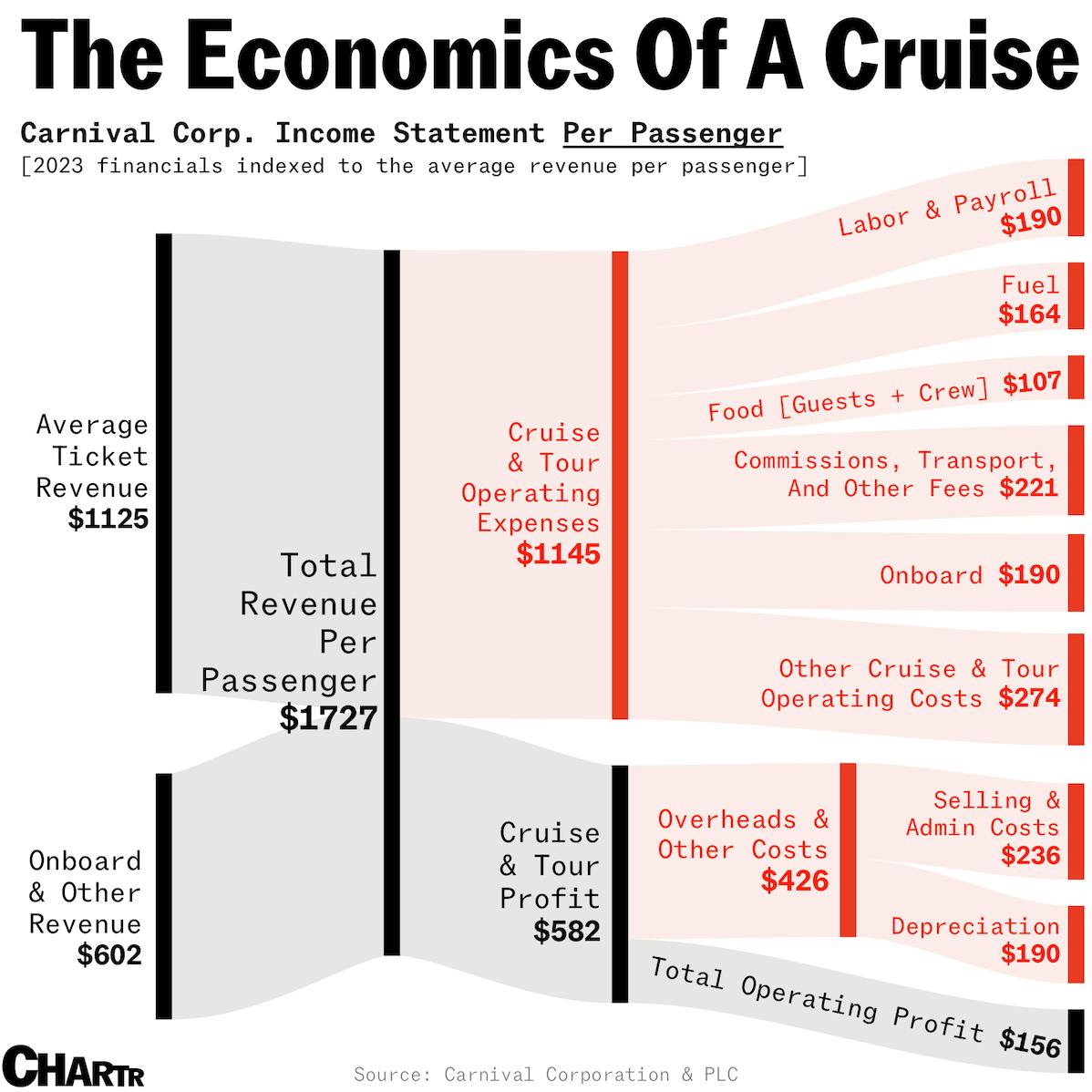
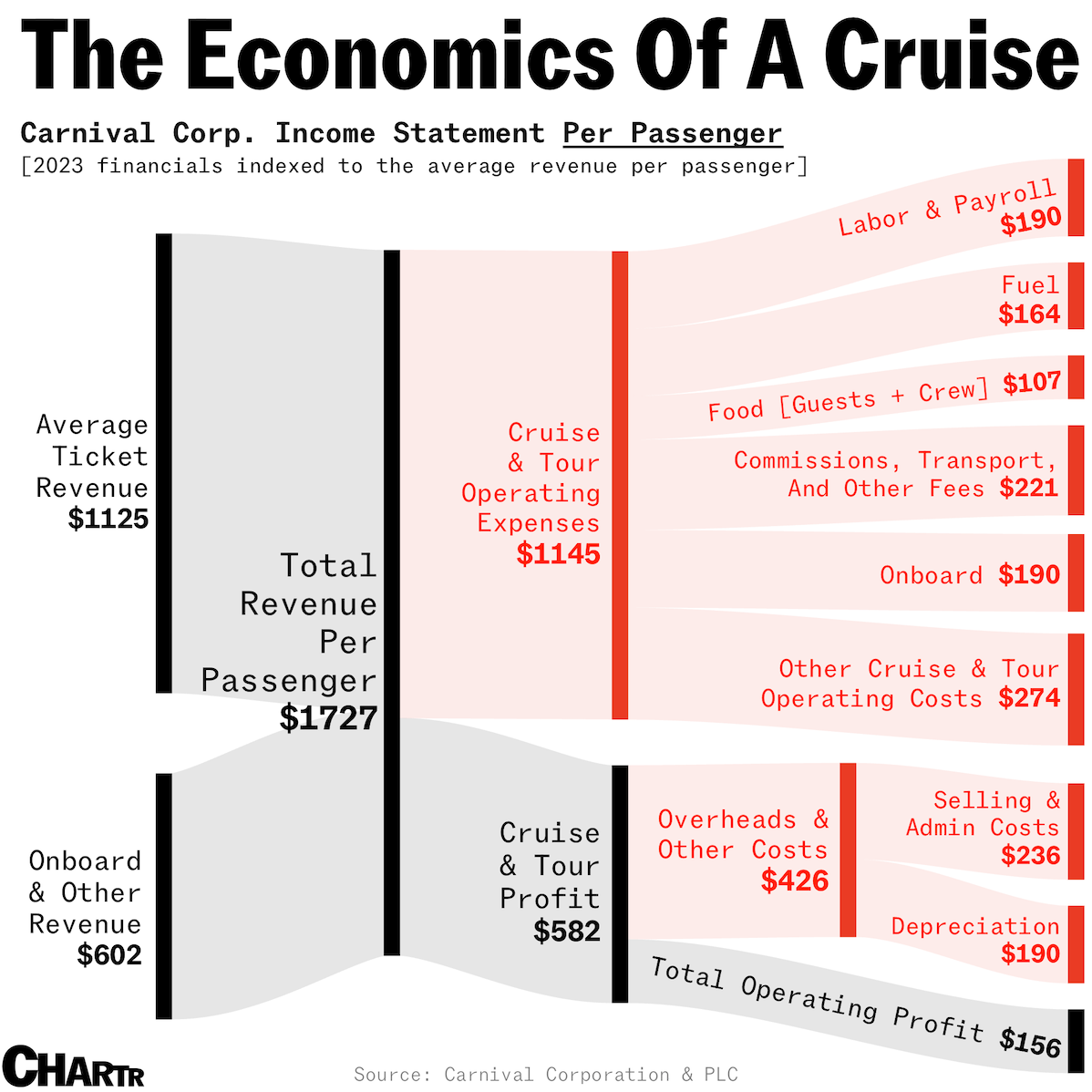
Per company filings, the average ticket in 2023 would have cost about $1,125. But your wallet doesn’t get off that lightly, with Carnival banking another $600 or so per customer on top of that thanks to excursions, food, drinks, casino games, retail sales, spa treatments, laundry services, internet access, and other onboard concessions.

Actually operating the cruise and tours cost the company $1,145 in our example, leaving a healthy $582 left to cover overheads. Of course, one major cost we’ve ignored until now is the ships themselves. That shows up predominantly in “depreciation”, with the company spreading the cost of its ships over a 30-year lifespan. So, what’s Carnival left with? About $150 out of the original $1,700, or a 9% margin. Company execs will be hoping that cutting less profitable routes will get it back to the 15-16% margins that were common pre-pandemic.

More Business

See all Business
The entrance of Allbirds seen from Hayes St. in San Francisco, Calif.

Allbirds, the once buzzy multibillion-dollar sneaker startup, is selling up for $39 million

That’s less than 1% of its peak market cap about four years ago.

Tom Jones3/31/26
business

JetBlue is raising its bag fees as fuel costs squeeze airlines

JetBlue will reportedly hike its bag fees, as the cost of jet fuel continues to climb amid the war in Iran. It’s the latest example of carriers finding ways to push rising costs onto travelers.

Last week, United Airlines CEO Scott Kirby said that if fuel prices remain elevated, fares would need to rise another 20% for his airline to break even this year.

As CNBC reported, when one airline raises fees, others tend to follow.

Earlier this month, JetBlue hiked its first-quarter outlook for operating revenue per seat mile to between 5% and 7%, saying that strong Q1 demand helped “partially offset additional expenses realized from operational disruptions and rising fuel costs.” Now, the carrier appears to be making moves to further boost revenue to offset those costs.

Earlier on Monday, JetBlue rival Alaska Air lowered its Q1 profit forecast. The refining margins for the carrier’s cheapest fuel option — sourced from Singapore and representing about 20% of Alaska’s overall supply — have spiked 400% since February.

JetBlue did not immediately respond to a request for comment.

As CNBC reported, when one airline raises fees, others tend to follow.

Earlier this month, JetBlue hiked its first-quarter outlook for operating revenue per seat mile to between 5% and 7%, saying that strong Q1 demand helped “partially offset additional expenses realized from operational disruptions and rising fuel costs.” Now, the carrier appears to be making moves to further boost revenue to offset those costs.

Earlier on Monday, JetBlue rival Alaska Air lowered its Q1 profit forecast. The refining margins for the carrier’s cheapest fuel option — sourced from Singapore and representing about 20% of Alaska’s overall supply — have spiked 400% since February.

JetBlue did not immediately respond to a request for comment.

Latest Stories

Sherwood Media, LLC produces fresh and unique perspectives on topical financial news and is a fully owned subsidiary of Robinhood Markets, Inc., and any views expressed here do not necessarily reflect the views of any other Robinhood affiliate, including Robinhood Markets, Inc., Robinhood Financial LLC, Robinhood Securities, LLC, Robinhood Crypto, LLC, Robinhood Derivatives, LLC, or Robinhood Money, LLC. Futures and event contracts are offered through Robinhood Derivatives, LLC.