Grab a tray
ORDER UP
Why the decline of the American shopping mall means we’re losing the ultimate brand incubator
From Chick-fil-A to Panda Express to Auntie Anne’s, some of the best-known American food brands got their starts in malls.
In 2006, Michael Scott let the whole world know about his favorite New York pizza joint.
“I’m gonna go get me a New York slice!” the regional manager for Dunder Mifflin’s Scranton branch declared as he beelined for a New York City Sbarro in an episode of “The Office.”
In many ways, the dig at Sbarro — the oily stalwart of the mall food court and a frequent punchline among pizza purists — was an indictment of mall culture itself. Malls were relics from an older time, inauthentic and déclassé.
Just a year later, 2007 would be the first year that a new mall didn’t open in the United States, breaking an annual streak that went back to the 1950s. Foot traffic declined, mall mergers gave way to department-store closings that deprived malls of their anchor tenants, and the 2008 financial crisis wiped the floor with the US economy. The skylit commercial hubs that Joan Didion once called “toy garden cities in which no one lives but everyone consumes” were on the outs.
But the rise and fall of malls provided an incredible proving ground for some of America’s most well-known restaurant brands, from Chick-fil-A to Panda Express to Sbarro to Orange Julius. Wherever there was a mall, there was also a food court teeming with hungry shoppers and employees.
The lives of mall food-court brands — whether popular, good, or just carb-rich and ubiquitous — are a fascinating saga on their own. For a few, bright, temperature-controlled decades, the chains that satiated hangry moments during bouts of retail therapy held a special status in the national culinary culture.
Sbarro, like many of its brethren in the food court, adapted its menu and operations to appeal to America’s mall-going hordes. Sbarro’s origins as an authentic Italian enterprise were once unimpeachable, growing out of a classic mom-and-pop salumeria founded by Italian immigrants in Bensonhurst, Brooklyn, in the ’50s. Only once it set up shop alongside ice rinks and mall Santas did Sbarro begin to trim its offerings from intricate Italian staples to quick slices smoldering under heat lamps for budget-minded diners on the go.
As malls began to cater to wealthier clientele and American palates grew slightly more sophisticated, Sbarro and some of its peers seemed to outlive their relevance. Even the Sbarro in Midtown Manhattan made famous by Michael Scott has long since served its last garlic knot.
Still, in other cases, the brands that made their names beyond the faint signature scent of an Abercrombie & Fitch outpost have become hits that even the most embittered mall rat would have to respect.
The launching pad
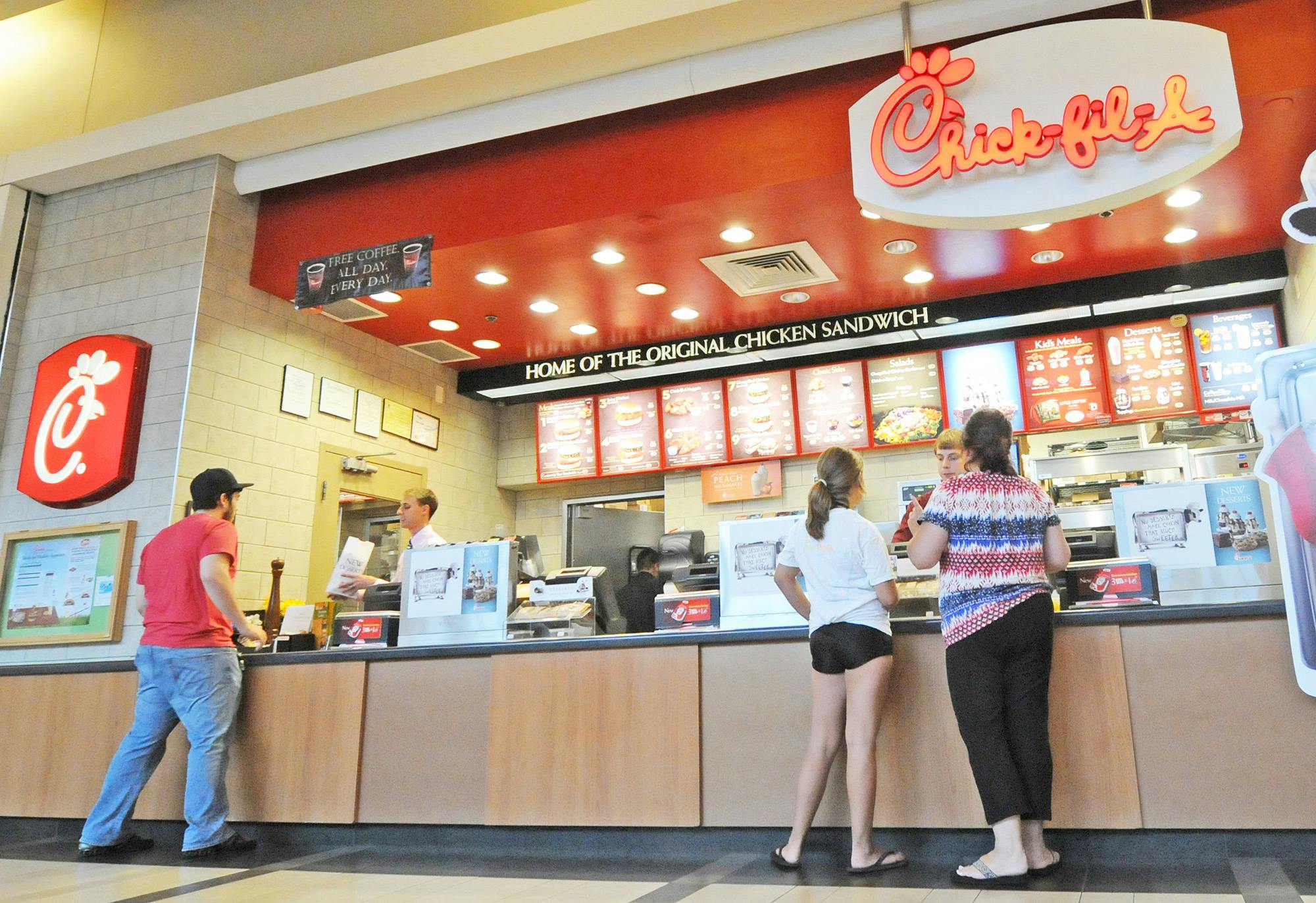
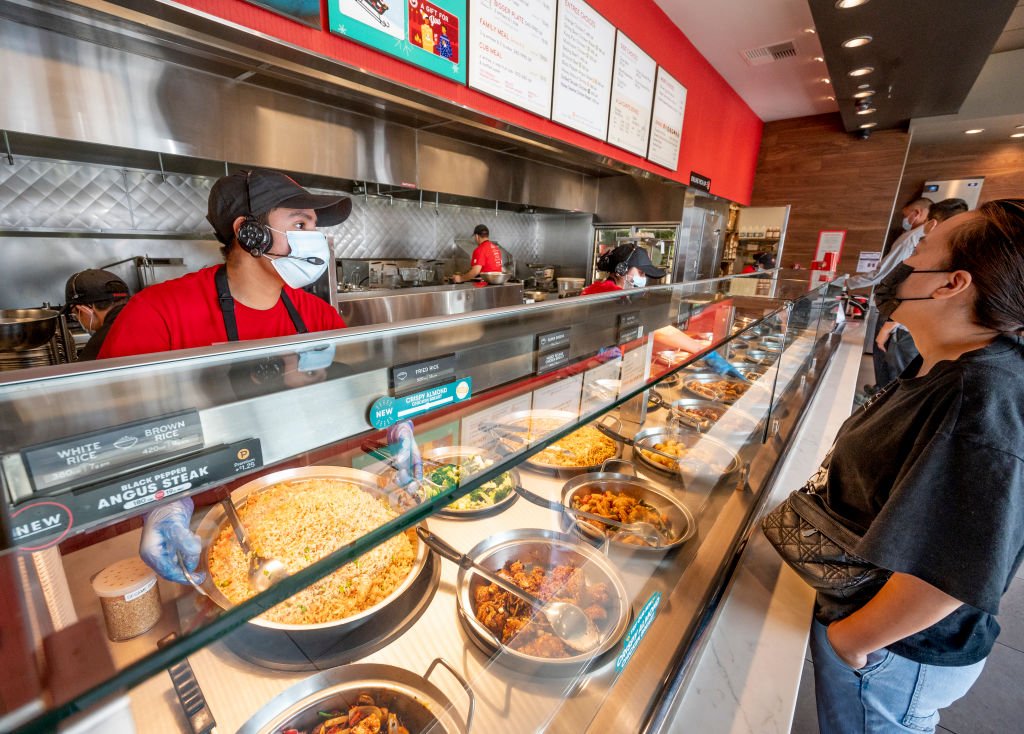
For all the easy jokes about the demise of mall brands (RIP Gadzooks), its success stories are undeniable, especially from the food court. Lost in modern business lore is the fact that Panda Express, the largest Chinese-themed food chain in America, and Chick-fil-A, almost certainly the most successful restaurant story of the past decade, first sold their orange chicken and waffle fries, respectively, in malls.
“All the salespeople and store employees that worked all day in the mall didn’t have anywhere to eat,” one Chick-fil-A executive said of founder Truett Cathy’s food-court strategy. “They had the space, he saw a need, but it was a challenge.”
Using the food court also offered a low-risk starting point for two small, family-run businesses with limited access to capital. For better or worse, Panda Express would serve as the introduction to Chinese-inspired dishes for millions of Americans.
After 14 years, Panda Express would open its first stand-alone restaurant, and by its 34th birthday in 2017, only 2% of its stores operated out of malls.
Meanwhile, over the decades, Chick-fil-A slowly built up brand awareness through various malls across the Southeast and wouldn’t open its first freestanding restaurant until 1986, nearly two decades after its first outlet opened in Atlanta’s Greenbriar Mall in 1967.
Fittingly enough, the company celebrated the opening of its landmark 3,000th store last year, just months after its very first location closed for good. And now, after its humble beginnings, it’s getting into streaming.
The food court’s early emperor, and a beloved Auntie
Like Sbarro, Orange Julius has a history that predates the proliferation of malls in the US. Originally a juice stand founded in 1920s California, Orange Julius became known for its patented drink, which was less acidic than orange juice and took the nation by storm decades before the smoothie craze unleashed sugar bombs on an unsuspecting population. The franchise operated hundreds of stand-alone stores and appeared at exhibitions, including the 1964 World’s Fair, where the Orange Julius served as the official drink.
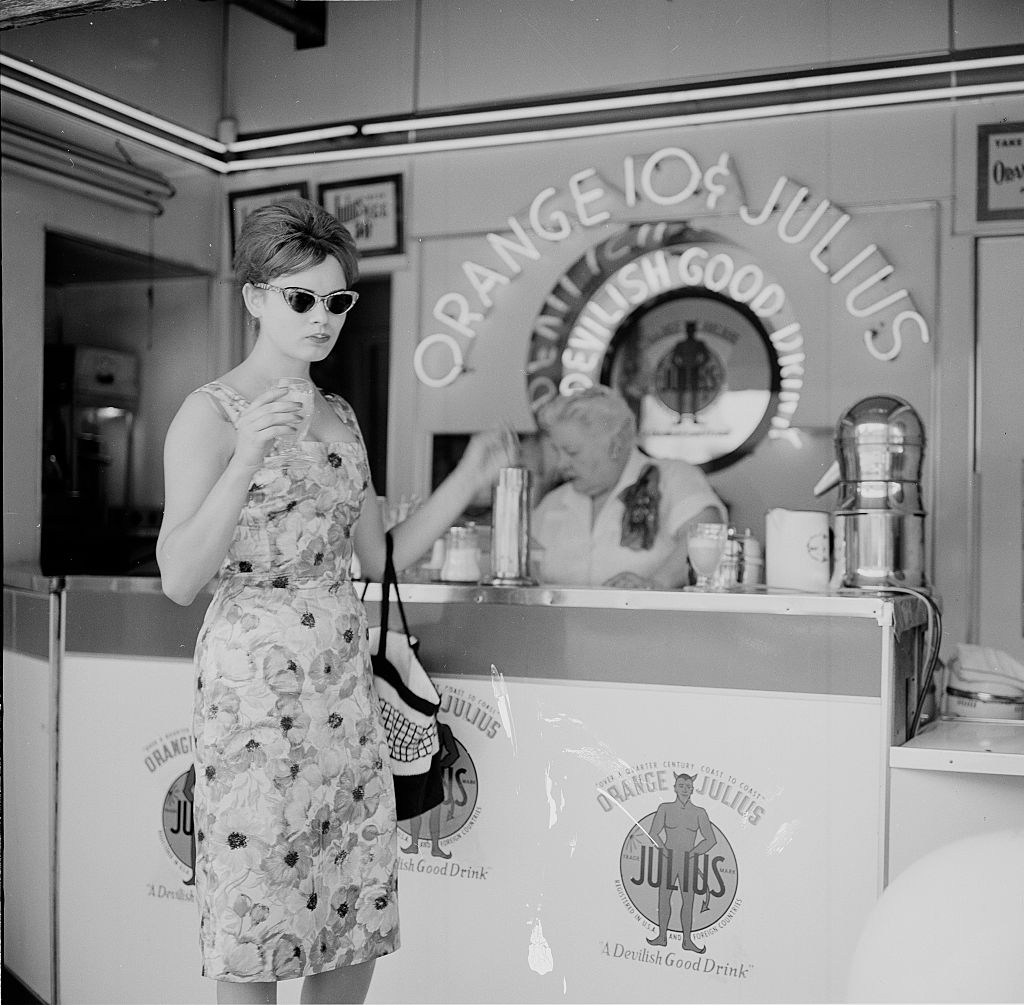
Ultimately, though, the era of corporate concentration beckoned. In 1967, the company was acquired by the ominously named International Industries, which brought Orange Julius outlets to malls and other nontraditional retail spaces with low overhead, making the drink synonymous with mall walking.
In the food-industry shakeout of the ’80s, Orange Julius became part of Warren Buffett’s Dairy Queen empire, which eventually absorbed the company entirely and blended Orange Julius’ drinks into DQ menus. Still, the association between malls and the nominally healthy Julius drinks lives on among nostalgists. When a teaser for the third season of the 1980s-themed Netflix hit “Stranger Things” came out, observers were quick to exult in the appearance of an Orange Julius at a recreated mall.
Where Sbarro and Orange Julius narrowed their offerings to fit the Spartan rhythms of the mall food court, Auntie Anne’s Pretzels and Cinnabon were both created in the mid-’80s with those very tenets in mind. Auntie Anne’s operated out of a few bustling farmer’s markets in the Amish communities of Pennsylvania before eventually twisting its way into malls. Cinnabon, on the other hand, skipped most of the aw-shucks stuff and opened directly into a mall in Seattle.
What made both companies a natural fit for the heyday of American malls — not to mention airports, train stations, rest stops, travel plazas, and hospitals — was their basic commissary model of a few ovens and prep stations. Pretzels and cinnamon buns not only demand a smaller footprint than more complex restaurant concepts, but they’re easily scalable as concepts around the world.
As American mall culture has waned, both Auntie Anne’s and Cinnabon have not only expanded abroad, but moved beyond their core food-court roots in the US market. Auntie Anne’s has experimented with freezer-aisle offerings, crossover items, food trucks, and tiny stores in urban centers — including co-branded outposts with Cinnabon.
“There’s about 1,200 malls. We’re in 650 of them, give or take,” Auntie Anne’s Pretzels CEO Heather Neary said in 2018. “But it’s time to look at what’s next for the brand.”
Adam Chandler is a journalist based in New York and the author of “Drive-Thru Dreams.” His next book, “99% Perspiration,” will be published in January 2025.