Business
President Biden Signs Bill Forcing The Sale Of TikTok
The TikTok app is displayed on an iPhone screen (Joe Raedle/Getty Images)
TrumpTok

What happens to TikTok under Trump?

Trump’s election victory just *might* bode well for TikTok based on his opinion of “Zuckerschmuck.”

Jack Raines

One of the more interesting stories to watch as Trump prepares to reenter the Oval Office is the fate of TikTok in the United States.

In April, President Biden signed a law that would ban Chinese-owned TikTok unless the app were to be sold within nine months, with the possibility of a three-month extension to find a buyer. As it stands, TikToks deadline is January 19, 2025.

The reason for the ban, which received bipartisan support, is national security. US government officials are concerned that the Chinese government could access user data through the social video app, pointing to laws that allow the Chinese government to demand data from Chinese companies.

The US federal government isnt the first group looking to limit or eliminate TikTok within its jurisdiction, either. India banned the app in 2020, the governments of the UK, Australia, Canada, the EU, France, New Zealand, and 30 US states have banned it from government devices, and the BBC advised staff to remove the app from their corporate phones, too.

Ironically, Biden wasnt the first US president to attempt to ban TikTok. His predecessor (and successor), Donald Trump, attempted to ban TikTok on national-security concerns as well in August 2020, but he was ultimately overruled by a US judge that December.

You would think, given his prior attempt to ban the app, that Trump would gladly embrace this second opportunity to do so. However, Trumps current stance on TikTok isnt that straightforward.

In March, Trump flipped the script and spoke out against banning TikTok, posting on Truth Social, “If you get rid of TikTok, Facebook and Zuckerschmuck will double their business. I don’t want Facebook, who cheated in the last Election, doing better. They are a true Enemy of the People!

While Trumps personal vendetta with Meta and Zuckerberg could have played a role in the reversal of his stance toward TikTok, another factor to watch is his connection to Republican mega-donor Jeff Yass.

Yass, a billionaire financier who founded Susquehanna International Group, has historically been an anti-Trump guy. In June 2023, he donated $10 million to the super PAC arm of Club for Growth, a pro-business, anti-tax organization that was looking for an alternative to Trump for the Republican nomination. Yass also donated $2.5 million directly to a state-level PAC supporting Florida governor Ron DeSantis.

However, in 2024, Yass political calculus began to change. In 2012, Susquehanna invested a few million dollars in ByteDance, the Chinese parent company of TikTok, a stake thats now worth an estimated $40 billion. That stake is now in jeopardy, and he would suffer a multibillion-dollar hit if a TikTok ban, or even forced divestment, were to materialize.

Bidens TikTok ban happened to coincide with Trump retaking the Republican ticket, putting Yass and Trump on a collision course.

A week before Trumps post about TikTok and Facebook, he met with Yass at a Club for Growth donor event in Florida, where Trump referred to Yass as fantastic. Trump later denied discussing TikTok with Yass, but Vanity Fair reported that Yass team had privately been lobbying Trumps team to defend TikTok.

Had Biden been reelected or Harris won, a TikTok ban seemed all but inevitable, even as public support has faded for the ban. However, with Trump poised to return to the White House in January, TikTok might have a chance to stick around. Trumps about-face, whether driven by his vendetta against Meta, his connection to Yass, or some combination of the two, has given the app some breathing room.

More Business

See all Business
business
Tom Jones

Prime Day is here again and Amazon’s subscription service has never been more popular

Well, it’s that time of year again: many have made their wish lists, people are scraping together the money they’ve saved to pick out a perfect gift, some are presumably leaving out refreshments for the weary delivery drivers and, more and more, drones.

It’s Amazon Prime Day — meaning that it’s the second day of the four-day promotional event that Amazon still calls Prime Day — of course, and it’s even come early this year, with the company bringing the period into late June from July, when it’s been traditionally held for the last five years.

The Prime Age

Alongside the eyes and endless clicks that the arbitrary stream of listicles on “The Best Prime Day Deals” that almost every media outlet pours into, Amazon will also be cheering the fact that there’s now more Prime users than ever before to devour the retailer and its sellers’ sometimes-contested “discounts.” Indeed, according to the latest annual estimates from Consumer Intelligence Research Partners (CIRP), there were just over 200 million American shoppers using Amazon’s massive subscription service at the end of 2025.

business

Electronic Arts launches a platform to put more ads in its games

Video game publishing giant EA launched a new platform on Monday designed to make the process of selling immersive ad space in its popular games easier.

The company says the platform, called EA Advertising, allows brands to “integrate directly into gameplay through dynamic, real-time placements, from stadium signage to custom in-game content.”

More so than other studios, EA has incorporated advertising into its most popular titles. As Kotaku points out, the company’s ad efforts stretch as far back as 2006. Several of its sports franchises already feature partnerships with brands like Visa, Lowe’s, Red Bull, and PepsiCo.

In-game advertising hasn’t exactly been embraced by fans, but industry experts expect it to ramp up as companies seek more revenue to offset higher games budgets and surging memory costs. EA rival Take-Two has taken a different approach, with CEO Strauss Zelnick recently saying the company was “not at risk of doing brand partnerships” in the forthcoming “Grand Theft Auto VI,” and that ads in full-price games seems “unfair.”

The $55 billion deal to take EA private, led by Saudi Arabia’s Public Investment Fund, is set to close at the end of this month. Being the largest leveraged buyout in history, EA will likely look for more ways to boost revenue to cover interest payments.

More so than other studios, EA has incorporated advertising into its most popular titles. As Kotaku points out, the company’s ad efforts stretch as far back as 2006. Several of its sports franchises already feature partnerships with brands like Visa, Lowe’s, Red Bull, and PepsiCo.

In-game advertising hasn’t exactly been embraced by fans, but industry experts expect it to ramp up as companies seek more revenue to offset higher games budgets and surging memory costs. EA rival Take-Two has taken a different approach, with CEO Strauss Zelnick recently saying the company was “not at risk of doing brand partnerships” in the forthcoming “Grand Theft Auto VI,” and that ads in full-price games seems “unfair.”

The $55 billion deal to take EA private, led by Saudi Arabia’s Public Investment Fund, is set to close at the end of this month. Being the largest leveraged buyout in history, EA will likely look for more ways to boost revenue to cover interest payments.

business

JM Smucker says it sold $1 billion worth of Uncrustables in FY2026

After years of booming sandwich sales, JM Smucker has finally earned a billion-dollar crust.

On Tuesday, the company reported results for fiscal year 2026, highlighting better-than-expected profits driven by higher prices for coffee and sweet baked goods. However, at another point on the earnings call, CEO Mark Smucker pointed to one particularly jammy figure: in line with previous forecasts, the company sold $1 billion worth of its (almost always) crustless sandwiches, Uncrustables, in the last year alone.

business

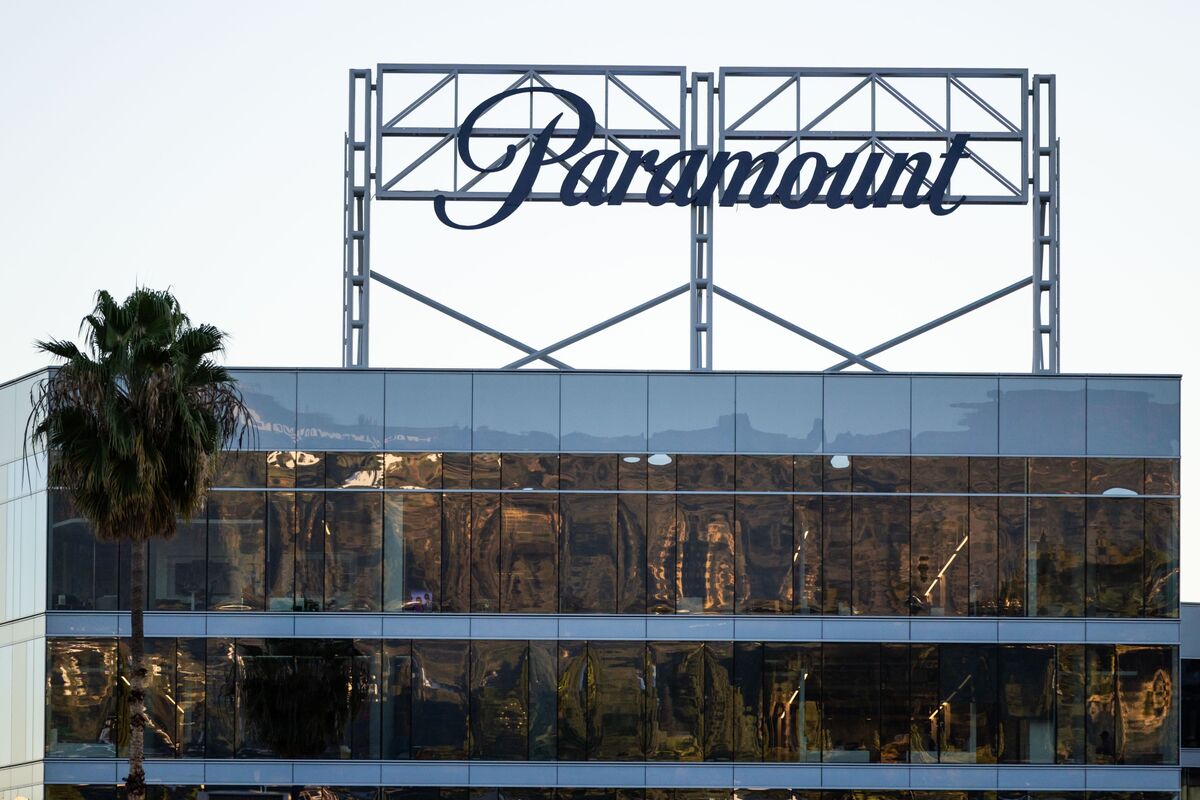
Paramount reportedly offers concessions to resolve multistate antitrust investigation

Paramount has reportedly offered up some concessions in an effort to prevent an antitrust lawsuit by California and about 10 other states, according to Bloomberg reporting on Monday.

Reuters first reported on the potential suit from a group of unnamed states last week, which could throw a wrench in Paramount’s plans to buy rival Warner Bros. Discovery in a Hollywood megamerger.

The list of concessions is unknown, though Bloomberg previously reported that Paramount is open to divesting some of its kids TV assets to appease EU regulators.

Late last month, reports said US regulators appeared likely to approve the $110 billion merger, following a meeting between Paramount CEO David Ellison and DOJ antitrust staffers.

The list of concessions is unknown, though Bloomberg previously reported that Paramount is open to divesting some of its kids TV assets to appease EU regulators.

Late last month, reports said US regulators appeared likely to approve the $110 billion merger, following a meeting between Paramount CEO David Ellison and DOJ antitrust staffers.

$98B ⛽

The IATA released its latest financial outlook for the airline industry over the weekend, forecasting a $98 billion jump in the sector’s collective fuel bill. The world’s largest trade group representing airlines expects the oil spike to halve profits by 49% from last year to $23 billion.

The group also expects profit margins to halve year over year, falling from 2025’s 4.2% to 2%. Still, revenue is expected to climb to $1.17 trillion from $1.07 trillion.

A surge in the cost of jet fuel has rocked US and global airlines this year, leading Delta Air Lines, United Airlines, American Airlines, Southwest Airlines, JetBlue, and others to raise fares and ancillary charges like bag fees. Low-cost carriers, which operate on smaller margins, have been squeezed the hardest, resulting in Spirit’s shutdown.

“It’s a tough year for all airlines, especially those whose balance sheets had not yet recovered from COVID. And, of course, for those operating in the Gulf,” said IATA Director General Willie Walsh, who added that demand is holding up and about half of passengers expect to spend more on travel this year. “That bodes well for a strong northern summer peak season. The big unknown is how long travelers and shippers can tolerate the higher costs of connectivity.”

Latest Stories

Sherwood Media, LLC and Chartr Limited produce fresh and unique perspectives on topical financial news and are fully owned subsidiaries of Robinhood Markets, Inc., and any views expressed here do not necessarily reflect the views of any other Robinhood affiliate, including Robinhood Markets, Inc., Robinhood Financial LLC, Robinhood Securities, LLC, Robinhood Crypto, LLC, Robinhood Money, LLC, Robinhood U.K. Ltd, Robinhood Derivatives, LLC, Robinhood Gold, LLC, Robinhood Asset Management, LLC, Robinhood Credit, Inc., Robinhood Ventures DE, LLC and, where applicable, its managed investment vehicles.