


Hollywood may have its best year at the box office since 2019, but streaming audiences are still obsessed with old content
Viewers are opting for catalog content over new shows and movies across (pretty much) every major streamer.


Prime Day is here again and Amazon’s subscription service has never been more popular
Well, it’s that time of year again: many have made their wish lists, people are scraping together the money they’ve saved to pick out a perfect gift, some are presumably leaving out refreshments for the weary delivery drivers and, more and more, drones.
It’s Amazon Prime Day — meaning that it’s the second day of the four-day promotional event that Amazon still calls Prime Day — of course, and it’s even come early this year, with the company bringing the period into late June from July, when it’s been traditionally held for the last five years.
The Prime Age
Alongside the eyes and endless clicks that the arbitrary stream of listicles on “The Best Prime Day Deals” that almost every media outlet pours into, Amazon will also be cheering the fact that there’s now more Prime users than ever before to devour the retailer and its sellers’ sometimes-contested “discounts.” Indeed, according to the latest annual estimates from Consumer Intelligence Research Partners (CIRP), there were just over 200 million American shoppers using Amazon’s massive subscription service at the end of 2025.

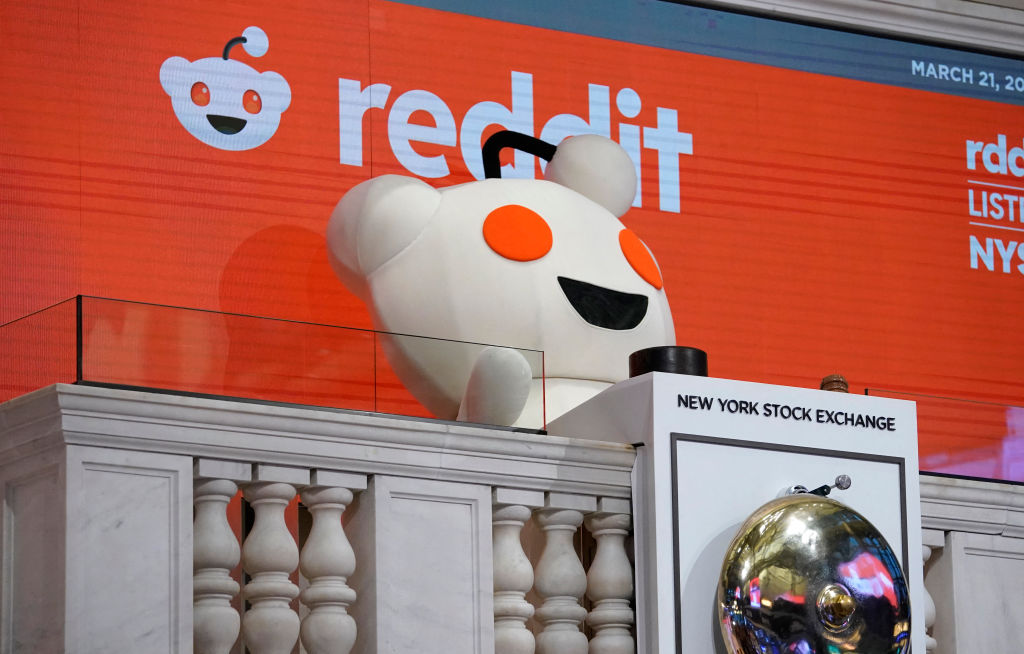
Reddit’s advertising business is getting bigger. It’s already booming.
The platform will plow more money into its ad offerings as it cements itself as a “trove of human intelligence.”



Prediction markets have, predictably, been given a boost by the summer of sports
Major platforms like Kalshi and Polymarket have seen huge upticks in users of late, thanks in no small part to what’s felt like a recent sporting smorgasbord, with major competitions across hockey, basketball, and soccer soaking up fans’ time (and spending, clearly) at the outset of summer.
While gaming industry groups may not like it, there’s been a huge change in the methods people are using to put money on the big games, with everyone from fortunate NYC bar owners, to a far less fortunate Spanish supporter, turning to prediction markets to try and turn their sports know-how into cold, hard cash.
According to a new report from Adam Blacker for apptopia, that shift might have been even more seismic than imagined in the wake of the NBA and NHL finals and around the 2026 World Cup kicking off.


While gaming industry groups may not like it, there’s been a huge change in the methods people are using to put money on the big games, with everyone from fortunate NYC bar owners, to a far less fortunate Spanish supporter, turning to prediction markets to try and turn their sports know-how into cold, hard cash.
According to a new report from Adam Blacker for apptopia, that shift might have been even more seismic than imagined in the wake of the NBA and NHL finals and around the 2026 World Cup kicking off.


Solar generated more power than coal for the first time in US history
At the same time that the Trump administration is pushing further toward coal power, announcing plans only last week to invest almost $700 million into reviving the industry, a key renewable energy source has just hit a major milestone in the US.
New data from energy think tank Ember, released Wednesday, shows that solar supplied 12.8% of US energy generation in May — marking not only the highest share ever recorded for the clean energy source, but also the first time that solar has generated more monthly energy than coal in the US, which supplied 12.2%.


JM Smucker says it sold $1 billion worth of Uncrustables in FY2026
After years of booming sandwich sales, JM Smucker has finally earned a billion-dollar crust.
On Tuesday, the company reported results for fiscal year 2026, highlighting better-than-expected profits driven by higher prices for coffee and sweet baked goods. However, at another point on the earnings call, CEO Mark Smucker pointed to one particularly jammy figure: in line with previous forecasts, the company sold $1 billion worth of its (almost always) crustless sandwiches, Uncrustables, in the last year alone.



The BBC has become the world’s top news website... by collapsing a little less than its competition
Press Gazette just published its annual look at the biggest news sites in the world across all languages; for the most part, it doesn’t make for particularly pretty reading.
The journalism industry publication’s latest update, which is based on estimates provided by Similarweb for May, found that 37 of the world’s 50 most visited news sites saw their reach shrink. Press Gazette highlighted that American outlets have been hit particularly hard by declining Google traffic compared to European counterparts, owing to the platform’s AI features rolling out earlier in the US.
Even the BBC, having climbed the rankings from last year to top the 2026 chart — reportedly in part thanks to Similarweb’s decision to combine the “.co.uk” and “.com” versions of the URL, given that the sites redirect to each other depending on the user’s location — showed a 1.9% decline from last year.

ChatGPT hit 1 billion users nearly twice as fast as TikTok did
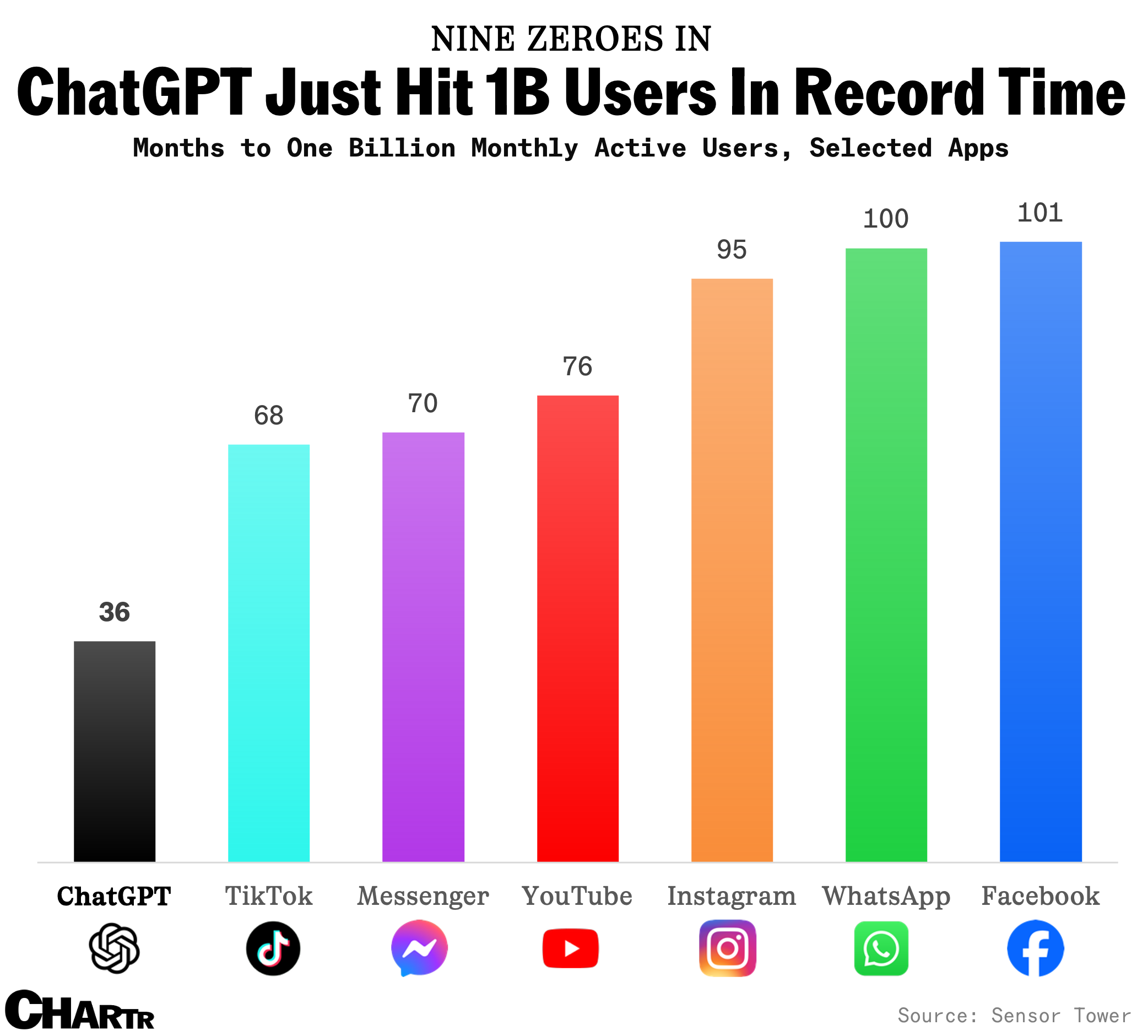
It took Facebook and Instagram around eight years; it took YouTube just over six; even TikTok, which at the time felt like it was a global sensation almost as soon as it arrived, took more than half a decade.
Now, though, the mobile version of ChatGPT has positively left the biggest platforms (and all of your other favorite apps) in the dust, hitting 1 billion monthly active users in just three years, per new data from market intelligence firm Sensor Tower, as more users turn to OpenAI’s chatbot each month.
While rival Anthropic might be pulling ahead in terms of annualized recurring revenue, enterprise customer adoption, and valuation, the app version of Claude, a market-leading chatbot on several counts, has clocked only 56 million monthly active users in the quarter to date.
In fact, according to Abe Yousef, a senior insights analyst at Sensor Tower, ChatGPT’s monthly active user count for the quarter to date outweighs the figures for Claude, Gemini (472 million), Doubao (106 million), Dola (78 million), DeepSeek (68 million), Meta AI (61 million), Grok (50 million), Perplexity (44 million), and Copilot (31 million)... combined.
ChatGPT made a pretty big splash in the tech world when it landed toward the end of 2022, but there’s no question that the mobile versions — which launched on iOS in May 2023, then on Android a couple months later — helped to catapult the chatbot into the mainstream proper.


