


Could paywalling The Mini have made a big difference to the NYT’s bottom line last quarter?
A new wave of bundled and single-product digital subscriptions boosted The New York Times’ profits in Q3.
OK, so we’ve been saying here that the business behind The New York Times Company hasn’t really been just about the news now for a minute. And while that’s hardly a fact the Gray Lady herself has shied away from — in his debut as the Times’ new media columnist in 2020, Semafor founder Ben Smith cited its “broadening content mix” as a key reason behind the company’s ability to outmuscle its competition — the observation rings truer with every passing quarter.
Collections; or _______ of joy [7]
In its third-quarter earnings last week, the Times reported that it had added 460,000 digital-only subscribers in the last three months, as bundles and single-product subscribers to products like Cooking and Games helped offset the 130,000 news-only subs it lost over Q3. For context, there are just ~570,000 print-only NYT subscribers left, after 10,000 jumped ship in the same period.
The additions mark the most substantial growth it’s posted across its digital offerings since it started breaking out individual subscriber figures, rather than the number of individual subscriptions those subscribers paid for, back in 2022, as the company’s digital footprint continues to grow.
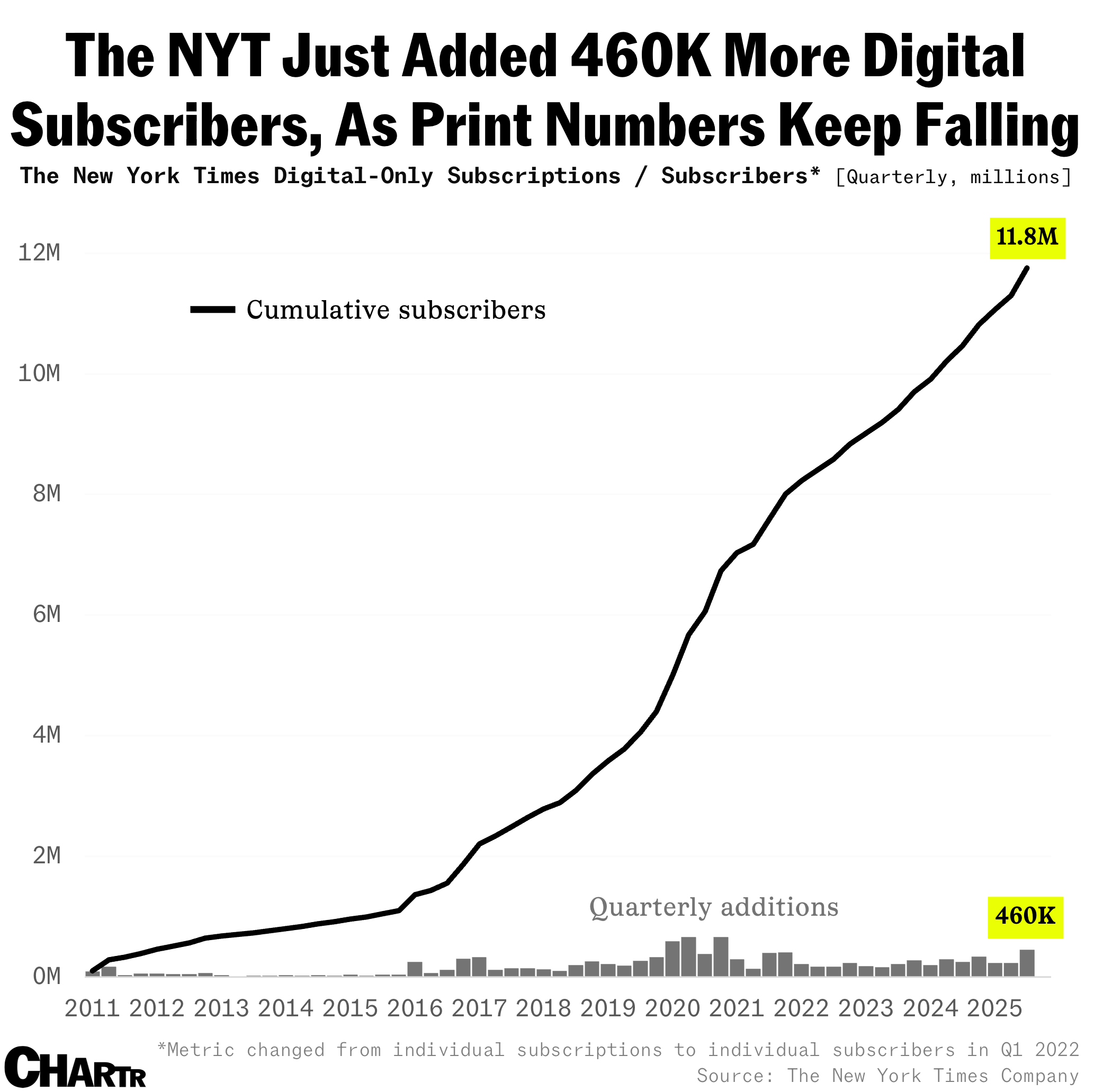
All told, The NYT now counts some 12.33 million subscribers across its family of products. The vast majority (11.76 million) of those are for digital-only products — whether that’s people keeping up to date on the NYTimes app, sports fans lapping up the latest analysis from The Athletic, chefs looking for recipe inspo from the Cooking segment, or the millions of people who’ve chiseled some combination of the company’s various mini games into cornerstones of their daily routines.
All the games that are fit to play
When The New York Times made the decision to move The Mini, the smaller version of its iconic crossword, which has amassed a devoted following since it launched over a decade ago, behind a paywall in late August, scores of disgruntled gamers rushed to Google to see what the issue was. Naturally, that frustration quickly spilled over onto social media.
Though nonsubscribers can still access Wordle and other daily games like Connections and Strands (for now), it’s difficult to imagine a world where the company’s latest digital sub figures weren’t boosted a little by Mini-mad users finally stumping up some extra cash to carry on playing the crossword every day.
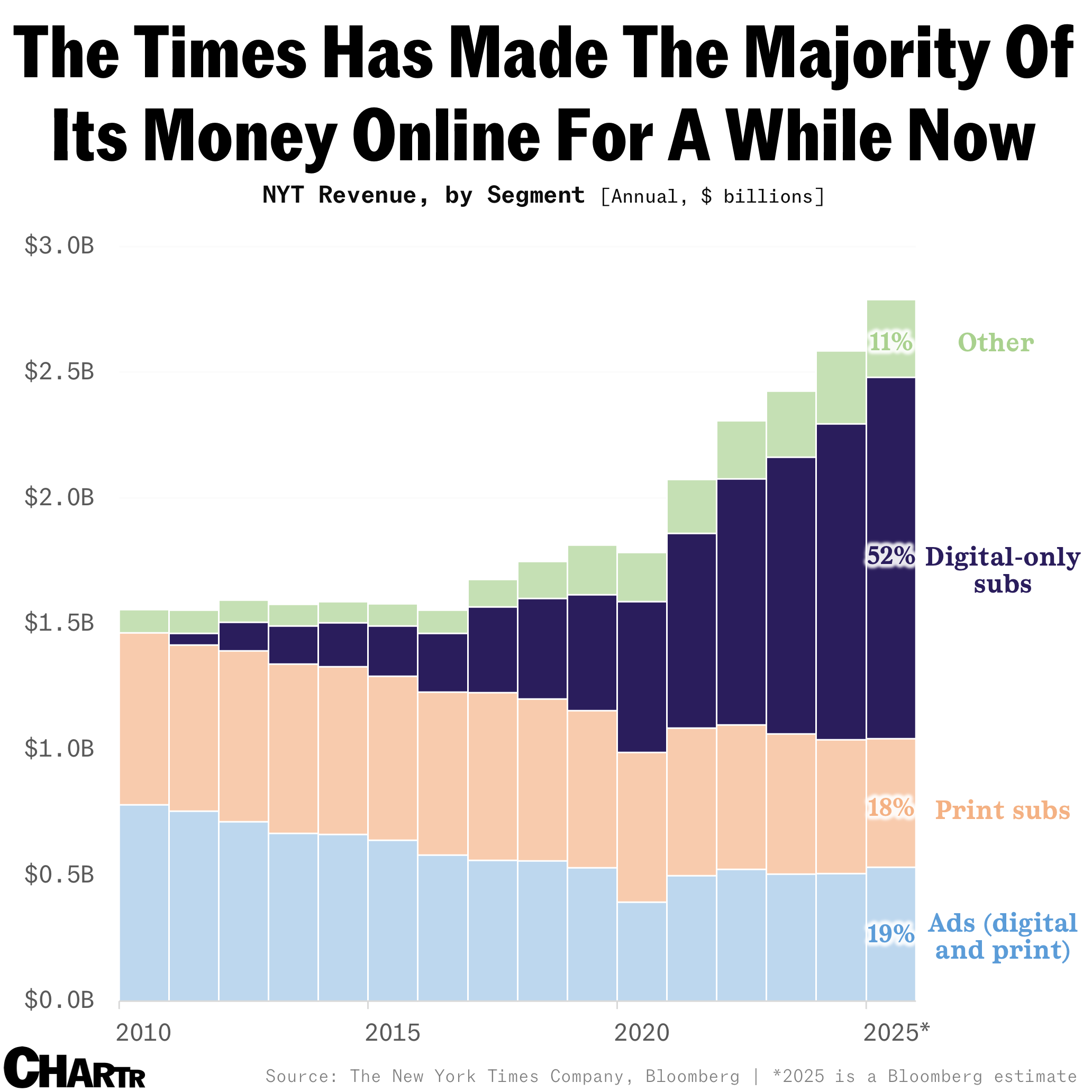
Paywalling its plethora of addictive mini games makes sense from the Times’ point of view, as revenues from digital subscribers continue to grow as the company’s biggest money-spinner, with Bloomberg forecasting that digital subscribers will account for $1.44 billion of the company’s $2.79 billion revenues this year.