

Would a social media ban see chronically online teens turn to AI chatbots?
As Australia enacts a world-first ban, a survey finds more US teens are using social media — and chatbots — daily.
This week is a dark one for web-obsessed teens living Down Under (or at least they might think so), after Australia’s social media ban for children under 16 came into effect on Wednesday.
The new national law will block under-16s from accessing 10 of the largest social media platforms — including Alphabet’s YouTube, Meta’s Instagram and Facebook, and ByteDance’s TikTok — by banning their accounts, making Australia the first country in the world to enact a policy of this kind.
The outcomes of the ban will be followed closely by regulators around the globe, even as it draws criticism from young campaigners, free speech advocates, and, naturally, the social media companies that will face fines of up to AU$49.5 million (~$33 million) for “serious or repeated” breaches.
Taking accounts
Social media has undeniably become more prevalent in the lives of young people everywhere. On Tuesday, Pew Research Center published an update for 2025 to its survey on teens and social media, which found record numbers of Americans aged 13-17 using these apps and sites — including huge shares that visit YouTube (76%) and TikTok (61%) every single day.
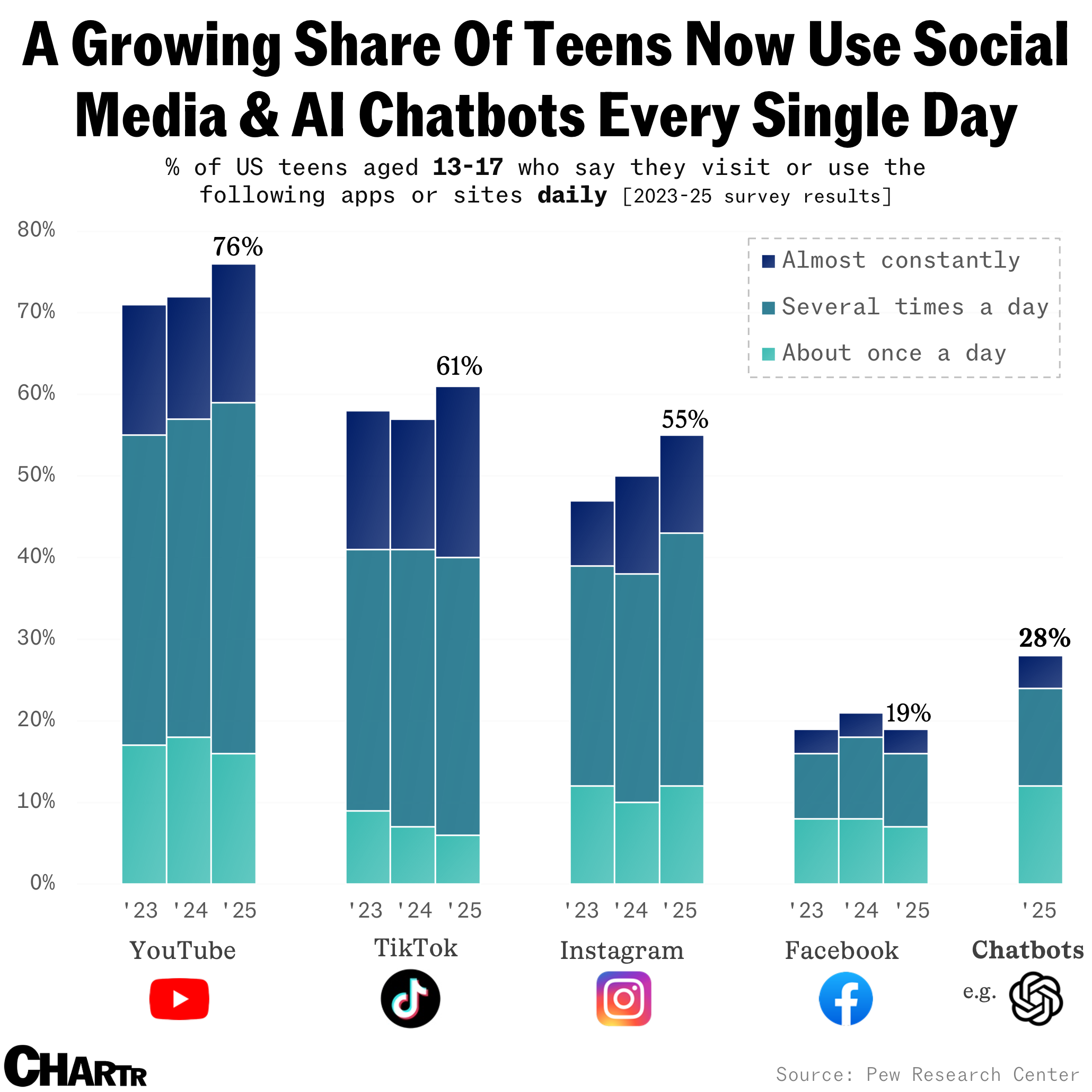
Of those, an alarming number of teens reported being on those platforms “almost constantly” (17% and 21% for YouTube and TikTok, respectively), a figure that had increased for the three largest platforms year over year.
Perhaps more concerning, though, is Pew’s findings about young people’s AI chatbot use, marking the first time the survey has included questions about the tech. Roughly two-thirds (64%) of surveyed American teens reported ever using chatbots like ChatGPT and Character.AI, with 28% saying they use the tools daily.
Gen(erative) Z
With the ubiquity and frequency of chatbot use rising — just this week, ChatGPT was said to be nearing 900 million weekly active users — there’s a good chance that this tech could have an even greater effect on teens in the coming years than social media does now.
From helping students with their homework to acting as an online companion, a growing number of young people are turning to AI, and the impact that is already having on mental health is well documented. In the absence of scrolling, this might only become more profound.