Extreme optimism on global growth is a bad omen for cyclically sensitive trades
By mid-December, it became pretty clear that investors were pricing in an acceleration in global growth for 2026, and price action since then has only calcified that narrative.
“The equity market has rapidly priced a positive expected growth outlook for this year,” Goldman Sachs’ Cullen Morgan wrote. “Similar has been seen in other asset classes as well, leading to our Global Growth Optimism Factor (RAI PC1) hitting a level seen only a handful of times over the last two decades.”
RAI stands for “risk appetite indicator,” the bank’s proprietary metric for investor sentiment.
One problem with all this optimism embedded in asset prices, Morgan noted, is that it can serve as a high-water mark for trades perceived to be sensitive to the ebbs and flows of the economy — in particular, small-caps and cyclicals versus defensives.
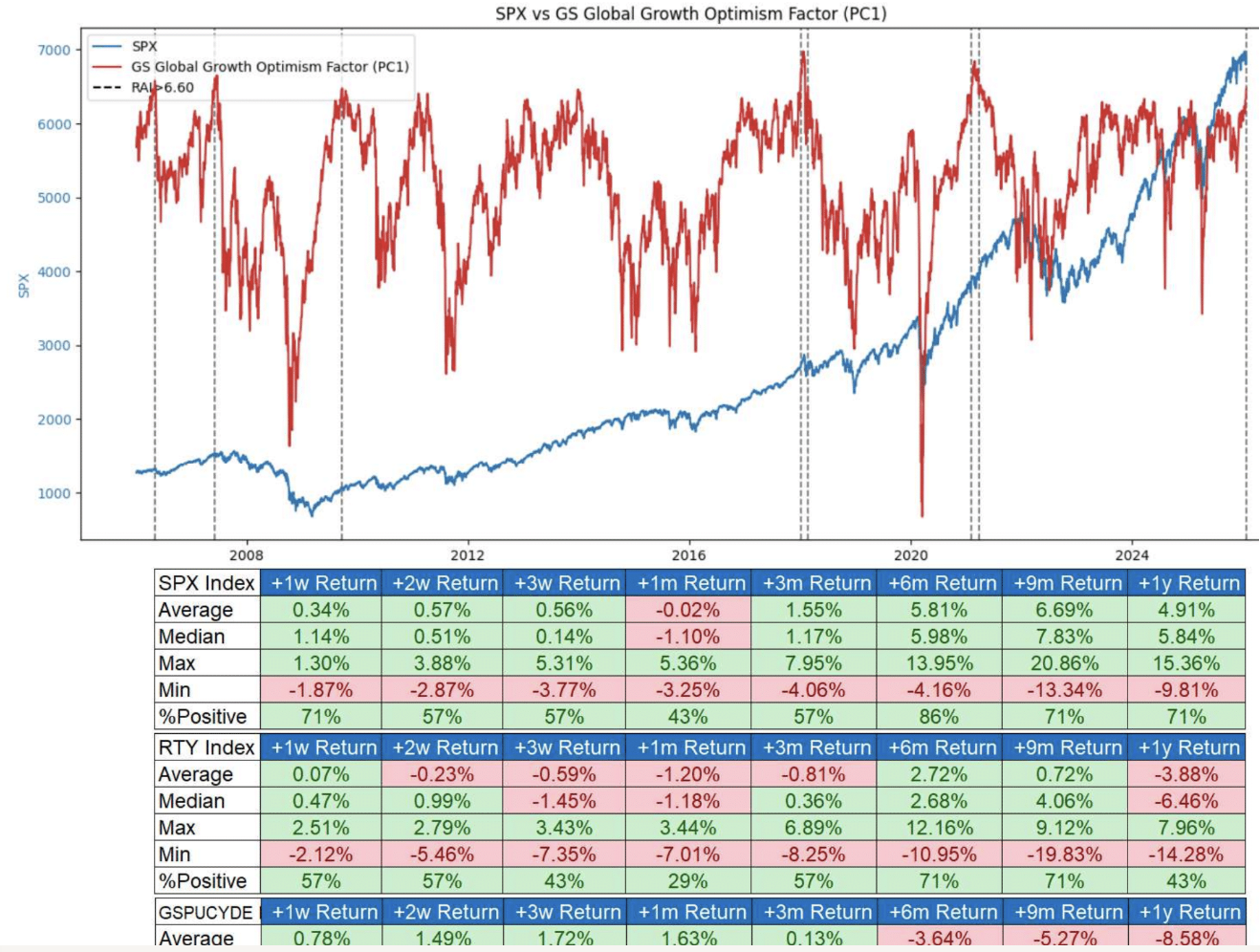
“To be clear, we continue to recommend select cyclicals as beneficiaries of the economic acceleration in early 2026 given the market does not yet appear to be fully pricing our economists’ above-consensus growth forecasts, but we are growing wary of a limited runway,” he concluded.

RAI stands for “risk appetite indicator,” the bank’s proprietary metric for investor sentiment.
One problem with all this optimism embedded in asset prices, Morgan noted, is that it can serve as a high-water mark for trades perceived to be sensitive to the ebbs and flows of the economy — in particular, small-caps and cyclicals versus defensives.
“To be clear, we continue to recommend select cyclicals as beneficiaries of the economic acceleration in early 2026 given the market does not yet appear to be fully pricing our economists’ above-consensus growth forecasts, but we are growing wary of a limited runway,” he concluded.