
Markets
JAPAN-ECONOMY-BANK-BOJ
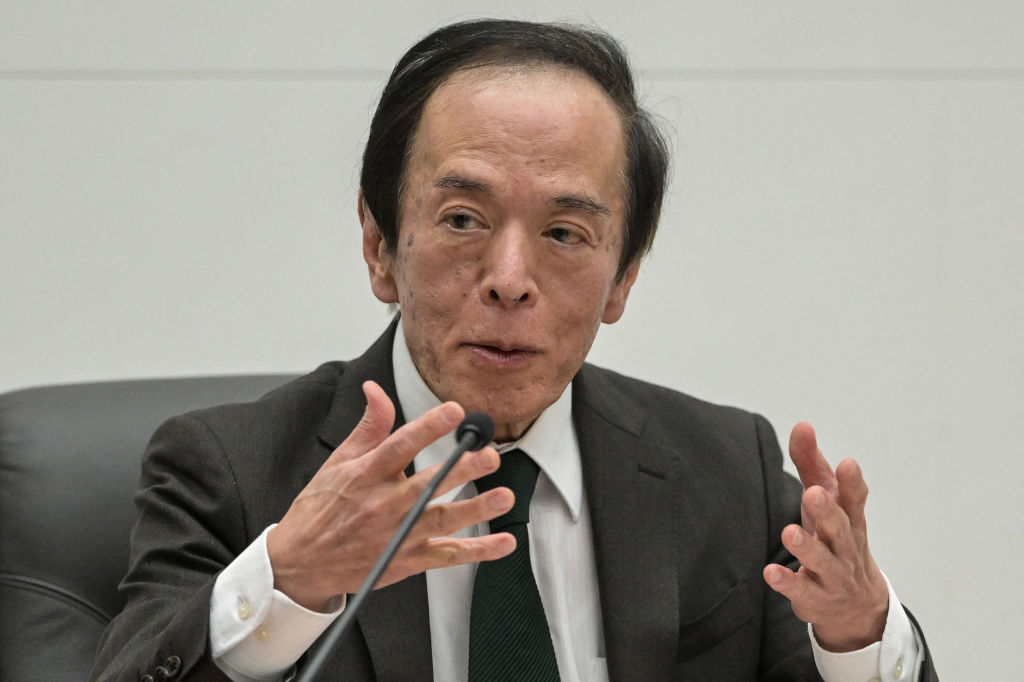
Bank of Japan governor Kazuo Ueda (Photo by RICHARD A. BROOKS/AFP via Getty Images)

Japan is fighting against the entire investing world in the currency market

Luke Kawa

Japan’s Ministry of Finance spent nearly $50 billion on April 29 and May 1 trying to prop up the value of the currency by selling US dollars and buying yen.

Who was on the other side of this trade?

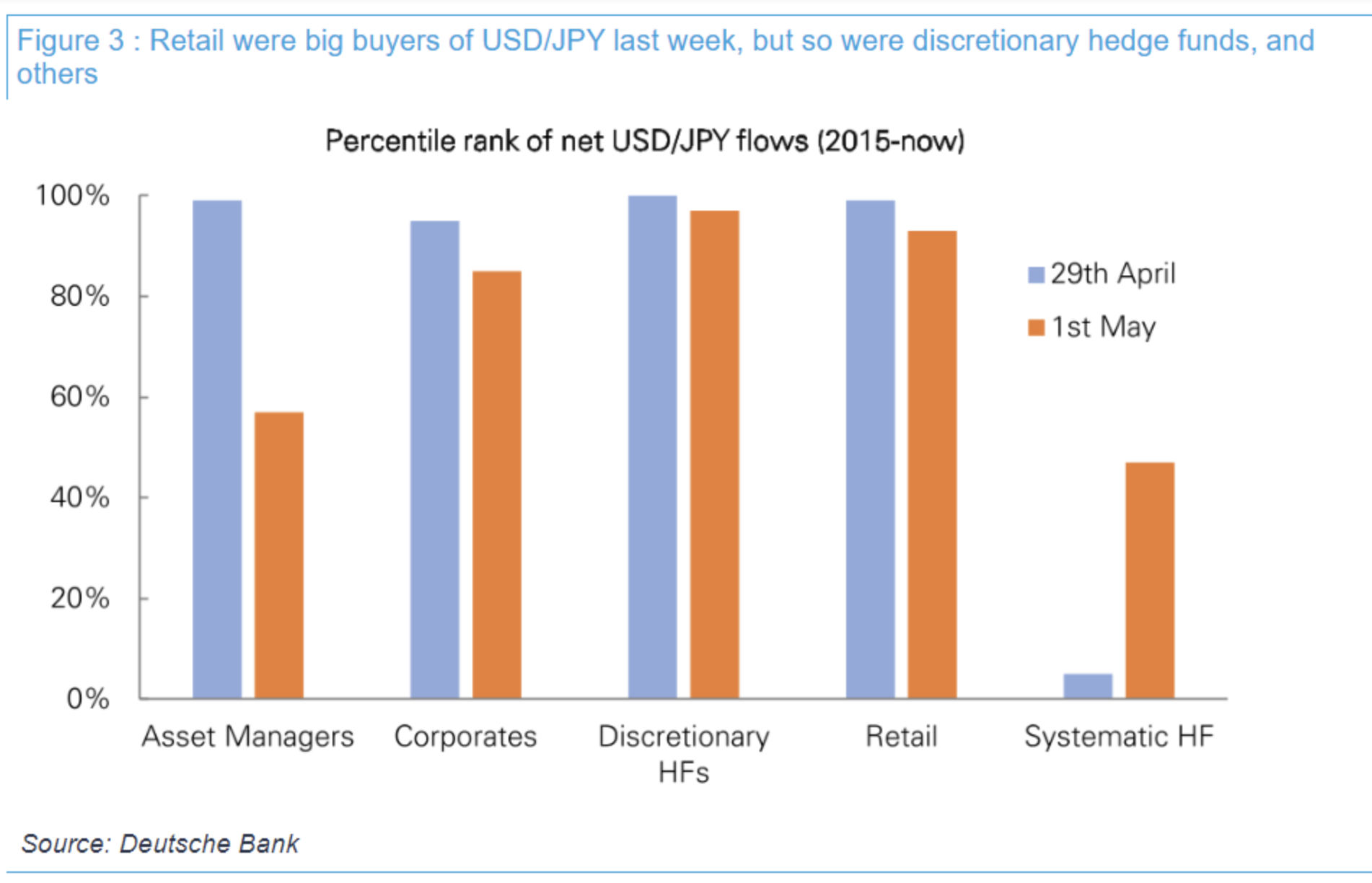
Data from Deutsche Bank’s foreign exchange trading platform suggests: literally everyone.
Deutsche Bank USDJPY flows

“Nearly all client categories saw record USD/JPY buying during the assumed intervention days,” writes George Saravelos, global head of FX research at the German bank, in a note to clients on Thursday. “That absorption of USD/JPY selling from the Japanese Ministry of Finance was so broad-based continues to point to the lack of effectiveness of this policy.”

The Japanese yen is the weakest G10 currency in trading on Thursday, deepening its decline relative to the US dollar to nearly 10% so far this year.

Very low rates in Japan increase the appeal of holding other currencies where investors can earn more interest. Strategists have warned that action from the Bank of Japan may be needed to reinforce the Ministry of Finance’s attempts to guard against further yen weakness.

“Longer term, successful interventions tend to be (1) coordinated with other central banks and (2) unsterilized i.e. backed by shifts in relative monetary policy,” writes Dario Perkins, economist at TS Lombard, in a May 6 note. “Unilateral interventions often fail, especially when they run exactly counter to the broader thrust of monetary policy.”

At this point, perhaps the biggest risk to the anti-yen view is how popular that view is. Everyone and their mother was happy to sell yen versus the US dollar when the Ministry of Finance was buying recently. That's just part of an ongoing trend: speculators, in aggregate, have been short the yen for over three years. Bets in futures markets that the yen would decline are hovering near their highest level since 2007.

If the underpinnings of the short yen case start to fall apart, either by the Bank of Japan embarking on a more aggressive rate-hiking campaign or other central banks cutting rates by more than is currently priced in, then a lot of investors may be changing their minds — and positions — at the same time.

More Markets

See all Markets
markets

SpaceX gets a wave of bullish ratings from Wall Street analysts

SpaceX received more than a dozen positive analyst calls on Tuesday — including from major Wall Street banks — as they initiate coverage on Elon Musk’s space and AI company.

SpaceX went public on June 12 at a $2.2 trillion valuation, the largest debut in history. While the company hasn’t yet posted a profit, it seems to have convinced Wall Street that it will get there and grow its valuation on the way.

Of the at least 17 analysts that gave a rating on Tuesday, all but one gave it a “buy” or “outperform” rating. MoffettNathanson was "neutral."

The ratings come as SpaceX joined the Nasdaq 100 index, a benchmark tech-heavy basket of companies that underpins millions of portfolios. The inclusion adds built-in demand for the stock from index funds and ETFs.

Still, SpaceX fell more than 5% on Tuesday amid a broader sell-off, and is currently effectively flat from its opening price of $150 a share.

markets

Nike sinks to lowest level since 2014 after warning of “challenged” sales environment in Q4 report

Did Nike do it?

Investors had a mixed reaction after the global sports apparel company reported its fourth quarter earnings on Tuesday after the bell. Shares initially rose 5% as Nike beat out Wall Street expectations amid a hefty tariff refund bonus. However, the stock then sank to its lowest level since August 2014 in postmarket trading.

Here are the Q4 numbers:

  • Revenue of $11.0 billion (estimate: $10.8 billion).

  • Adjusted earnings per share of $0.20 (estimate: $0.12).

Ahead of this report, Nike warned that results would be flattered by a one-time tariff refund (now estimated at roughly $0.52 per share for the bottom line). That gave the company an extra cushion in snapping its streak of seven quarters of year-over-year profit declines.

Over the past year, the company had been punished by tariffs on imported goods, stagnant consumer spending, and increasing competition from other footwear brands like New Balance, Adidas, and Hoka.

Outgoing CFO Matthew Friend deemed it an “increasingly challenging operating environment, where sell-through remains challenged.”

Latest Stories

Sherwood Media, LLC and Chartr Limited produce fresh and unique perspectives on topical financial news and are fully owned subsidiaries of Robinhood Markets, Inc., and any views expressed here do not necessarily reflect the views of any other Robinhood affiliate, including Robinhood Markets, Inc., Robinhood Financial LLC, Robinhood Securities, LLC, Robinhood Crypto, LLC, Robinhood Money, LLC, Robinhood U.K. Ltd, Robinhood Derivatives, LLC, Robinhood Gold, LLC, Robinhood Asset Management, LLC, Robinhood Credit, Inc., Robinhood Ventures DE, LLC and, where applicable, its managed investment vehicles.

