

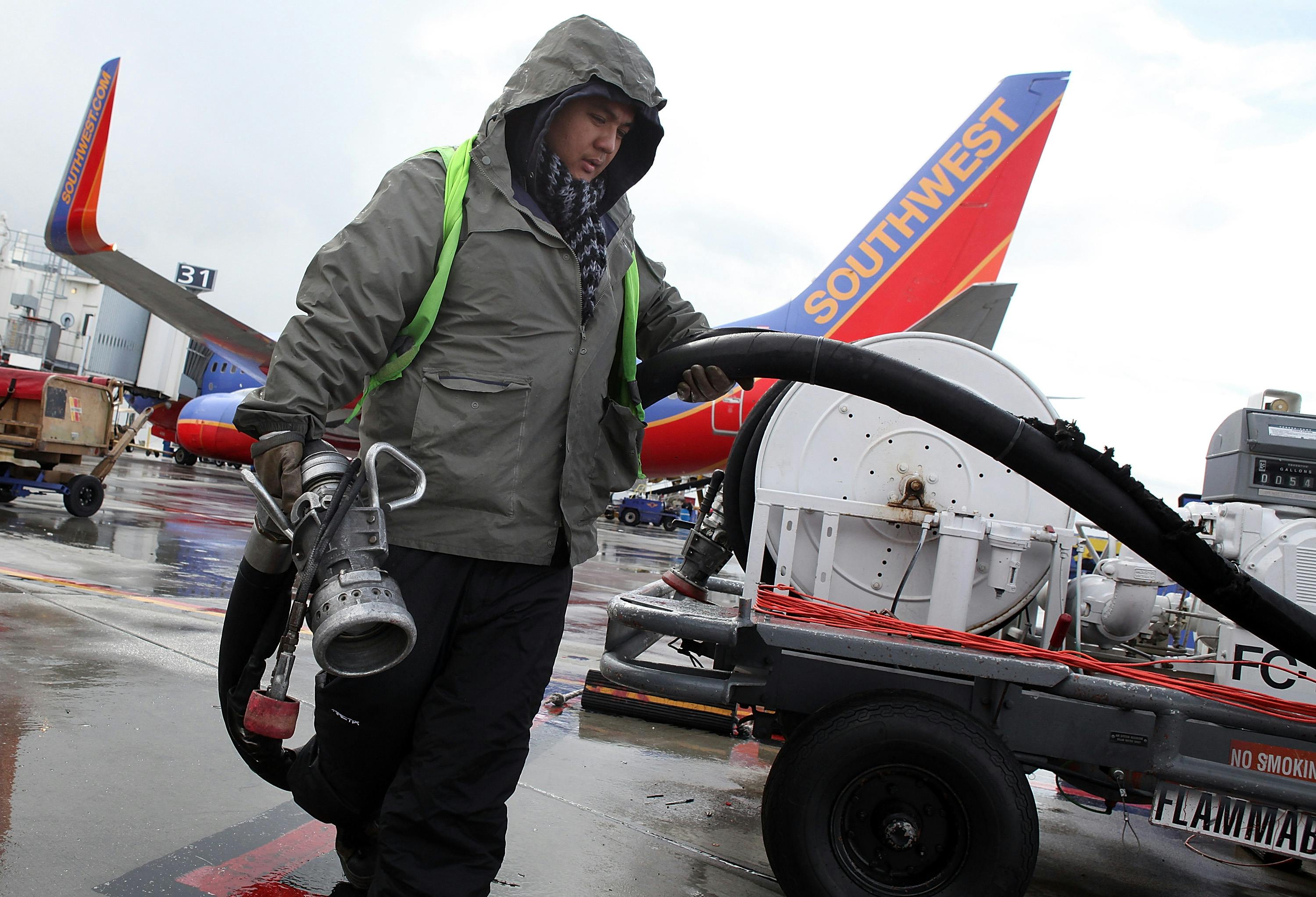
Jet fuel refining margins are surging to 20-year highs amid Iran war, threatening airlines
According to a Deutsche Bank note on Friday, airlines haven’t seen this phenomenon since the aftermath of hurricanes Katrina and Rita in 2005.
Amid the war in Iran and the resultant rising oil prices, airlines are facing a jet fuel margin squeeze not seen since the aftermath of hurricanes Katrina and Rita in 2005.
According to a Deutsche Bank note released on Friday, US jet fuel crack spreads — the difference in price between crude oil and the jet fuel refined from it — now range from $85 to $95 per barrel. That difference is equal to or higher than the cost of oil itself.
It’s a rare phenomenon airlines haven’t faced since 2005, when devastating storms caused extensive damage to several refineries. Per DB analyst Michael Linenberg, it represents an existential threat to airlines.
“Absent near-term relief, airlines around the world could be forced to ground 1,000s of aircraft while some of the industry’s financially weakest carriers could halt operations...
The last time we witnessed this phenomenon was in 2005 when crack spreads of as high as $65 per barrel exceeded ~$60 per barrel oil prices in the aftermath of Hurricanes Katrina and Rita. The damage to the airline industry was significant and widespread including major airlines Delta Air Lines and Northwest filing for Chapter 11 bankruptcy in September 2005.”

Per Deutsche Bank, airlines could face a fuel price headwind “in the $10s of billions on an annualized basis.”
Airline stocks have been pounded since the US military first struck Iran at the end of February. The big four US airlines — Delta Air Lines, United Airlines, American Airlines, and Southwest Airlines — are all down between 10% and 15% since the war began.
Budget airlines, which tend to have tighter margins and are therefore more vulnerable to pricing swings, have fallen even more. JetBlue, Allegiant, and Frontier have each fallen roughly 20%. Alaska Air is down 16% since February 28.
United CEO Scott Kirby addressed fuel costs this week, saying that the spike will have a “meaningful” impact on this quarter’s earnings results, and that higher airfares will “probably start quick.” Kirby added that demand hasn’t been affected.



