

Markets
markets
Luke Kawa

Nvidia, TSMC rise as the world’s most valuable company reportedly asks for more chips to meet Chinese demand

Nvidia and TSMC are modestly higher in premarket trading Wednesday after Reuters reported that the chip designer asked the Taiwanese chip manufacturing giant to boost production of its H200 AI chips.

Earlier this month, US President Donald Trump said that Nvidia would be able to ship the best-performing processors from its Hopper generation to China, with 25% of the proceeds going to the US government. Per the report, Chinese companies have already placed orders for more than 2 million of these chips in 2026, roughly triple the 700,000 in inventory that Nvidia has in reserve. Reuters added that Nvidia is planning on selling these chips at around $27,000 apiece, which would amount to a more than $54 billion boost in revenues if it’s able to realize all this reported demand. The ability to do so will also depend on Chinese regulators green-lighting purchases. The chip designer’s success in 2025 has come despite being effectively shut out of the Chinese AI market for the year.

The outlet previously reported that Nvidia plans to begin sending these GPUs to China before the Lunar New Year holiday (which starts on February 17, 2026), and that Chinese companies are eagerly awaiting the opportunity to get their hands on these powerful chips.

During Nvidia’s Q3 conference call, which came prior to the Trump announcement, CEO Jensen Huang expressed confidence in his ability to meet demand for the company’s GPUs going forward, saying, “In many cases, we’ve secured a lot of supply for ourselves, because obviously, they’re working with the largest company in the world in doing so.”

Huang’s relationship with critical supply chain partner TSMC appears to benefit from a personal touch: during his November visit to Taiwan, he met with the chipmaker’s CEO, CC Wei, as well as other execs over hot pot, and called TSMC “the pride of the world” the next day.

More Markets

See all Markets
markets

Memory, optical, and AI-construction stocks dive as embattled SaaS stocks rebound

Memory stocks sank on Monday, continuing a sell-off that began last week with new details about a potentially more memory-efficient AI algorithm from Google Research.

Western Digital, Micron, Seagate Technology Holdings, and retail favorite Sandisk all tumbled.

Industry publication Wccftech flagged that some memory chip prices have seen a “significant drop” recently across multiple US retailers.

A new, upbeat initiation for Seagate by JPMorgan analysts — they rated it “overweight,” basically a buy, on “opportunity for significant upside” — couldn’t help Seagate shake off the slump in the broader data center trade.

Optical stocks — recent high-flyers — also got slammed, taking down Applied Optoelectronics, Corning, Lumentum, Coherent, and Ciena Corp. . The group may also under particular pressure in light of reports that Samsung is entering the silicon photonics market.

AI construction trades like Emcor, Vertiv Holdings, and Sterling Infrastructure also sank.

Meanwhile, traders seemed to be scurrying back to securely profitable software-as-a-service (SaaS) and cybersecurity stocks as a place to wait out the market mayhem.

ServiceNow, Zscaler, CrowdStrike, Salesforce, and Atlassian were all solidly in the green in midday training.

markets

Meta rallies after being named a “top pick” by Morgan Stanley

Meta is off to a strong start to the week after being named a new “top pick” of Morgan Stanley’s internet analysts.

Their case: the social media giant is cheap and commands an ever-increasing amount of eyeballs, which it’ll leverage to make money from its massive AI capex through nascent opportunities like agentic shopping and assistants.

“META sentiment has troughed due to GenAI ROIC and long-term positioning fears, and more recently macro ad market and regulatory question marks,” wrote analyst Brian Nowak. “In all, META now trades at ~15X our ’27 $36 EPS, 1 standard deviation below the long-term average, which creates a strong buying opportunity, in our view.”

Reported job cuts would also be “a bullish development” that boosts earnings, he added.

Even so, Nowak trimmed his price target on the stock to $775 from $825, which still represents upside of about 50%.

The hyperscalers have come under persistent pressure as investors remain reticent to bet that this capex binge will have a happy ending. Per The New York Times, Meta recently delayed the launch of its new model because of performance issues.

(That being said, the company’s latest earnings report did show that its ability to use AI tools to grow its top line remains impressive, even if its models aren’t best in class.)

markets

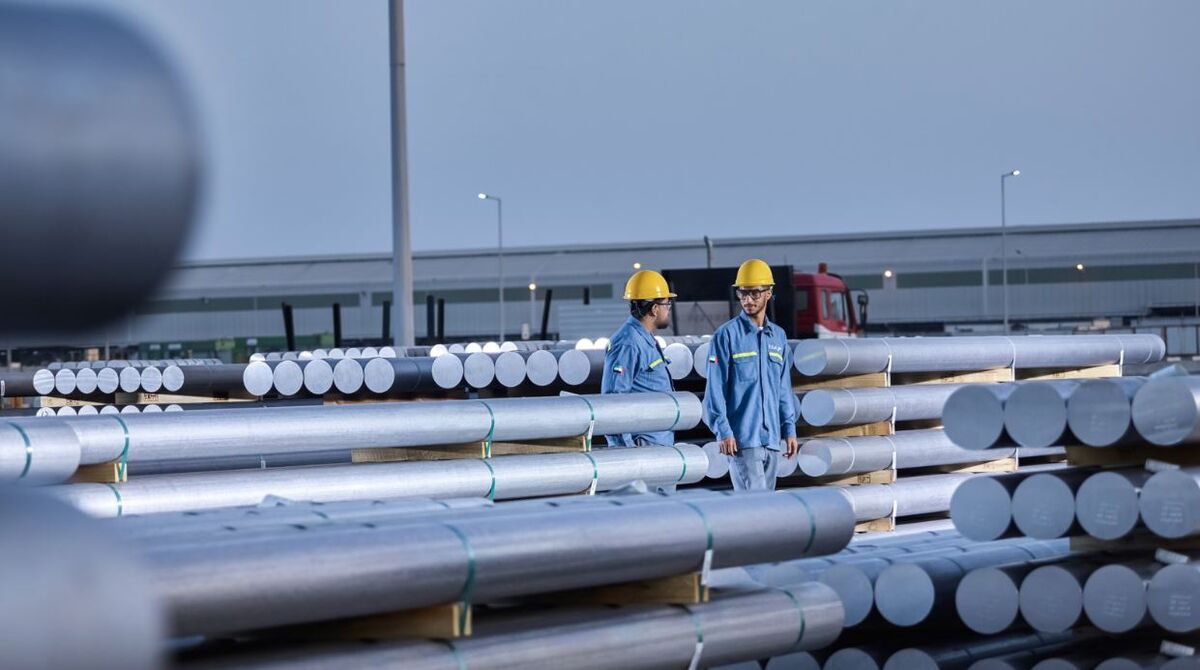
American aluminum stocks rip following strikes against Gulf’s giant smelters

Aluminum stocks soared Monday after Iran attacked major smelting operations in the Gulf region over the weekend.

Alcoa and Century Aluminum both surged Monday, after strikes Saturday hit aluminum plants in Bahrain and the United Arab Emirates. New York aluminum futures were up about 4% shortly after 11 a.m. ET.

Bloomberg reports that the Gulf is the source of roughly 9% of the world’s aluminum supply, which was already imperiled by the closure of the Strait of Hormuz.

Iran’s Revolutionary Guard Corps said the combined drone and missile attacks on the plants were justified by the aluminum producers’ links to the US military and aerospace industries in the region.

Producing aluminum is highly energy-intensive, and the Gulf has emerged as a center of the industry in recent years due to its energy assets. Emirates Global Aluminum, for example, is one of the world’s largest producers of the lightweight metal.

The attacks on the plants only add to the upward pressure on prices, as it can take months to restart closed smelters.

Bloomberg reports that the Gulf is the source of roughly 9% of the world’s aluminum supply, which was already imperiled by the closure of the Strait of Hormuz.

Iran’s Revolutionary Guard Corps said the combined drone and missile attacks on the plants were justified by the aluminum producers’ links to the US military and aerospace industries in the region.

Producing aluminum is highly energy-intensive, and the Gulf has emerged as a center of the industry in recent years due to its energy assets. Emirates Global Aluminum, for example, is one of the world’s largest producers of the lightweight metal.

The attacks on the plants only add to the upward pressure on prices, as it can take months to restart closed smelters.

markets

British government weighs removing Palantir from NHS data systems

Officials in the British government are exploring ways to eject defense, intelligence, and AI software company Palantir Technologies from data systems used by the National Health Service, the government-funded health system.

The Financial Times reports:

“The US company was awarded a seven-year £330mn contract in 2023 to create a data platform that collates health waiting lists, patient information and other sensitive data.

Its role has become an increasing source of controversy, given its ties to the US defence sector and its co-founder and CEO Alex Karp’s vocal support for Donald Trump’s immigration crackdown. MPs, NHS staff and medical trade unions have voiced concerns about Palantir’s suitability for managing data in national health systems.”

While Palantir’s AI software services business — aimed at corporate customers — is a fast-growing business line, the US government remains Palantir’s single largest source of revenue, accounting for $1.9 billion in sales in 2025. That’s almost as much as Palantir’s entire commercial division, which logged $2.1 billion in revenue in 2025.

But the company’s close ties to the US government — including providing services to US agencies such as Immigration and Customs Enforcement amid the Trump administration’s mass deportation program, as well as US intelligence and military services — have created resistance to growth in some other areas.

For instance, Switzerland repeatedly rejected Palantir systems, according to recent reporting from Swiss magazine Republik, after officials there raised concerns about data sovereignty and risks data could be accessed by the US government and intelligence services.

“The US company was awarded a seven-year £330mn contract in 2023 to create a data platform that collates health waiting lists, patient information and other sensitive data.

Its role has become an increasing source of controversy, given its ties to the US defence sector and its co-founder and CEO Alex Karp’s vocal support for Donald Trump’s immigration crackdown. MPs, NHS staff and medical trade unions have voiced concerns about Palantir’s suitability for managing data in national health systems.”

While Palantir’s AI software services business — aimed at corporate customers — is a fast-growing business line, the US government remains Palantir’s single largest source of revenue, accounting for $1.9 billion in sales in 2025. That’s almost as much as Palantir’s entire commercial division, which logged $2.1 billion in revenue in 2025.

But the company’s close ties to the US government — including providing services to US agencies such as Immigration and Customs Enforcement amid the Trump administration’s mass deportation program, as well as US intelligence and military services — have created resistance to growth in some other areas.

For instance, Switzerland repeatedly rejected Palantir systems, according to recent reporting from Swiss magazine Republik, after officials there raised concerns about data sovereignty and risks data could be accessed by the US government and intelligence services.

Latest Stories

Sherwood Media, LLC produces fresh and unique perspectives on topical financial news and is a fully owned subsidiary of Robinhood Markets, Inc., and any views expressed here do not necessarily reflect the views of any other Robinhood affiliate, including Robinhood Markets, Inc., Robinhood Financial LLC, Robinhood Securities, LLC, Robinhood Crypto, LLC, Robinhood Derivatives, LLC, or Robinhood Money, LLC. Futures and event contracts are offered through Robinhood Derivatives, LLC.