

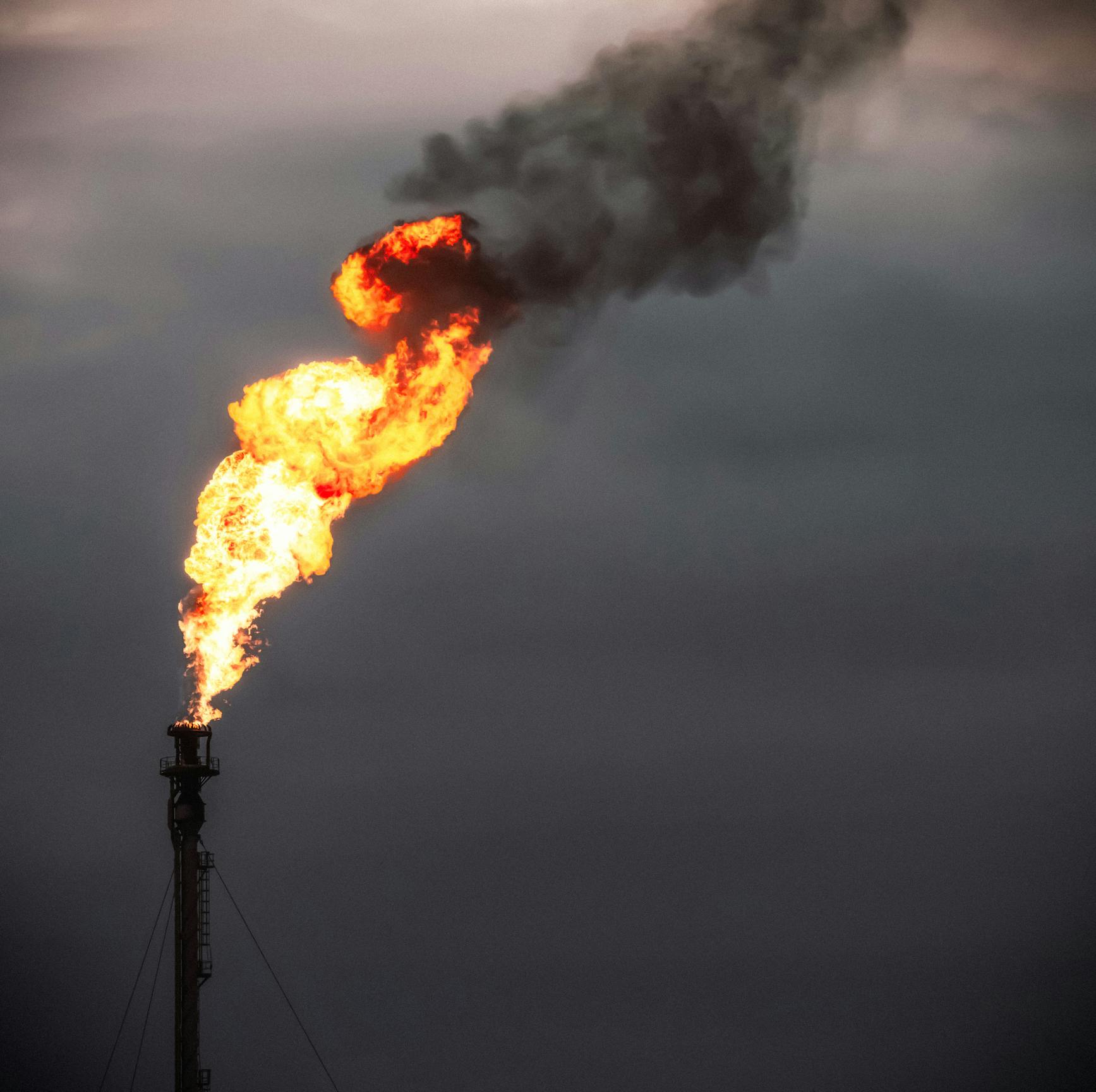
Oil and gas prices jump, stocks slide, after Middle East strikes hit key energy infrastructure
Attacks on Iranian and Qatari energy facilities pushed Brent to $118, as Defense Secretary Pete Hegseth offered no deadline on an end to the war in a press conference.
Oil and gas prices surged on Thursday morning following attacks on key energy infrastructure in the Middle East, with international benchmark Brent crude briefly topping $118 per barrel (before retreating to $113) and European gas prices spiking more than 30%.
The escalation began with Wednesday’s Israeli strike on Iran’s South Pars gas field, the world’s largest natural gas field, to which Iran retaliated with missile strikes on Qatar’s Ras Laffan Industrial City, home to the largest liquefied natural gas export facility in the world. Qatar, which accounts for roughly 20% of global LNG supply, said the Iranian strikes caused “extensive damage” to Ras Laffan.
In a Truth Social post following the attacks, President Trump said the US wasn’t involved in the South Pars strike and that no more Israeli attacks would be made on the site. He went on to warn, however, that any further Iranian attacks on Qatar’s LNG facilities could trigger a US response to “massively blow up the entirety of the South Pars Gas Field.”
Additional attacks and threats hit energy facilities across Saudi Arabia, the UAE, and Kuwait, while tanker movement through the Strait of Hormuz, which handles about a fifth of global oil supply, remains largely blocked.
The South Pars strike marks the first time upstream Iranian gas infrastructure has been targeted since the war began. With overseas supply risks escalating, Brent crude rose as high as $118.80 a barrel, while US benchmark WTI futures climbed more modestly, up 0.3% to $95.80. The widening spread between the two, which was just $5 at the end of February, reflects the localized nature of the disruption, with Europe, Asia, and the Middle East likely to be hit harder by the rise in Brent.
Europe’s benchmark Dutch TTF gas futures surged more than 30% to €71.70 per megawatt-hour, their highest level since December 2022. In the US, the average price for regular gas rose 1% to $3.88 a gallon — still its highest level since September 2023, according to the American Automobiles Association.
Global equities followed a similar pattern, with Japan’s Nikkei closing 3.4% lower on Thursday and Europe’s STOXX 600 falling 1.9%. Equities futures in the US were initially more muted, perhaps because US stocks had already sold off hard yesterday afternoon, but they have since resumed their downward trend, with the S&P 500 Index off more than 0.9% at the start of trading today after US Defense Secretary Pete Hegseth said in a press conference this morning that there was “no time set” on ending the war in Iran.
Even gold and silver aren’t holding up this morning:

Gold and silver dip amid inflation concerns and ongoing Iran war
Often seen as safe havens through times of uncertainty, precious metals aren’t acting that way today, as oil prices spike amid escalations in the Iran war, compounding inflationary concerns and sending the SPDR Gold Shares ETF and iShares Silver Trust down 3.4% and 6.6%, respectively, as of 6:55 a.m. ET.
Though the Fed kept rates steady yesterday, as was universally expected, officials raised their forecasts for inflation — a move that seems to have spooked investors, who had already been taking risk off the table in recent weeks. With Brent crude north of $114 per barrel this morning, investors look to be bracing for further inflationary shock and are dumping gold and silver, as implied odds of a Fed rate cut in June plummeted on prediction markets from 60% on February 23 to just 16% this morning.
The shiny metal slump is already weighing on mining stocks like Anglogold Ashanti, Newmont, Wheaton Precious Metals, and Agnico Eagle, which are all plunging in premarket trading.


