

Markets
markets
Luke Kawa

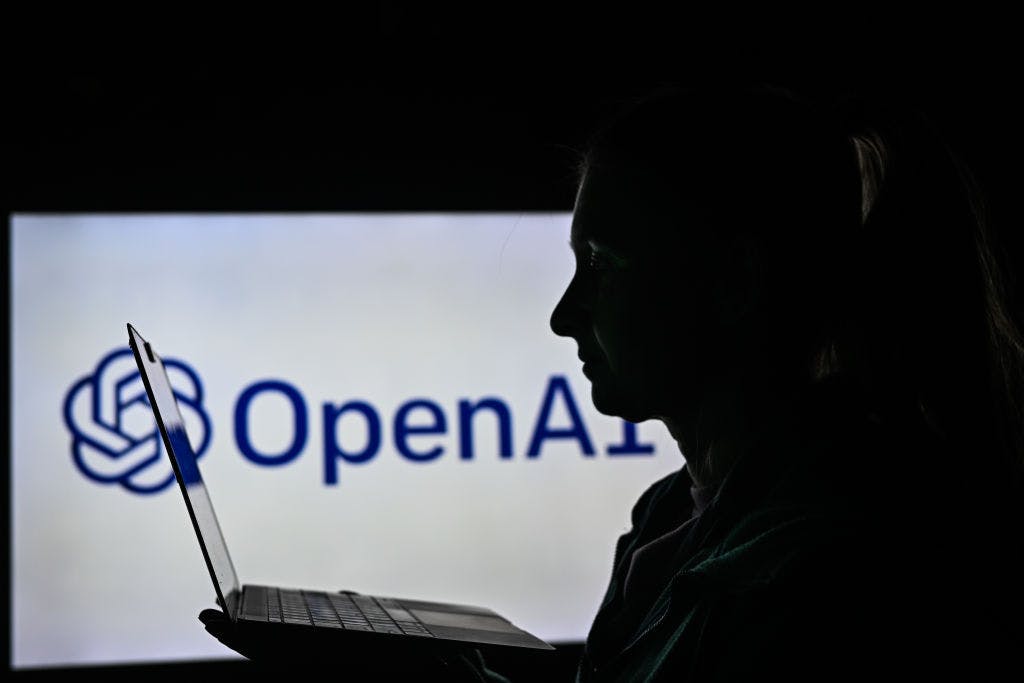
OpenAI appears to be definitively answering its doubters’ biggest question

The AI boom is power constrained. It’s chip constrained.

But it will not be capital constrained.

That’s the top takeaway from media reports from The Wall Street Journal and Reuters that OpenAI is plotting an IPO.

That message is also corroborated by anecdotal reports that the order book for Meta’s $25 billion bond offering is roughly $125 billion (!), per a source familiar with the situation.

My colleague David Crowther recently wrote that OpenAI would likely need to raise $50 billion to $75 billion to fund its spending ambitions, which are poised to drive $115 billion in cash burn through 2029.

The most common question raised by OpenAI skeptics has been, “Where is OpenAI going to get all this money?”

A mulled IPO might suggest that OpenAI’s ability to raise money from private markets is reaching its limits. But it also tells us the answer to that question is “from literally anyone who wants to.”

And in a world where SPACs are back and speculation is rampant, something we should have known all along is that people want to. The technology and the unit economics of AI will have to prove their failures, or reach a much higher level of saturation, before capital will shy away from an opportunity billed as this transformative.

Per Reuters, OpenAI is looking to raise about $60 billion at a $1 trillion valuation from the offering — significantly reducing any funding needs through 2029 in one fell swoop.

That message is also corroborated by anecdotal reports that the order book for Meta’s $25 billion bond offering is roughly $125 billion (!), per a source familiar with the situation.

My colleague David Crowther recently wrote that OpenAI would likely need to raise $50 billion to $75 billion to fund its spending ambitions, which are poised to drive $115 billion in cash burn through 2029.

The most common question raised by OpenAI skeptics has been, “Where is OpenAI going to get all this money?”

A mulled IPO might suggest that OpenAI’s ability to raise money from private markets is reaching its limits. But it also tells us the answer to that question is “from literally anyone who wants to.”

And in a world where SPACs are back and speculation is rampant, something we should have known all along is that people want to. The technology and the unit economics of AI will have to prove their failures, or reach a much higher level of saturation, before capital will shy away from an opportunity billed as this transformative.

Per Reuters, OpenAI is looking to raise about $60 billion at a $1 trillion valuation from the offering — significantly reducing any funding needs through 2029 in one fell swoop.

More Markets

See all Markets
markets

Google invests $75 million in film studio A24, forms AI partnership

Google is investing roughly $75 million in independent film studio A24 as part of an AI partnership, according the Wall Street Journal. The investment marks Google’s first direct stake in a film studio.

Under the agreement, A24 will work with Google DeepMind to develop and test AI tools for filmmaking and production workflows, the Journal reports.

The deal comes as A24 continues to expand its business beyond indie films into television, music, and live events. Since its 2013 launch, the studio has produced Oscar-winning films such as Everything Everywhere All at Once. Its revenue has more than doubled over the past two years, according to the Journal, and the company was last valued at $3.5 billion in a Thrive Capital-led funding round in 2024.

Google’s investment comes as major technology companies increasingly deepen ties with media companies as generative AI tools become more integrated into creative industries. For Google, the partnership also expands DeepMind’s reach into entertainment and film production.

The firm and TV industry is pushing to develop AI tools that can be integrated into the time-consuming and expensive production process. In a sign of the potential value of such tools, in March, Netflix announced it would acquire Ben Affleck's startup InterPositive, which is building AI film-making tools, for $600 million.

markets

Getty Images surges following OpenAI partnership

Getty Images is surging in early trading after the company announced a multi-year licensing and product partnership with OpenAI.

Under the agreement, OpenAI will license Getty’s library of images, videos, and metadata for use in training and improving its AI models, while Getty will integrate OpenAI’s generative AI tools into its own products and services.

The deal comes as Getty faces growing pressure from generative AI tools that can create stock image-like images in seconds, threatening parts of its traditional licensing business. Getty posted revenue of $226.6 million in Q1, down 2.5% year over year on a currency-neutral basis.

Getty was one of the earliest major content companies to challenge AI firms in court, suing Stability AI in 2023 for allegedly scraping millions of copyrighted images without permission to train image-generation models.

The OpenAI deal follows Getty’s 2025 licensing agreement with Perplexity, which gave the AI search company access to Getty’s library and required image credits with links to original sources.

Before the announcement, Getty shares had been trading below $1 for months. The stock surged by 124% in early trading, erasing its year-to-date losses as investors are waiting to see if Getty can turn its licensed content library into a more valuable AI asset.

Chicago Bulls player Michael Jordan is surrounded by NBA Championship trophies after his team defeated the Utah Jazz 90-86 to win the 1997 NBA Finals at the United Center in Chicago, IL.

Stock climb on US-Iran peace deal; semiconductors rally

This morning, President Trump and Iranian President Masoud Pezeshkian signed a memorandum of understanding aimed at ending the war.

markets

Intel surges after Trump announces US chip deal with Apple

Intel is soaring in early trading after President Donald Trump posted on Truth Social that Apple has agreed to work with the semiconductor giant to design and manufacture its chips domestically.

President Trump positioned the agreement as the latest victory for his administration’s industrial policy after the federal government acquired a 9.9% equity stake in Intel last year.

"Stupid Presidents took our Economy for granted, and let Taiwan and others steal our Semiconductor Factories," Trump wrote in the post. "We design everything, but we need to BUILD it here, NOW! So I decided to help Intel because we need to design and build our Chips right here in America... and, finally, Apple has agreed to work with Intel to design and build its Chips in America."

Intel reportedly reached a preliminary agreement back in May to manufacture chips for the Apple, which has been facing supply constraints for its iPhone as well other products. The deal could help Apple reduce its reliance on longtime partner TSMC by bringing more of its chip manufacturing stateside.

"This partnership helps Apple with chip development and manufacturing on US soil with greater focus on reducing dependence on Asian manufacturing facilities." Wedbush's Dan Ives commented in a company report. He has a $400 price target for Apple this year.

The timing aligns with Intel's technical roadmap. Earlier this week, Intel confirmed that its advanced, performance-boosted 18A-P process node officially entered its risk production phase. This move serves as a blueprint for both Intel chips and processors the company plans to build for foundry customers.

“The current capacity crunch is probably emboldening customers to give Intel a harder look at this stage than perhaps they might ordinarily be inclined to do as the prospect of more advanced capacity will take on higher value in a constrained environment,” wrote Bernstein analyst Stacy Rasgon. “We are sure that Trump’s encouragement is at least not going to hurt though.”

Momentum was built around Intel Foundry services as surging global AI demand continuously outpaced capacity. Earlier this month, Google reportedly placed an order with Intel to manufacture more than 3 million of its increasingly popular tensor processing unit chips in 2028. According to the report, Nvidia is also testing to see if Intel could manufacture its next-gen Feynman chips.

Latest Stories

Sherwood Media, LLC and Chartr Limited produce fresh and unique perspectives on topical financial news and are fully owned subsidiaries of Robinhood Markets, Inc., and any views expressed here do not necessarily reflect the views of any other Robinhood affiliate, including Robinhood Markets, Inc., Robinhood Financial LLC, Robinhood Securities, LLC, Robinhood Crypto, LLC, Robinhood Money, LLC, Robinhood U.K. Ltd, Robinhood Derivatives, LLC, Robinhood Gold, LLC, Robinhood Asset Management, LLC, Robinhood Credit, Inc., Robinhood Ventures DE, LLC and, where applicable, its managed investment vehicles.
