
Markets
Palantir CTO Shyam Sankar
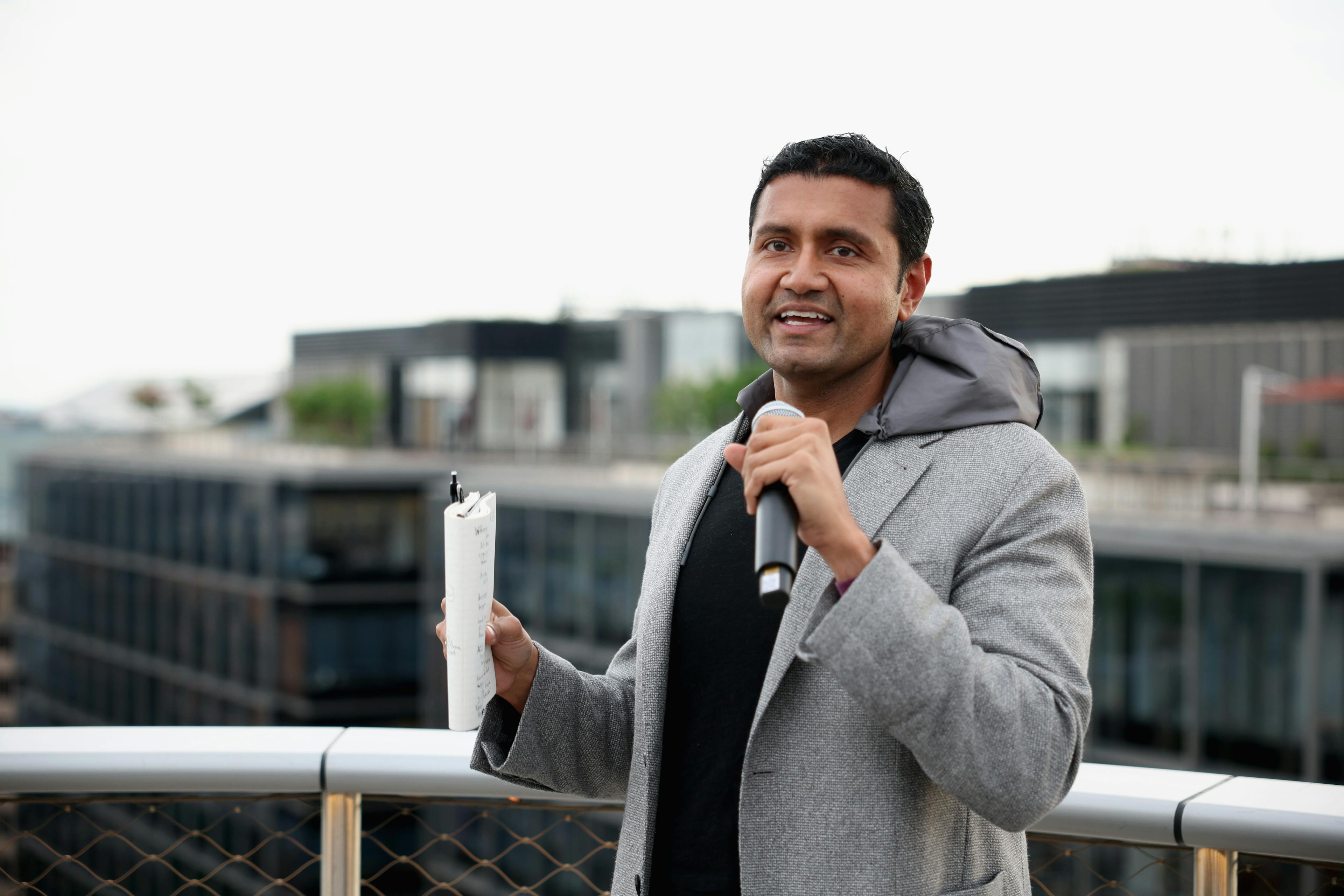
Palantir CTO Shyam Sankar (Tasos Katopodis/Getty Images)

Palantir execs like DOGE-related DC disruptions

CTO says Musk-led group to “bring meritocracy and transparency to government.”

Matt Phillips

We’ve recently remarked on the fact that the best-performing stocks in the S&P 500 since the presidential election are Palantir and Tesla, two companies in which right-wing tech oligarchs with close financial ties to and ideological overlap with the Trump administration have significant stakes.

The price surge clearly suggests investors see a high likelihood that business benefits accrue to the two firms under a Trump administration, though, as is always the case, it’s impossible to say precisely what those benefits might be. Favorable policies? Government contracts? Helpful regulatory actions? Who knows.

But in the conference call Palantir held after its strong Q4 earnings sent its stock sharply higher, I was struck by one section that seemed to flick at some of the possibilities that an ambitious defense and data analytics software firm like Palantir with a large government contracting business might see over the next four years.

When asked about some of the disruption and legal issues surrounding Elon Musk’s so-called Department of Government Efficiency — a structurally murky White House task force created by executive order to help the Trump administration with its stated goals of firing federal workers, abolishing government departments, and reducing government spending — Palantir CTO Shyam Sankar saw clear sales opportunities. He said:

“Palantir’s real competition is a lack of accountability in government — these forever software projects that cost an insane amount, that don’t actually deliver results. They’re sacred cows of the deep state... Soldiers in war zones preferred Palantir because it worked, and it happened to only cost millions of dollars. And I think DOGE is going to bring meritocracy and transparency to government, and that’s exactly what our commercial business is. The commercial market is meritocratic and transparent, and you see the results that we have in that sort of environment. And that’s the basis of our optimism around this. I think the work that we’ve done in government, it’s deeply operational, it’s deeply valuable. And we’re pretty excited about exceptional engineers getting in there under the hood and being able to see that for a change.”

Alex Karp, Palantir’s CEO, followed up:

“Disruption, at the end of the day, exposes things that aren’t working. There’ll be ups and downs. This is a revolution. Some people can get their heads cut off. It’s like we’re expecting to see really unexpected things and to win, basically... And we’re planning to do that and we’re pretty optimistic about the US environment.”

More Markets

See all Markets
markets

SpaceX gets a wave of bullish ratings from Wall Street analysts

SpaceX received more than a dozen positive analyst calls on Tuesday — including from major Wall Street banks — as they initiate coverage on Elon Musk’s space and AI company.

SpaceX went public on June 12 at a $2.2 trillion valuation, the largest debut in history. While the company hasn’t yet posted a profit, it seems to have convinced Wall Street that it will get there and grow its valuation on the way.

Of the at least 17 analysts that gave a rating on Tuesday, all but one gave it a “buy” or “outperform” rating. MoffettNathanson was "neutral."

The ratings come as SpaceX joined the Nasdaq 100 index, a benchmark tech-heavy basket of companies that underpins millions of portfolios. The inclusion adds built-in demand for the stock from index funds and ETFs.

Still, SpaceX fell more than 5% on Tuesday amid a broader sell-off, and is currently effectively flat from its opening price of $150 a share.

markets

Nike sinks to lowest level since 2014 after warning of “challenged” sales environment in Q4 report

Did Nike do it?

Investors had a mixed reaction after the global sports apparel company reported its fourth quarter earnings on Tuesday after the bell. Shares initially rose 5% as Nike beat out Wall Street expectations amid a hefty tariff refund bonus. However, the stock then sank to its lowest level since August 2014 in postmarket trading.

Here are the Q4 numbers:

  • Revenue of $11.0 billion (estimate: $10.8 billion).

  • Adjusted earnings per share of $0.20 (estimate: $0.12).

Ahead of this report, Nike warned that results would be flattered by a one-time tariff refund (now estimated at roughly $0.52 per share for the bottom line). That gave the company an extra cushion in snapping its streak of seven quarters of year-over-year profit declines.

Over the past year, the company had been punished by tariffs on imported goods, stagnant consumer spending, and increasing competition from other footwear brands like New Balance, Adidas, and Hoka.

Outgoing CFO Matthew Friend deemed it an “increasingly challenging operating environment, where sell-through remains challenged.”

Latest Stories

Sherwood Media, LLC and Chartr Limited produce fresh and unique perspectives on topical financial news and are fully owned subsidiaries of Robinhood Markets, Inc., and any views expressed here do not necessarily reflect the views of any other Robinhood affiliate, including Robinhood Markets, Inc., Robinhood Financial LLC, Robinhood Securities, LLC, Robinhood Crypto, LLC, Robinhood Money, LLC, Robinhood U.K. Ltd, Robinhood Derivatives, LLC, Robinhood Gold, LLC, Robinhood Asset Management, LLC, Robinhood Credit, Inc., Robinhood Ventures DE, LLC and, where applicable, its managed investment vehicles.

