Markets
2024 New York City Halloween Parade
Parade participants in a flash mob dance to “Thriller” by Michael Jackson (Roy Rochlin/Getty Images)

These charts from Goldman Sachs show how much the stock market is in thrall to a speculative frenzy

IPO pops and SPACs are back, call options are in ascendance, and trading activity in penny stocks, unprofitable companies, and expensive stocks is mooning.

Luke Kawa

The dot-com bubble and meme stock frenzy of 2021 are the only times speculative fervor has held a tighter grip over the stock market than it does today, according to Goldman Sachs.

Strategists led by Ben Snider detailed the many ways in which the footprint of exuberant risk-seeking behavior in the stock market is growing, headlined by the sharpest three-month rise in the bank’s “speculative trading indicator outside of those two high-profile episodes.

This metric — which tracks how much trading activity there is in penny stocks, unprofitable companies, and very expensively valued stocks — has reached historical extremes:
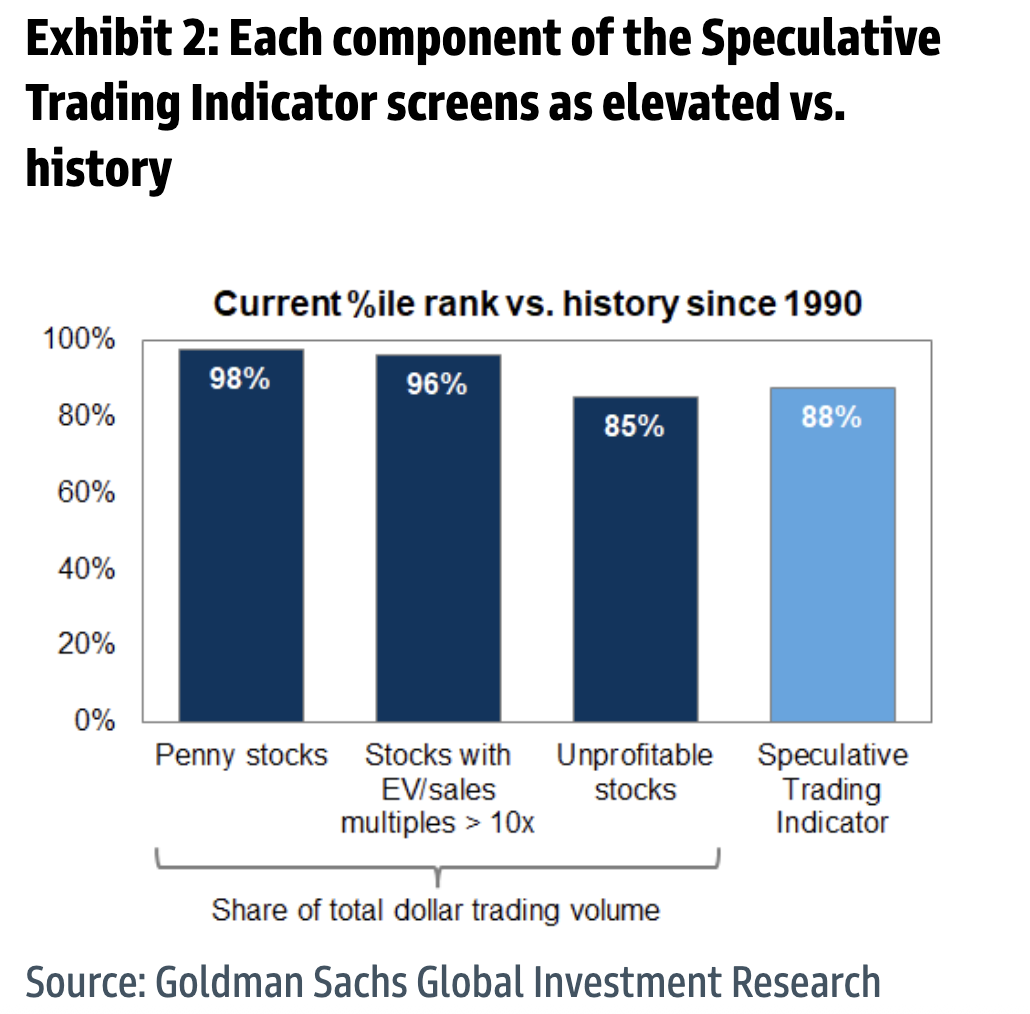
GoldmanSpecScreens

That’s supported by the “good vibes only” message from social media on the stock market:
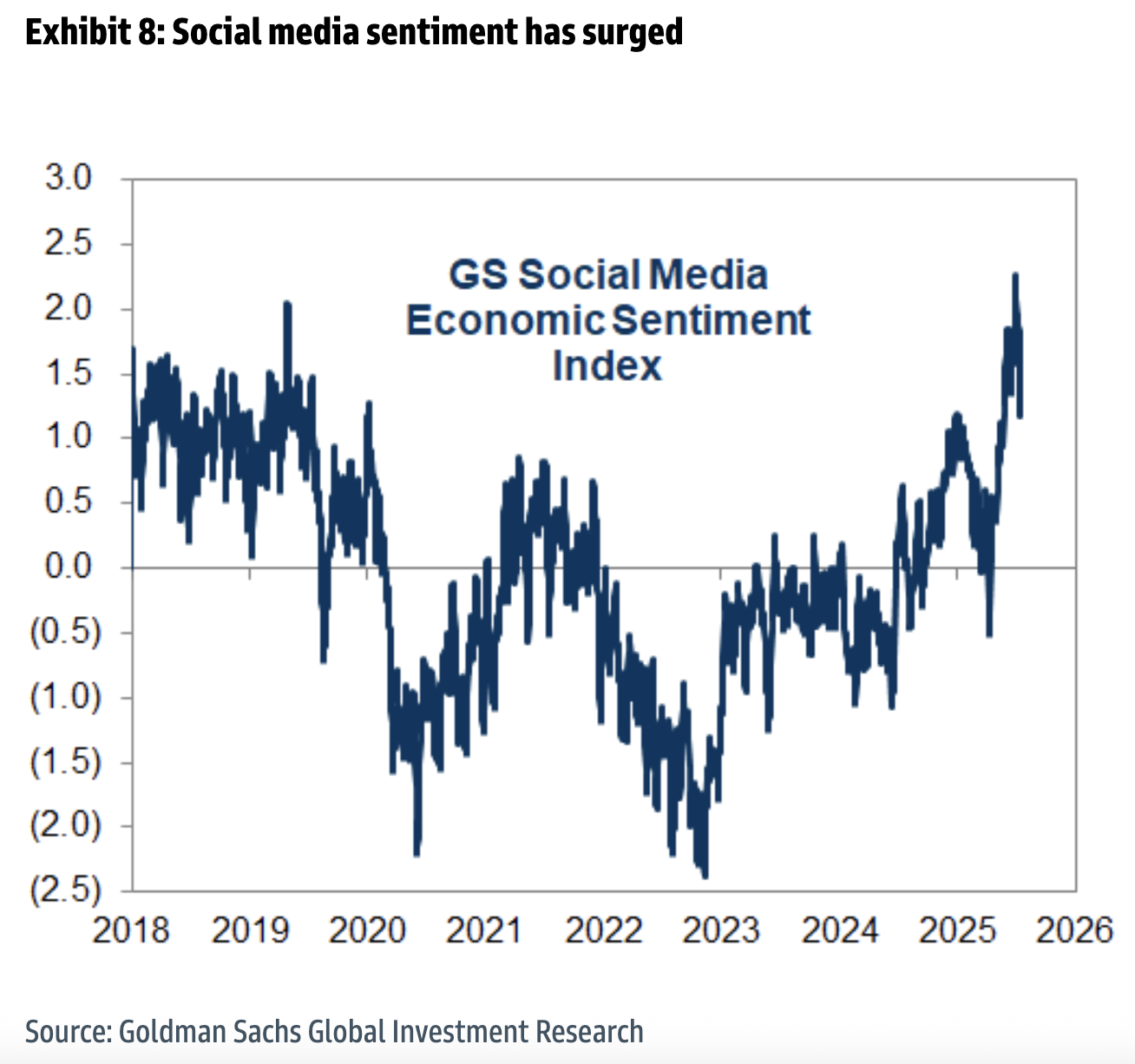
GSSocialIndicator

Call options, often the instrument of choice for retail traders piling into a new stock, are dominating options activity:
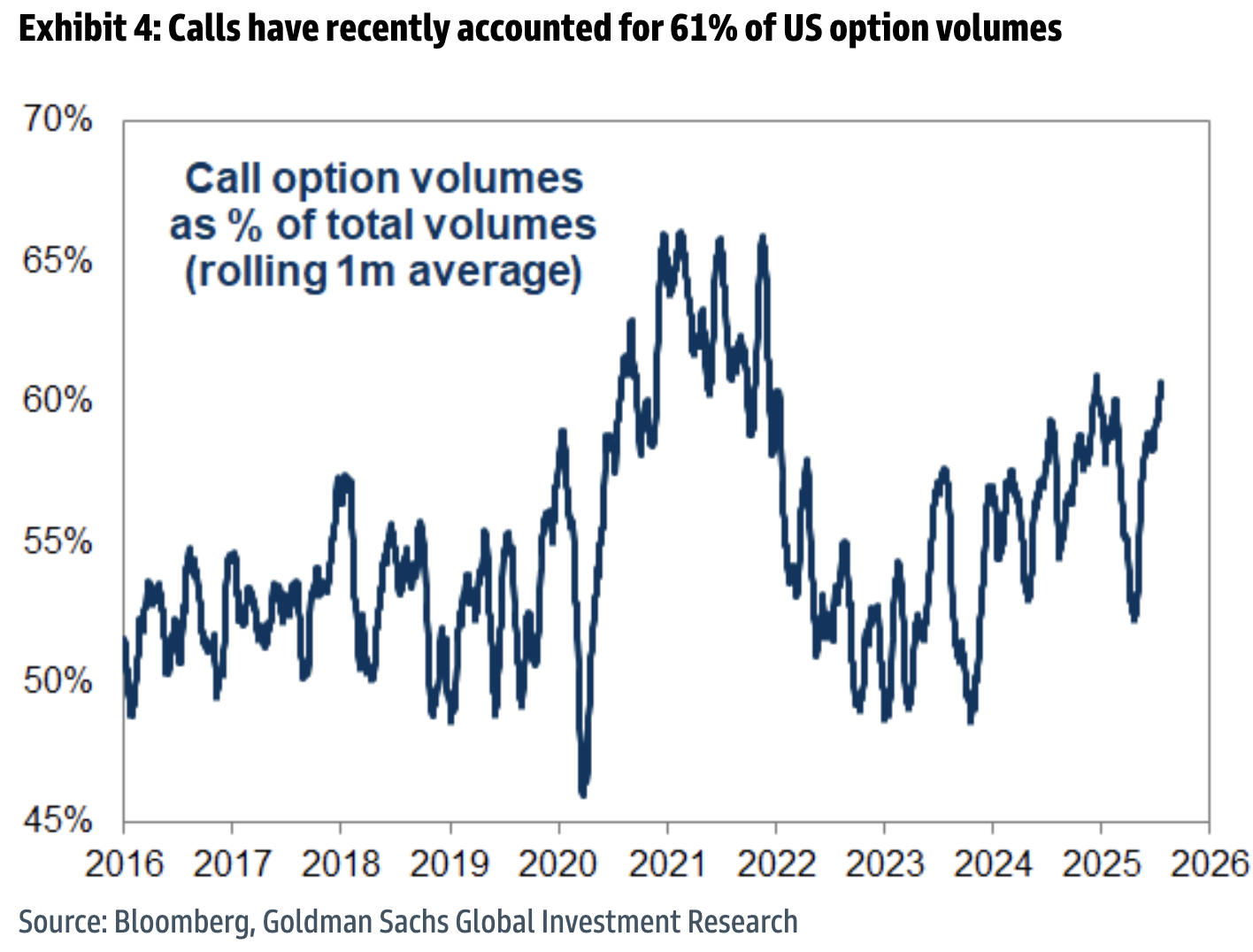
GSCallVolumes

Snider and company note that buyers’ binges have caused some of short sellers’ favorite targets to surge…
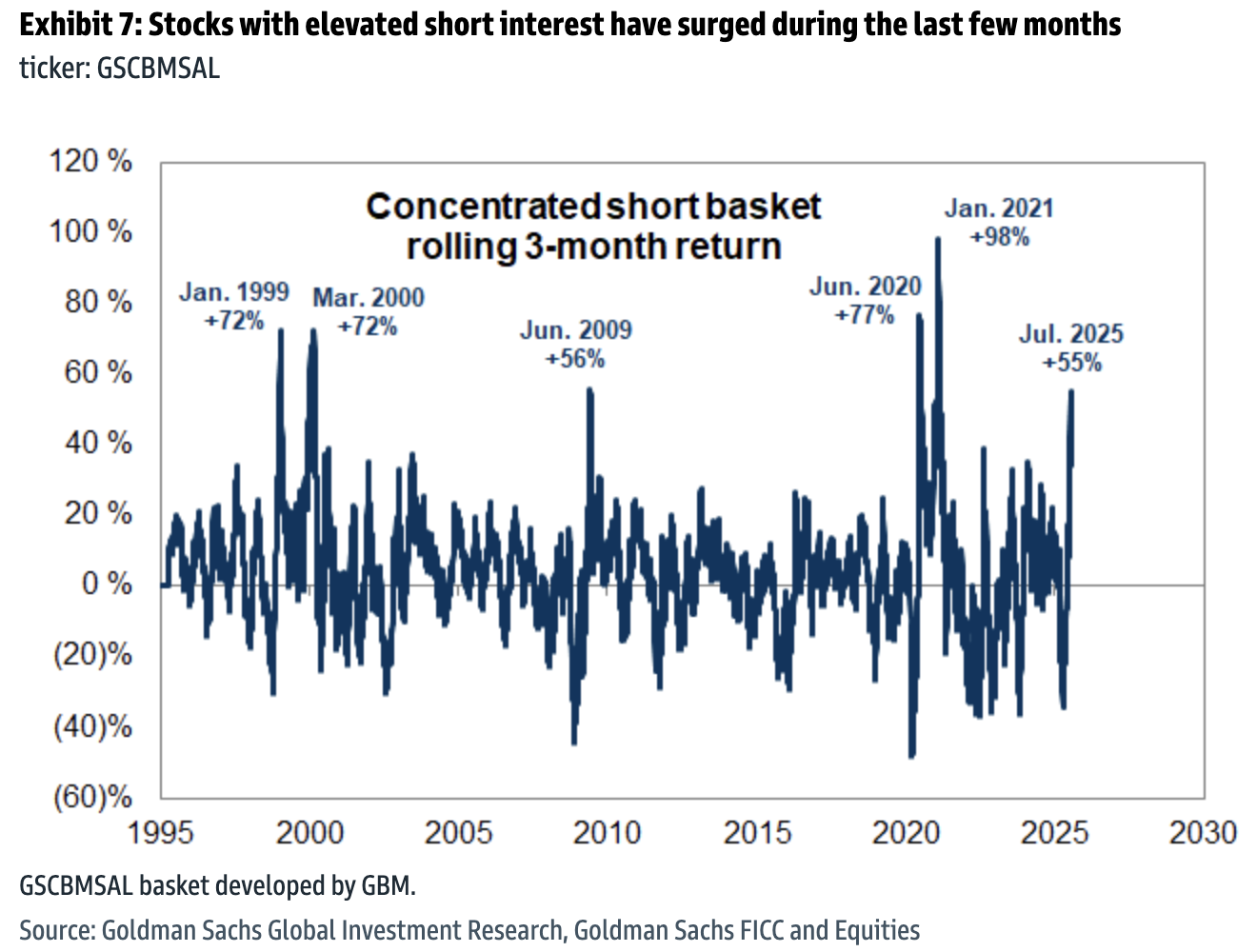
GSShortPerf

…with their peers at JPMorgan pointing out that these squeezes have been amplified by those bearish bets getting closed at a frenzied pace:

Not only is the index inclusion pop back, but IPOs are enjoying very strong starts relative to history:
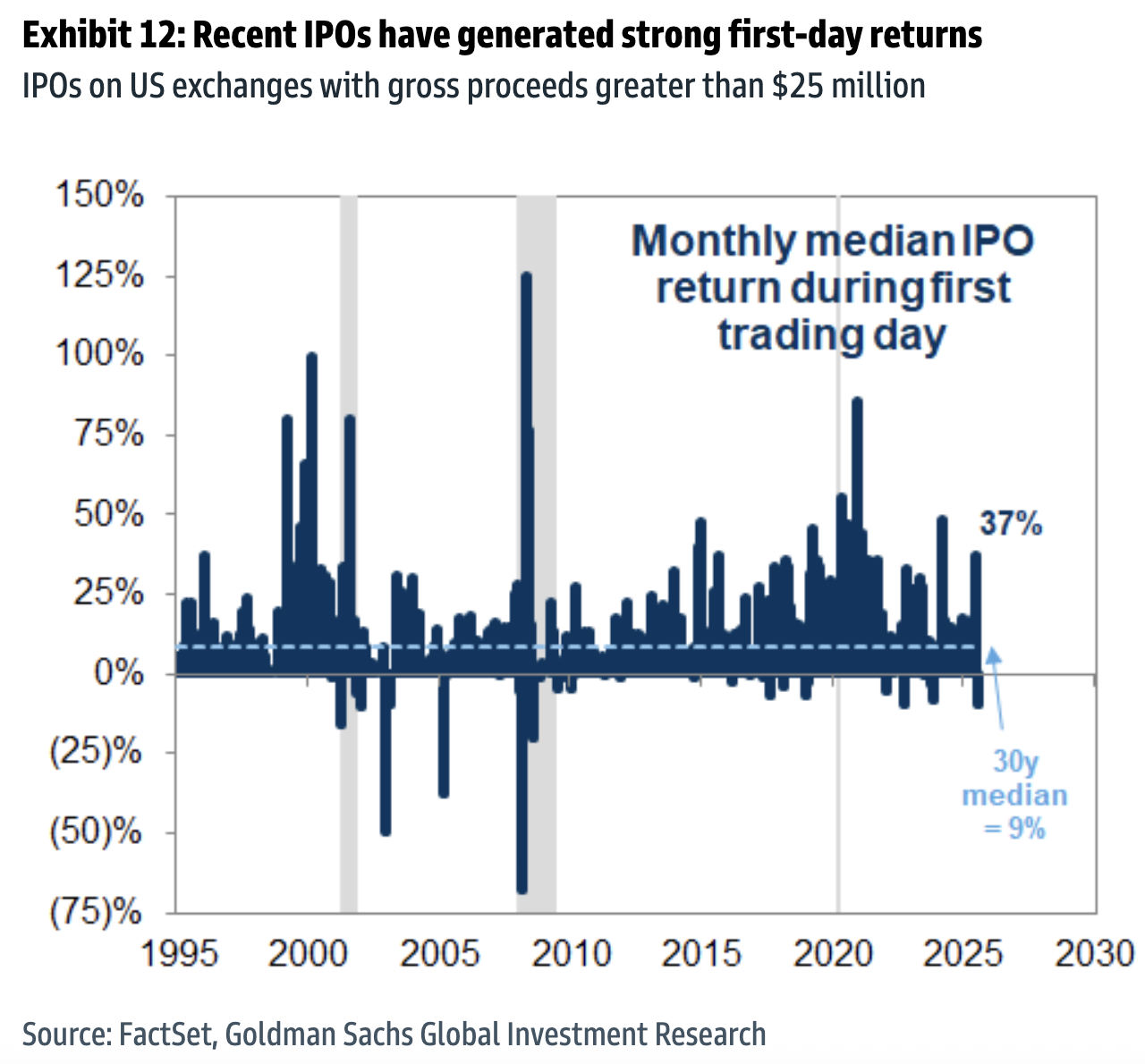
GSIPOpop


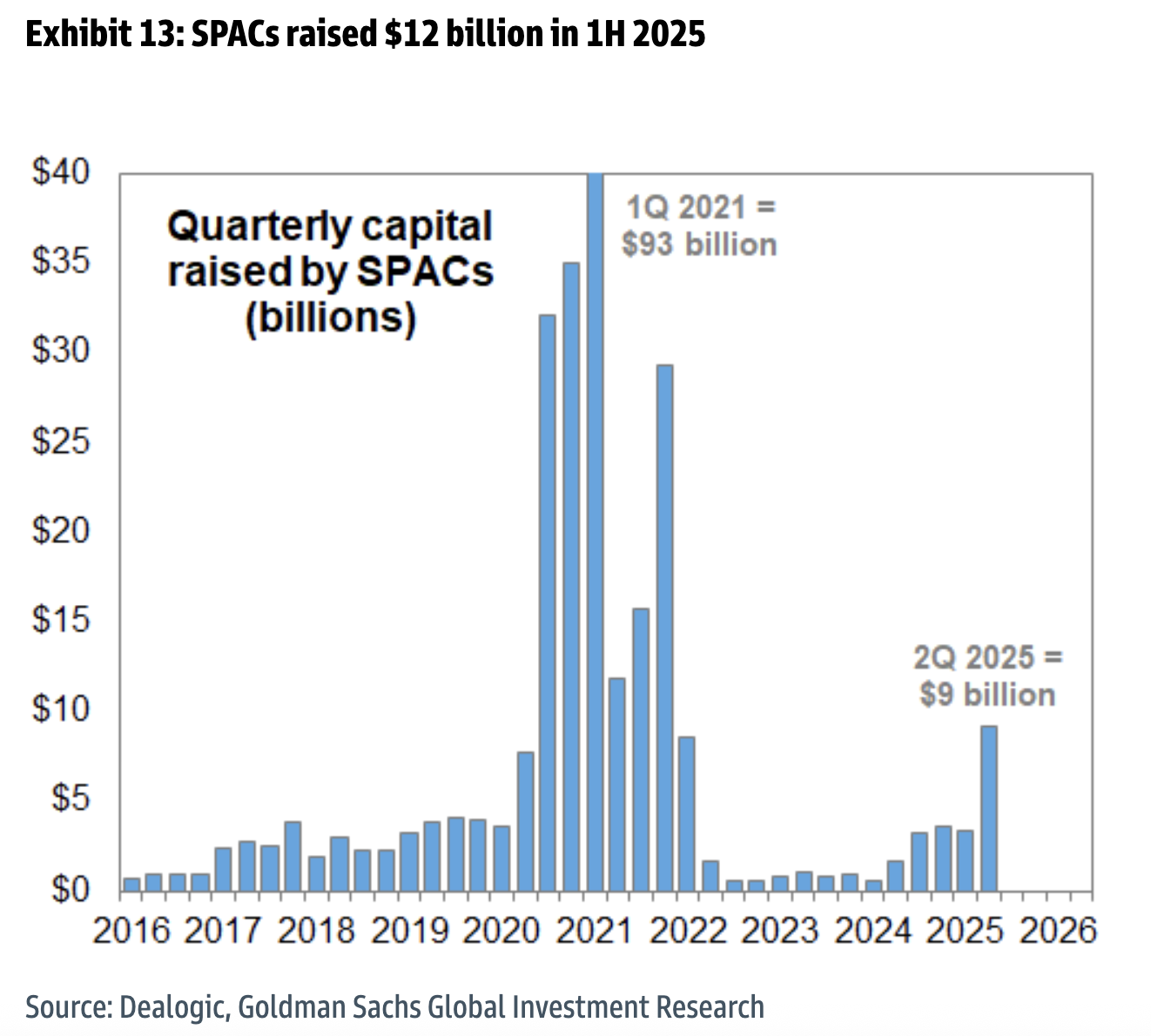
And SPACs are back:

SPACback

Goldman spotlights BigBear.ai, Lucid, Nvidia, Tesla, and Plug Power as some of the companies with the highest volumes in the Russell 3000 over the past month. That’s indicative of a bit of a barbell strategy in these speculative endeavors, with traders buying smaller tech companies and some of the largest companies in the world. Notably, its list excludes Opendoor, which was booted from the Russell 2000 (and 3000) near the end of June before trading 1.9 billion shares last Monday.

But when we zero in on the stocks with high turnover as a percent of shares outstanding, that list is dominated by smaller, more speculative companies that include thematically intriguing groups like quantum computing or crypto-linked companies.

“The recent rise in speculative trading activity signals near-term upside risk for the broad equity market but also increases the risk of an eventual downturn,” Goldman concludes. “During the last 35 years, other sharp increases in speculative trading activity have signaled above-average subsequent 3-, 6-, and 12-month S&P 500 returns, but returns typically faltered on a 24-month horizon.”


More Markets

See all Markets
markets

Data center trade deep in the red

The data center trade is seeing its steepest sell-off since the market rout that was ignited by President Donald Trump’s Rose Garden tariff announcement back in April.

Goldman Sachs’ themed basket of AI data center shares was down more than 6% at around 12 p.m. ET, putting it on track for its worst day since the tariff announcement.

Losses hammered seemingly every form of input needed for the sprawling concrete server warehouses at the heart of the investment boom.

Hardware makers including data storage companies like Sandisk, Western Digital, and Seagate Technology Holdings, as well as DRAM maker Micron — some of the best-performing stocks in the S&P 500 this year — were taking a licking, as were networking stocks Cisco and Arista Networks and data center builders such as Vertiv Holdings and electrical and mechanical contractor Emcor.

Optimism for all things AI has seemed to evaporate throughout the week, as the stock market greeted lackluster quarterly numbers from Oracle and Broadcom with jittery sell-offs and concern about growing debts that could crater cash flows.

Those worries seem to be spreading to ancillary beneficiaries of the AI boom on Friday, gouging a chunk out of charts that retail dip buyers have not — at least so far — stepped in to buy as we head into the weekend.

markets

Oracle denies Bloomberg report that it’s delaying some data centers for OpenAI to 2028 from 2027

Getting a multi-hundred-billion-dollar backlog for cloud computing revenues from data center projects is easy. Building them is hard.

Oracle extended declines to as much as -6.5% on the day on the heels of a Bloomberg report that the cloud giant has pushed back the completion dates for some of the data centers it’s building for OpenAI to 2028 from 2027, citing people familiar with the work. Oracle denied this report, telling Reuters that there have been no delays to any sites required to meet its contractual commitments and that all milestones remain on track.

Shares had fully pared their report-induced drop ahead of Oracle’s reply, but remain in the red for the day.

Bloomberg said the reported postponement was attributed to labor and material shortages.

Oracle has been spending more on capex than Wall Street had anticipated, leading to higher-than-expected cash burn. Management boosted its full-year capital spending plans by $15 billion after reporting Q2 results earlier this week.

Oracle’s cloud infrastructure sales came in short of estimates in its fiscal 2026 Q2, a signal that markets already had reason to doubt its ability to quickly turn its humungous RPO (that is, remaining purchase obligations) into revenues.

Traders also seem to be of the mind that potential delays to data center completions are going to limit sales for what goes into them.

Some of the bigger losers since the Bloomberg headline hit the wires include:

markets

Broadcom’s post-earnings tumble is weighing on Google’s entire AI ecosystem

Broadcom’s post-earnings plunge is prompting a sharp pullback in Google-linked AI stocks, which had been on fire thanks to the warm reception to Gemini 3.

The stocks getting hit hard:

A basket of these Google-linked AI stocks compiled by Morgan Stanley is suffering one of its worst losses of the year. This brisk retreat also follows the release of GPT-5.2 by OpenAI.

markets

Citi initiates coverage of Planet Labs with “buy” rating

Planet Labs was up after aerospace and defense analysts at Citi initiated coverage with a “buy/high risk” rating and $19 price target.

The stock is up more than 40% this week, after a strong earnings result that spotlighted the company’s growing opportunity in linking its core business of capturing daily images of the planet with AI technologies.

Citi analysts noted the potential for a positive flywheel effect for Planet Labs as it deepens its focus on integrating AI into its offerings:

“AI is accelerating the conversion of pixels to decisions, where Planet’s daily scan and deep archive offer a uniquely large training corpus and broad-area foundation for automation. AI-enabled solutions (MDA/GMS/AMS) are gaining traction with customers such as NATO and the U.S. DoW, validating the approach of integrating AI into broad-area monitoring products... These AI moves create a compounding advantage: more coverage generates more training data, which improves models, which in turn increases product utility and addressable demand.”

The stock has also caught the attention of some of the retail trading crowd, with call options activity spiking on Thursday as traders rode the market reaction to the results.

Latest Stories

Sherwood Media, LLC produces fresh and unique perspectives on topical financial news and is a fully owned subsidiary of Robinhood Markets, Inc., and any views expressed here do not necessarily reflect the views of any other Robinhood affiliate, including Robinhood Markets, Inc., Robinhood Financial LLC, Robinhood Securities, LLC, Robinhood Crypto, LLC, or Robinhood Money, LLC.