

Litigation investment
Ambulance chasers on steroids

How to turn someone else's lawsuit into a $6B payday
Inside the weird world of litigation finance
Investing can look like anything. You can purchase stock, you can buy an NFT of a monkey smoking a cigarette, you can even invest in yourself by buying “Magic” cards and then selling them to Post Malone.
But if those more traditional methods aren’t your speed, there is another option: bankrolling a lawsuit. Last year, finance firm Burford Capital did exactly that, financing a case against Argentina that it had nothing to do with. That formula scored the firm a cool 37,000% return on investment.
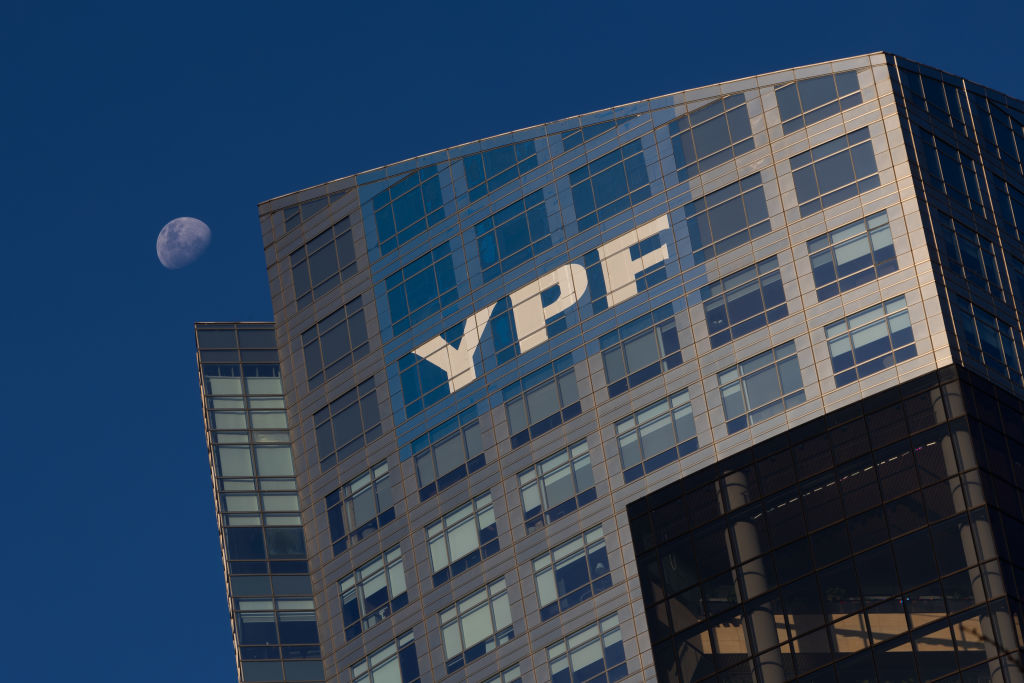
In 2015, Burford, a publicly traded company, began financing a case against Argentina over the country’s nationalization of its largest oil company (YPF) by two minority shareholders. After a long legal battle that included an unsuccessful US Supreme Court appeal, Argentina lost the case last year and was ordered to pay YPF shareholders $16 billion. Burford’s share of the pot: $6.2 billion (on just a $17 million investment).
Collecting the money is proving challenging: Argentina, dealing with the world’s worst inflation, says it doesn’t have the cash. But Burford CEO Christopher Bogart appears optimistic that the firm’s payday will come. Earlier this year, a US judge ruled that Burford could start going after Argentina’s assets (a big ship, for example) to satisfy debts, but doing so in reality is difficult. Ultimately, some legal experts expect Burford to take home significantly less than they were awarded, potentially halving their return to a measly 18,000% or so.
Welcome to the high-risk, high-reward possibilities of litigation finance.
Litigation finance, aka litigation funding, is an alternative investment vehicle where deep-pocketed and often anonymous third parties fund lawsuits in exchange for a potentially big chunk of the winnings. It’s doing well: Burford’s revenues tripled last year to $1.1 billion. Today, litigation finance is a more than $15 billion industry in the US, used in cases ranging from antitrust to personal injury to divorce.
Worldwide, the industry has its roots in the 1990s (though the practice dates to antiquity) and began making headlines in the US after billionaire Peter Thiel secretly bankrolled Hulk Hogan’s 2016 case against Gawker Media.
Supporters say that litigation funding gives plaintiffs — who may not have the financial means to stay in a protracted court battle — a fighting chance. Critics say that it helps wealthy investors exert control over the legal system and that it’s less often a case of helping David fight Goliath than a case of helping the wealthy sue the ultrawealthy.
“Litigation finance looks for Davids who are already likely to win,” said Frank Garcia, a Boston College law professor. “Funders,” he said, “are using the ‘access to justice’ rationale, but the real access to justice problems — the real Davids of the world who need help — if they’re not in cases that are going to be profitable, litigation finance is not interested.”
Some case types certainly attract more funding than others. Burford has spent at least $140 million since 2019 backing antitrust cases. Funding for climate litigation — like pollution and greenwashing — is on the rise. But the real cash cow in litigation finance is intellectual property and patent law. It’s the largest funding category, pulling in almost a fifth of all committed cash, according to a report released last month by Westfleet Advisors, which has tracked the industry for five years.
Westfleet CEO Charles Agee said patent cases are big targets for funding because the cases tend to feature a budget imbalance between the two parties — such as an individual inventor with a potentially huge case against a major tech company.
Before you go dumping your savings into your neighbor’s “Google stole my idea for a search engine” lawsuit, you may want to consider an inherent risk to litigation finance: your side needs to win or you don’t get anything.
To offset that risk, funders don’t invest in cases lightly, opting instead for a robust, data-backed legal method, based on sabermetrics (aka the “Moneyball” method). Legalist, a Bay Area litigation fund, has seen a 75% success rate, according to CEO Eva Shang, by running an intensive “he gets on base” financing strategy. Burford said its track record is higher than 90%.
Funders don’t disclose the factors that go into deciding to invest in a case — that’s proprietary — but factors in a funder's decision matrix could include the judge on the case, the venue, the potential damage amount, collectability, the defendant’s likelihood to settle to avoid public scrutiny, and even plaintiff likability.
Another way to hedge risk in litigation finance is to batch cases together. According to Westfleet’s report, two-thirds of litigation funding deals are in bundled portfolio structures.
“We’ve seen through the global financial crisis what happens when you take questionable legal instruments and bundle them together and appear to create something that has less risk than the pieces that are inside it,” Garcia said. “I think we've seen on a planetary basis how that can explode.”
Lisa Sachs, director of the Columbia Center on Sustainable Investment, likens litigation funders to ambulance chasers on steroids, given the sheer size of the claims they fund — regularly against poorer countries. Those cases exist within an area of law called investor-state dispute settlement (ISDS), in which investors, often backed by funders, sue nation states. According to Sachs, litigation finance adds to the “monstrosity” of ISDS.
“It’s not that, inherently, the idea of getting support for a claim is problematic in and of itself,” Sachs said. “The lack of disclosure, the absence of any rules of procedure, the fact that it’s layered on top of this already illegitimate system, make it inherently problematic.”
One example of how litigation finance can play out in ISDS: In 2015, Italy banned oil drilling close to shore. UK oil company Rockhopper filed a lawsuit against the country, bankrolled by Harbour Litigation Funding. In 2022, Rockhopper was awarded $265 million by a closed-door tribunal. Ostensibly, litigation funding worked as a cudgel against a country’s environmental reform.
Despite its size and the apparent risks, litigation finance hasn’t faced much state or federal regulation in the US. According to LexisNexis, legislation is pending in 10 states. Critics say that the lack of disclosure rules could provide space for funders to exert control over the cases they finance. Lisa Rickard, a former president of the US Chamber of Commerce Institute for Legal Reform, called it a “cancerous growth on our civil justice system.”
It’s important to note that litigation finance doesn’t always end with the plaintiffs and the funders grabbing victory drinks together. When a woman injured in a car accident in 1995 was finally awarded $170,000 in 2003, interest rates from her lawsuit loan meant she owed her litigation funders $221,000 — $51,000 more than she’d won.
In 2007, network-security provider DeepNines, with funding from Altitude Capital, won a $25 million settlement in a patent case against McAfee. After legal fees and Altitude’s cut, DeepNines took home $800,000, about 3% of its settlement.
And sometimes litigation funders and clients can end up in ouroborosian litigation with each other. Burford last year entered litigation with its own client, food distributor Sysco, saying that Sysco was preparing to accept too low a settlement. After both parties dropped their suits, Burford actually took over as the plaintiff in the original case.
It’s these kinds of outcomes — and other risks to the legal system — that lead many critics and lawmakers to call for greater transparency in the industry. But Sachs thinks that’s too little, too late.
“All of the underlying policy concerns that I have are not addressed by transparency,” said Sachs, who added that banning litigation funding would “stop pouring gasoline on the fire” of ISDS.
Garcia similarly supports a full ban on litigation finance in America.
“The more it becomes common knowledge that very wealthy investors are investing in lawsuits all over the place and turning the justice system into yet another profit-making opportunity, I think we're running a risk of serious cynicism about the nature of justice and litigation itself,” Garcia said. “That’s something which I think we can’t afford to play with.”