Amazon joins Alphabet and Microsoft in the quantum chip club
The first rule of Quantum Chip Club is you make a big announcement about being part of Quantum Chip Club.
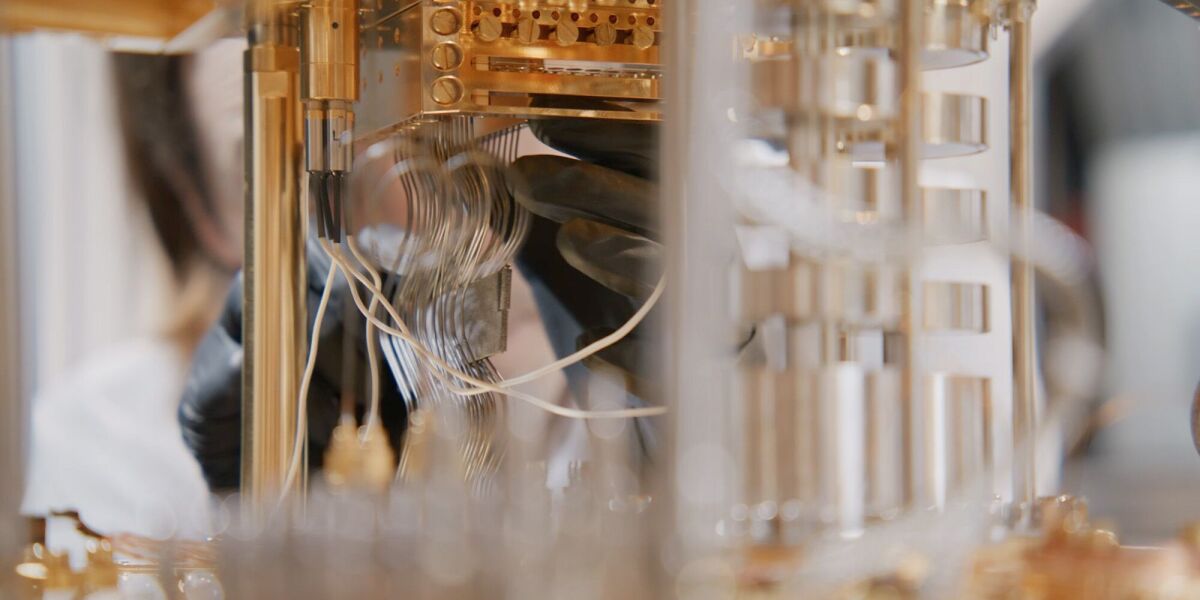
Today, Amazon Web Services unveiled its first quantum chip, Ocelot, which “represents a breakthrough in the pursuit to build fault-tolerant quantum computers capable of solving problems of commercial and scientific importance that are beyond the reach of today’s conventional computers.”
It said scaling the chip to a “fully-fledged quantum computer capable of transformative societal impact would require as little as one-tenth of the resources associated with standard quantum error correcting approaches.”
Welcome to the club.
If you haven’t heard about the latest trend among the Silicon Valley tech giants, quantum chips are super powerful and can do in a few minutes what today’s supercomputers would take septillions — yes, septillions — of years to do.
Earlier this month, Microsoft released its first quantum chip, Majorana 1, which it billed similarly as “breakthrough” and a “transformative leap toward practical quantum computing.”
Late last year, Alphabet announced its latest and greatest quantum chip, Willow, which it lauded for its “breakthrough achievements,” including performing a benchmark computation that would take today’s fastest supercomputers 10 septillion years — “a number that vastly exceeds the age of the Universe” — in less than five minutes.
Amazon, which also launched an upgraded AI assistant Alexa+ yesterday, is up more than 1% premarket.

It said scaling the chip to a “fully-fledged quantum computer capable of transformative societal impact would require as little as one-tenth of the resources associated with standard quantum error correcting approaches.”
Welcome to the club.
If you haven’t heard about the latest trend among the Silicon Valley tech giants, quantum chips are super powerful and can do in a few minutes what today’s supercomputers would take septillions — yes, septillions — of years to do.
Earlier this month, Microsoft released its first quantum chip, Majorana 1, which it billed similarly as “breakthrough” and a “transformative leap toward practical quantum computing.”
Late last year, Alphabet announced its latest and greatest quantum chip, Willow, which it lauded for its “breakthrough achievements,” including performing a benchmark computation that would take today’s fastest supercomputers 10 septillion years — “a number that vastly exceeds the age of the Universe” — in less than five minutes.
Amazon, which also launched an upgraded AI assistant Alexa+ yesterday, is up more than 1% premarket.