Tech
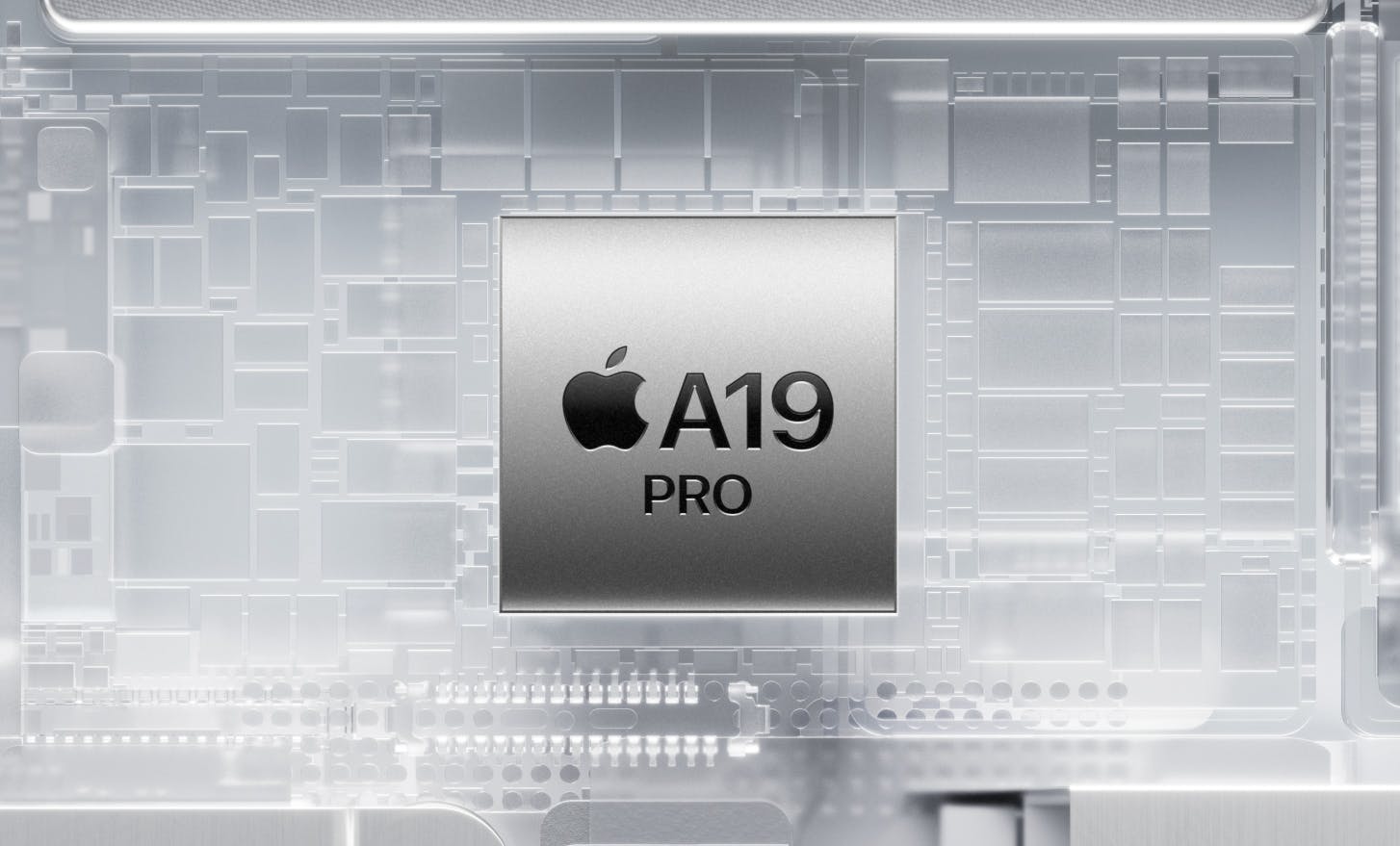
Apple A19 Pro chip
(Apple)

Apple is packing a growing number of self-built custom chips into its gadgets

Fifteen years ago, Apple started on a journey to build its own custom chips. Today, more and more core functions are running on Apple silicon.

The sleek industrial design of Apple iPhones and watches was the obvious the star of last week’s product release event. But beneath the ceramic shields, proprietary alloys, and aluminum unibodies, you’ll find more and more chips that are custom designed by Apple.

For 15 years, the company has been steadily moving away from third-party chips in favor of designing its own. Apple has repeatedly shown the advantages of owning the entire “tech stack” — when you build the software and the hardware, you can optimize power consumption and enable custom features that your competitors can’t.

Apple designs its own chips, but most of them have been manufactured by TSMC in a close partnership that has made Apple one of the chip giant’s largest customers.

During last week’s Apple event — which introduced the new iPhone Air, iPhone 17 lineup, and refreshed Apple Watches — the company spotlighted two new custom Apple silicon chips. It showed off the N1, “a new Apple-designed wireless networking chip that enables Wi-Fi 7, Bluetooth 6, and Thread,” and the C1X, a second-generation cellular modem chip, which both debut in the new ultrathin iPhone Air.

A 15-year journey

After some collaborations with Samsung for its early iPhone chips, Apple’s A4 chip was the first one that the company touted as an Apple custom chip, which Steve Jobs debuted when he introduced the original iPad in 2010. 

A decade later, in 2020, Apple moved away from Intel processors for its Mac computers. The M1 processor was a system on a chip (SoC), which packed a CPU, GPU, security, and I/O control all onto one chip. Designing a custom chip for the Mac allowed Apple to boost power and efficiency, as it controlled both the software and hardware. Apple said that the M1 resulted in twice the performance of an Intel-powered PC for one-quarter of the power.

The company has also pushed into cellular connectivity. While the iPhone 16 still used a cellular modem from Qualcomm, it introduced the first Apple-designed C1 cellular modem chip in the low-cost iPhone 16e. 

Over the years, Apple has expanded its custom silicon to support more and more of the functions of its products.

Developing its own C series cellular modem chip was a major achievement, as it sits at heart of the iPhone’s core purpose: connecting to cellular networks for voice and data. On its first-quarter 2025 earnings call, when asked about the first-generation C1 chip, Apple CEO Tim Cook framed the effort as the beginning of a long-term strategy: 

“We’re super excited to ship the first one and get it out there, and it’s gone well. We love that we can produce better products from a point of view of really focusing on battery life and other things that customers want, and so we have started on a journey, is the way I would put it.”

The next frontier

With so many of the existing features already switched over to Apple silicon, the company is now looking toward an area where it badly needs to catch up: AI.

The Wall Street Journal reported last year that Apple has been collaborating with TSMC on making its own AI chips for its data centers that will power features for Apple services, a move out of step with the rest of the industry, which has favored GPUs made by Nvidia.

Apple’s years of experience building custom chips gives it an edge over other tech companies like OpenAI, Amazon, and Google, which have recently started doing the same.


More Tech

See all Tech
tech

Meta to lay off 8,000 employees, move 7,000 to new initiatives related to AI

On Wednesday, Reuters reported Meta plans to lay off about 8,000 employees in three batches and move another 7,000 employees to “new initiatives related to AI workflows.” The company also plans to “eliminate managerial roles,” though Reuters did not specify how many.

Reuters had previously reported the number and date of the layoffs, but details of the restructuring come from a new internal document from the company’s head of human resources. The cuts come as Meta tries to balance its enormous capex budget of $125 billion to $145 billion this year, as it builds out its AI infrastructure.

As of the company’s last earnings report, its headcount was 77,986.

Reuters had previously reported the number and date of the layoffs, but details of the restructuring come from a new internal document from the company’s head of human resources. The cuts come as Meta tries to balance its enormous capex budget of $125 billion to $145 billion this year, as it builds out its AI infrastructure.

As of the company’s last earnings report, its headcount was 77,986.

tech

Google employees are now competing with Anthropic and Meta for access to Google compute

Google built its reputation as a paradise for ambitious researchers: a place where smart people got massive resources and freedom to experiment.

But in the AI era, the physical infrastructure that powers those breakthroughs is maxed out, and even Google’s own employees are reportedly struggling to get enough computing power.

According to Bloomberg, the bottleneck comes down to hardware. Google’s custom-built AI chips — tensor processing units, or TPUs — are in such high demand that internal researchers say they’re effectively competing for rack space against massive, paying cloud customers like Anthropic and Meta. Frustrated by the bureaucracy of fighting for server time, top engineers are jumping ship to launch their own startups, arguing they can secure more reliable access to infrastructure on the open market than inside the company that actually builds it.

In other words: Google became so successful at selling AI infrastructure that its own researchers now have to justify experimental projects against revenue-generating workloads and a more than $460 billion backlog of paying tenants.

According to Bloomberg, the bottleneck comes down to hardware. Google’s custom-built AI chips — tensor processing units, or TPUs — are in such high demand that internal researchers say they’re effectively competing for rack space against massive, paying cloud customers like Anthropic and Meta. Frustrated by the bureaucracy of fighting for server time, top engineers are jumping ship to launch their own startups, arguing they can secure more reliable access to infrastructure on the open market than inside the company that actually builds it.

In other words: Google became so successful at selling AI infrastructure that its own researchers now have to justify experimental projects against revenue-generating workloads and a more than $460 billion backlog of paying tenants.

$420

Elon Musk once promised to take Tesla private at $420. More recently, he’s been offering xAI employees $420 to hand over their private tax returns as training data for Grok, Bloomberg reports, citing internal chats. In an effort to boost the chatbot’s tax-prep capabilities, the company asked employees — as well as friends and family — to submit completed tax returns in exchange for cash that, two months later, still hasn’t materialized. xAI is owned by the soon-to-be-public SpaceX.

tech

EY retracts report with apparent AI hallucinations

Consulting firm EY has retracted a report on travel loyalty points that an AI watchdog had found was full of hallucinations.

AI-detection firm GPTZero alleged that the report was “riddled with hallucinations,” including citing numerous sources that didn’t appear to exist. Sherwood News exclusively reported on GPTZero’s findings about the report on Thursday. EY didn’t respond to multiple requests for comment.

The firm later told the Financial Times that it had retracted the report, saying it was “reviewing the circumstances that led to this article’s publication.” It said the study wasn’t connected to work for any of its clients. 

“EY Canada takes the accuracy of all the content we publish seriously and we have an organization-wide commitment to the responsible use of AI,” EY said, according to the FT.

A link to the report on EY’s site now displays an error: “Oops! We couldn’t find the page you were looking for.” 

The firm later told the Financial Times that it had retracted the report, saying it was “reviewing the circumstances that led to this article’s publication.” It said the study wasn’t connected to work for any of its clients. 

“EY Canada takes the accuracy of all the content we publish seriously and we have an organization-wide commitment to the responsible use of AI,” EY said, according to the FT.

A link to the report on EY’s site now displays an error: “Oops! We couldn’t find the page you were looking for.” 

tech

Elon Musk expects Tesla Robotaxis to be “widespread” in the US by the end of the year

After an uncharacteristically clear-eyed earnings call where Elon Musk was cautious about the timing of the company’s many ambitious goals, the Tesla CEO is back to making his usual unlikely predictions:

“We already have some vehicles operating with no people inside and no safety monitors in three cities in Texas, and it probably will be widespread in the US by the end of this year,” Musk said by video at the Smart Mobility Summit in Tel Aviv on Monday. It’s a prediction Musk has made before, but that doesn’t mean it’s going to happen.

Tesla’s expansion of its Robotaxi service, which launched nearly a year ago, has been painstakingly slow. The vast majority of the Robotaxis — more than 500 in the Bay Area — have a person behind the wheel using a version of Supervised Full Self-Driving. In Austin, 12 of the 40 Robotaxis have been spotted driving unsupervised in the last week, according to Robotaxi Tracker. There are two more each in Dallas and Houston. Alphabet’s Waymo, by comparison, is already operating more than 3,000 of its driverless vehicles in cities across the country.

“Initially, were taking a very cautious approach to the rollout here,” Musk had said on the last earnings call, estimating the service would be in a dozen states by the end of the year. Today he was more bullish, estimating that in 5 or 10 years, “90% of all distance driven will be driven by the AI in a self-driving car.”

Latest Stories

Sherwood Media, LLC and Chartr Limited produce fresh and unique perspectives on topical financial news and are fully owned subsidiaries of Robinhood Markets, Inc., and any views expressed here do not necessarily reflect the views of any other Robinhood affiliate, including Robinhood Markets, Inc., Robinhood Financial LLC, Robinhood Securities, LLC, Robinhood Crypto, LLC, Robinhood Money, LLC, Robinhood U.K. Ltd, Robinhood Derivatives, LLC, Robinhood Gold, LLC, Robinhood Asset Management, LLC, Robinhood Credit, Inc., Robinhood Ventures DE, LLC and, where applicable, its managed investment vehicles.