Tech
Man and Girl Walking Through Aisle of Computers
(CSA-Printstock/Getty Images)
great scott!

Clash of the titans: Here are the biggest AI data center projects

Hyperion, Colossus, Prometheus, and Stargate. Our guide to the GPUs and gigawatts that make up the largest AI infrastructure projects in the industry.

Jon Keegan
Updated 9/24/25 12:02PM

Nvidia’s $100 billion megadeal with OpenAI to build massive AI data centers filled with Nvidia GPUs sets a new threshold for unprecedented computing power: the plan describes a partnership to build a staggering 10 gigawatts of computing power.

Gigawatts — a million kilowatts — is a metric increasingly used as a yardstick to measure the scale of AI infrastructure and the energy consumed by projects like these. According to the Department of Energy, in 2022 the average annual amount of energy used by a residential home was 10,791 kilowatt-hours (kWh). Based on this figure, 10 gigawatts is roughly enough power to supply 8 million homes for a day.

The other key attribute of these titanic data centers is how many thousands of pricey GPUs are filling their racks to the ceiling. Here’s how the biggest-profile projects from the top players stack up:

There are a lot of billions of dollars and gigawatts flying around. Here’s a guide to the biggest AI data center projects underway.


Nvidia and OpenAI partnership

Nvidia says it will invest as much as $100 billion into OpenAI as part of an unprecedented 10-gigawatt data center buildout. Nvidia CEO Jensen Huang told CNBC that the project would be “the biggest AI infrastructure project in history.” Reuters reports that the deal gives Nvidia nonvoting shares for its staged investment in OpenAI, and OpenAI in turn uses that money to purchase the GPUs from Nvidia. Final details of the plan are yet to be announced.

  • Location: ???

  • Power: 10 gigawatts

  • GPUs: 4 million to 5 million

  • Value: $100 billion


OpenAI, Oracle, SoftBank - “Stargate”
stargate
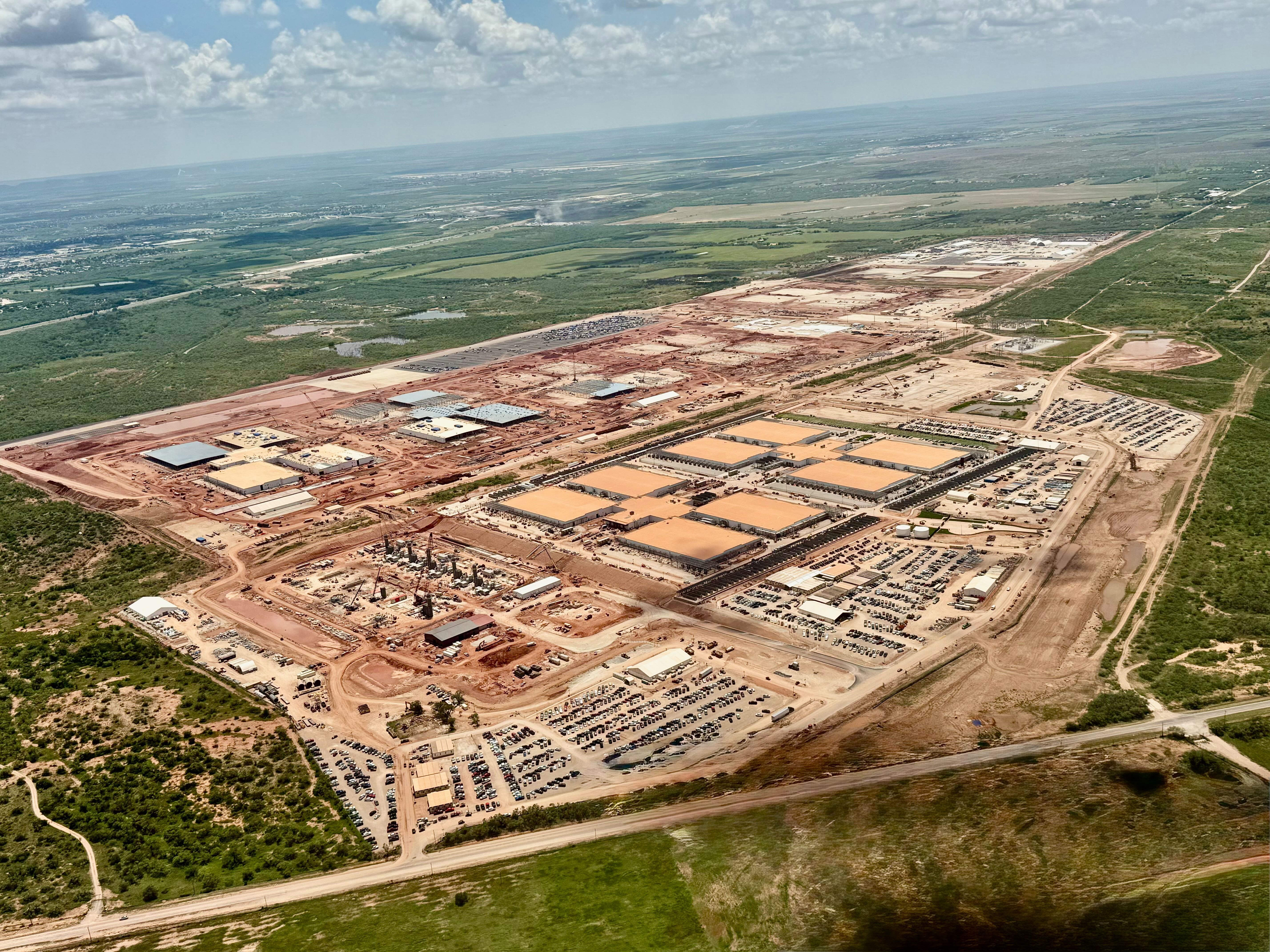
Stargate I (OpenAI)

Stargate is the $500 billion OpenAI partnership with Oracle and SoftBank to build a series of massive AI data centers, totaling 5.5-gigawatts. The latest announcement expanded the number of locations for the facilities and puts the project ahead of schedule after earlier doubts had been surfaced around the timeline.

  • Locations: Abilene, Texas; Shackelford County, Texas; Doña Ana County, New Mexico; Lordstown, Ohio; Milam County, Texas, undisclosed site in the Midwest.

  • Power: 5.5 gigawatts

  • GPUs: 2 million

  • Value: $500 billion (over four years)


Meta - “Hyperion”
Richland-Parish-Data-Cener
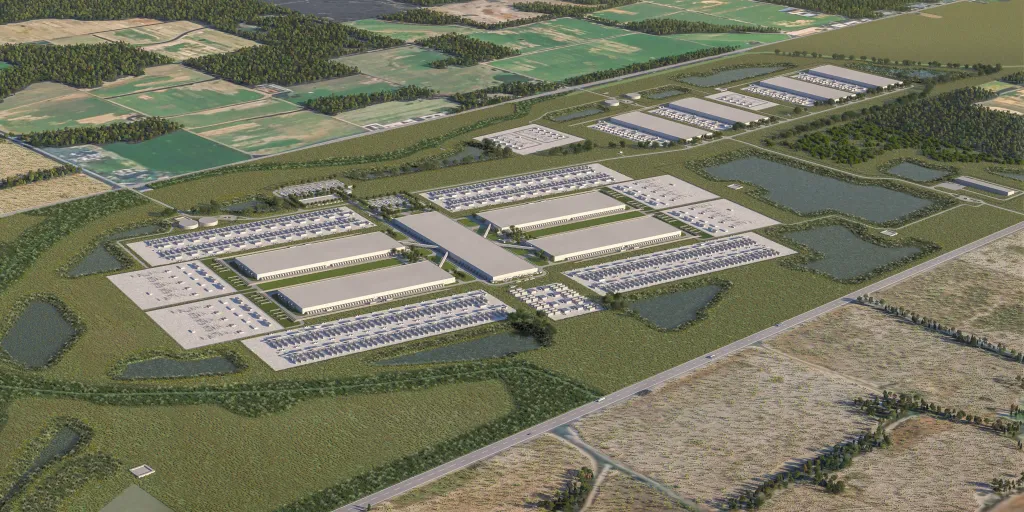
(Meta)

Meta’s massive city-sized data center in Richland Parish, Louisiana, is known as Hyperion. CEO Mark Zuckerberg said it will scale up to 5 gigawatts over several years.

  • Location: Richland Parish, Louisiana

  • Power: Scaling up to 5 gigawatts

  • GPUs: ???

  • Value: $10 billion... or is it $50 billion?


Meta - “Prometheus”

Meta is also building Prometheus, a data center in New Albany, Ohio, due to come online next year. It’s the first of the “titan clusters” that Meta has planned to power its mission to achieve “superintelligence.”

  • Location: New Albany, Ohio

  • Power: 1 gigawatt “plus”

  • GPUs: 500,000 (estimated)

  • Value: ???


xAI - “Colossus”

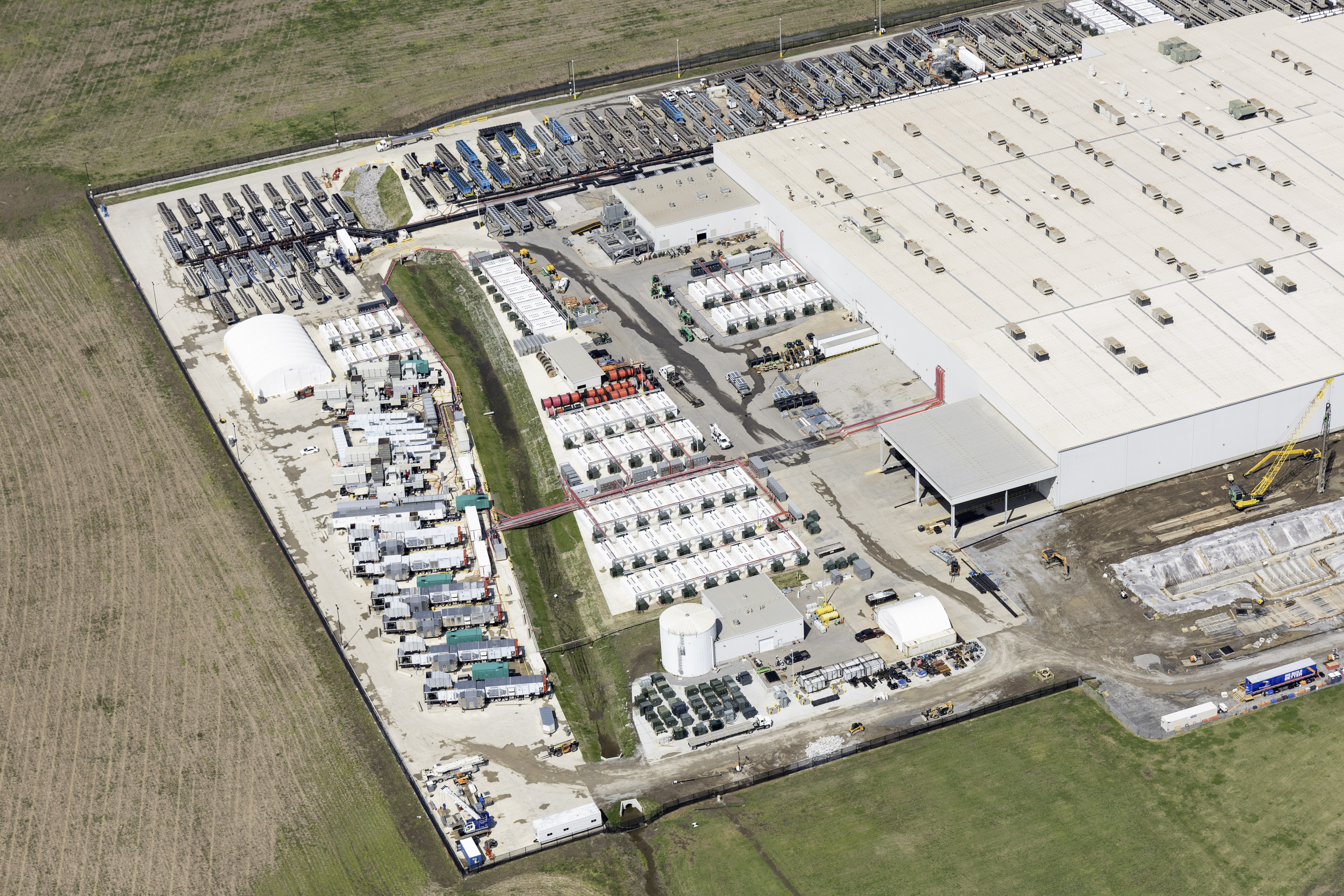
xAI “Colossus” data center
xAI’s Colossus data center (Steve Jones/Southwings)

Built in a record 122 days, Colossus, a data center in South Memphis, Tennessee, was the first to reach 1 megawatt of computing power. It’s used to train and run xAI CEO Elon Musk’s Grok AI. Watchdog groups have taken issue with methane spewing from 35 portable gas turbines, allowed without permits using a loophole.

  • Location: South Memphis, Tennessee

  • Power: 300 megawatts

  • GPUs: 230,000

  • Value: $3 billion (estimated)


xAI - “Colossus II”
colossus-2
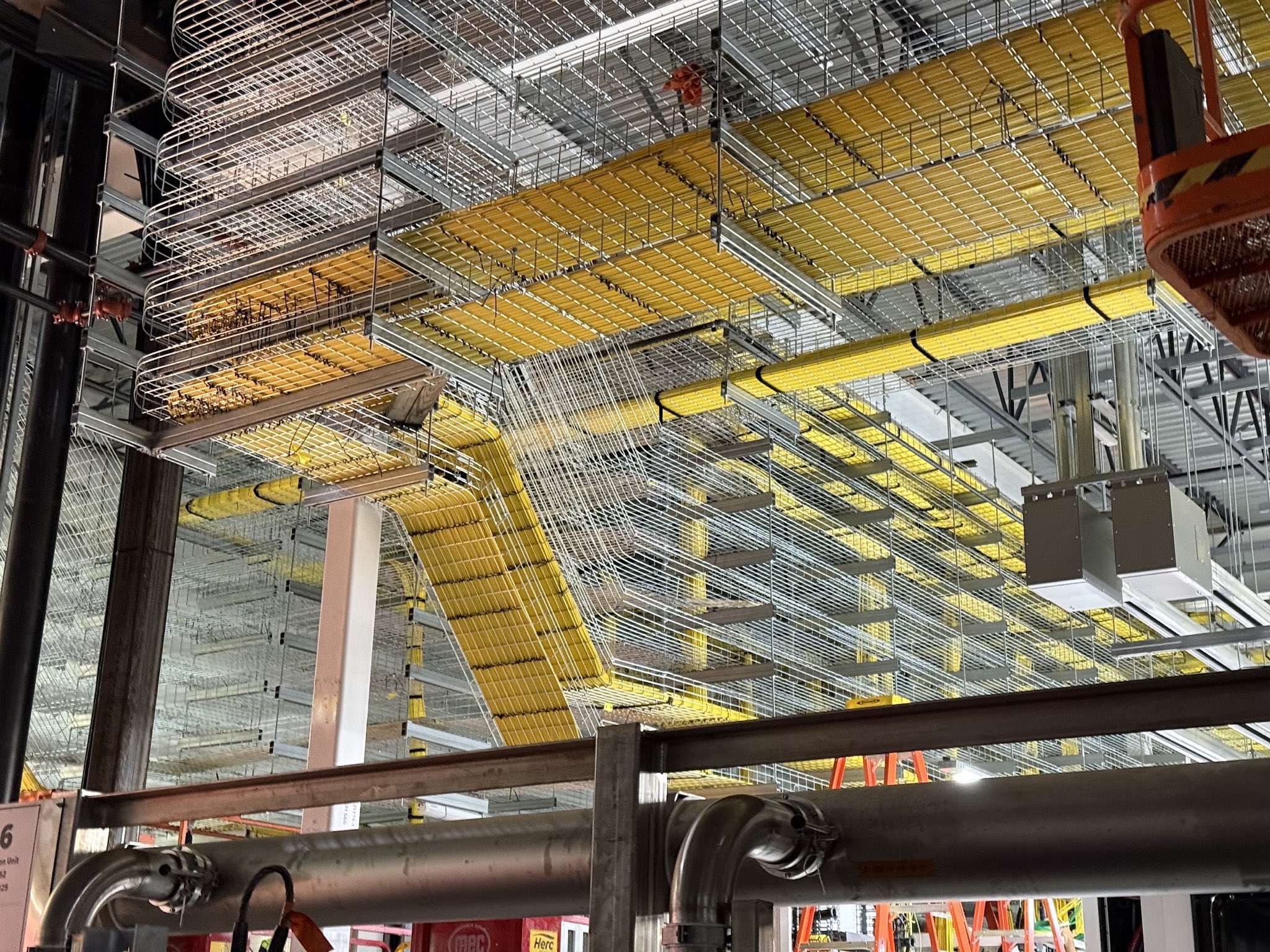
Inside the Colossus II data center (@elonmusk on X)

Colossus II is the second Memphis-area data center currently under construction. Musk said it will use 550,000 GPUs.

  • Location: South Memphis, Tennessee

  • Power: 1 gigawatt

  • GPUs: 550,000

  • Value: ???


Amazon, Anthropic - “Project Rainier”
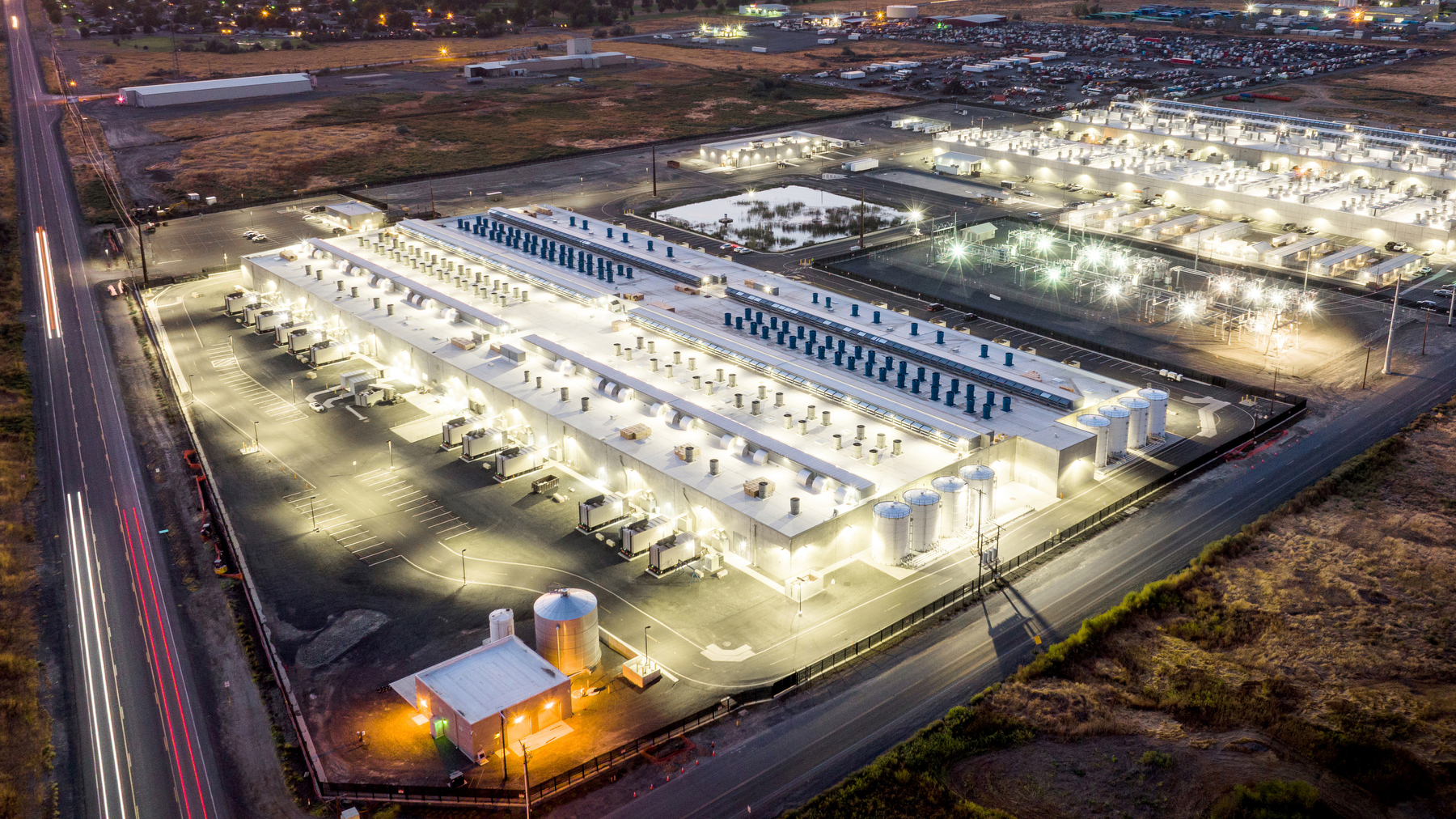
Amazon Project Rainier
Amazon’s Project Rainier (Amazon)

Running on Amazon’s custom Trainium2 chips, Project Rainier is a cluster of 30 data centers at one site in Indiana. It’s used to power Amazon partner Anthropic’s AI services.

  • Location: St. Joseph County, Indiana

  • Power: 2.2 gigawatts

  • GPUs: “Hundreds of thousands”

  • Value: $11 billion


Microsoft - “Fairwater”

Microsoft CEO Satya Nadella called Fairwater, a new Wisconsin data center, “a seamless cluster of hundreds of thousands of NVIDIA GB200s, connected by enough fiber to circle the Earth 4.5 times.” 90% of the facility will use a “state-of-the-art closed-loop liquid cooling system” that greatly reduces its water use.
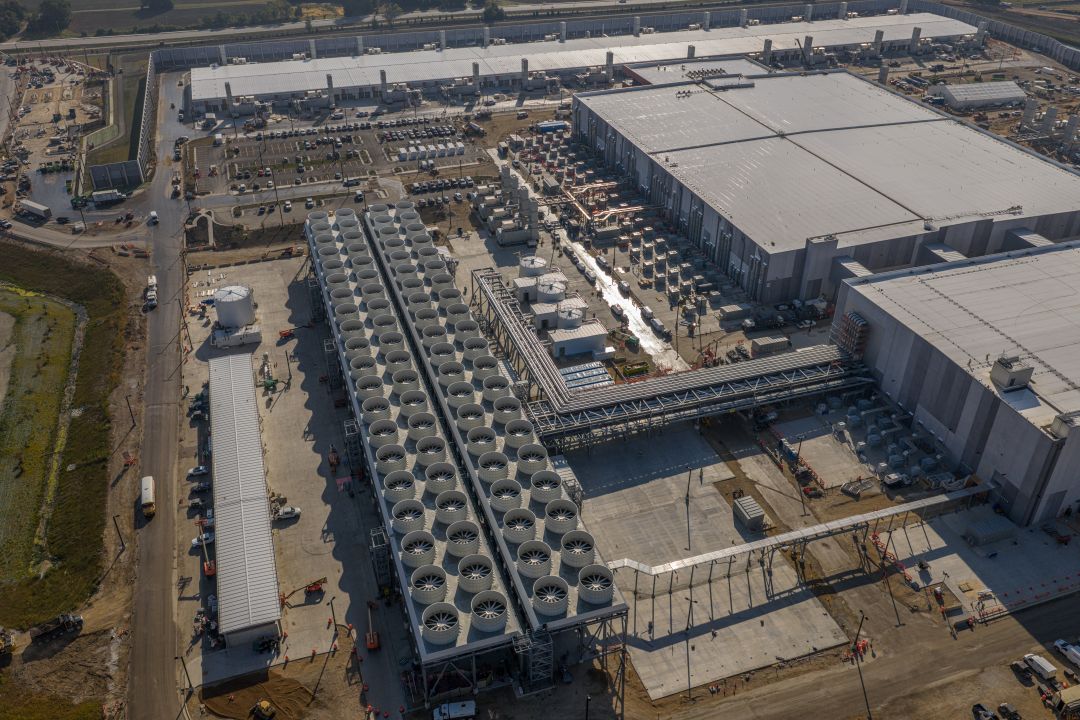
FAIRWATER OMB-Image-1-Datacenter
Microsoft’s “Fairwater” data center (Microsoft)
  • Location: Mount Pleasant, Wisconsin

  • Power: ???

  • GPUs: “Hundreds of thousands”

  • Value: Initial $3.3 billion; adding a $4 billion expansion

Update (September 23): Corrected definition of gigawatts as a million kilowatts, not a thousand kilowatts.

Update (September 24): Updated details about the Stargate project following a new announcement from OpenAI.

More Tech

See all Tech
tech

Google’s Gemini is gaining but OpenAI’s ChatGPT is still the AI chatbot leader

Following Alphabet’s stellar earnings report Wednesday, analysts were quick to declare that the Google parent had blossomed from an AI laggard into a leader. The company posted strong revenue and profit growth, driven in part by heavy investment in artificial intelligence, and noted that its Gemini app had grown to more than 750 million monthly active users.

Still, usage data suggest Gemini remains far behind the market leader — at least as far as usage.

While Gemini is growing faster than OpenAI’s ChatGPT — up 19% month over month versus 4% — it still trails by a wide margin in overall usage. In January, Gemini logged more than 2 billion global visits, according to new data from Similarweb, less than half of ChatGPT’s 5.7 billion.

tech

OpenAI’s Altman calls Anthropic an “authoritarian company” and says its Super Bowl ad is “deceptive”

Yesterday, Anthropic announced that it intends (for now) to keep its Claude chatbot free of ads. Competitors OpenAI, xAI, Meta, and Google all have expressed plans for ads in some form for their respective AI chatbots.

Anthropic also released cheeky ads depicting scenarios where people are asking questions to a personified version of their AI chatbot, only to recoil in confusion when the response transforms into a creepy ad.

It’s pretty clear that Anthropic was poking fun at the market-leading AI chatbot, ChatGPT. The characters playing the chatbot had the pitch-perfect tone of an eager-to-please ChatGPT session.

OpenAI CEO Sam Altman tried to be a good sport, calling the ads funny, but clearly they struck a nerve, prompting a 400-word post on X in which he called the ads “deceptive,” accused Anthropic of “doublespeak,” and said it was an “authoritarian company” that was heading down a “dark path.”

Altman pushed back on the depiction of how such creepy ads could show up in chats, saying that OpenAI has pledged to never weave ads into chat conversations, knowing it users would reject that.

Previewing how the rival AI startups might battle each other in the marketplace, Altman attacked Anthropic’s focus on paid subscription, rather than generous limits for free users (which appears to be working out pretty well for Anthropic):

“Anthropic serves an expensive product to rich people. We are glad they do that and we are doing that too, but we also feel strongly that we need to bring AI to billions of people who can’t pay for subscriptions.”

Both companies are racing to launch an IPO this year, which will only raise the stakes for this billionaire beef.

tech

Part of the reason for Google’s huge capex plans: It has a $240 billion revenue backlog

Google reported strong earnings yesterday that beat analysts’ expectations. But the thing that caught investors’ attention was Google’s capex plans.

The company spent a whopping $91.4 billion for all of 2025 on capex, but it plans to roughly double that amount in 2026 to between $175 billion and $185 billion.

Why does it need to spend so much? It can’t keep up with demand due to constraints on its compute capacity. Cloud computing demand is surging, and Google simply can’t fulfill all of the orders it has, because it can’t build the data centers and AI infrastructure fast enough.

Alphabet CEO Sundar Pichai was asked on last night’s earnings call what keeps him up at night:

“At this moment, maybe the top question is definitely around compute capacity. All the constraints, be it power, land, supply chain constraints — how do you ramp up to meet this extraordinary demand for this moment, get our investments right for the long term, and do it all in a way that we are driving efficiencies and doing it in a world-class way?”

Demand is so extraordinary that Google has $240 billion in “remaining performance obligations” (RPO, or revenue backlog).

This swelling backlog is not unique to Google. Microsoft just reported $625 billion in RPO, though a big chunk of that was for one customer: OpenAI. After market close today, we will see what Amazon’s RPO backlog looks like. It was $200 billion last quarter.

tech

Nvidia reportedly won’t release a new gaming graphics chip this year, a first

For the first time in its history, Nvidia will not release a new gaming graphics card this year, according to reporting by The Information.

The move comes amid a global shortage of memory chips as AI compute demand squeezes the market. Nvidia is also reportedly slashing production of its current gaming chips.

This follows Micron’s announcement in December that it plans to exit the consumer chip business.

As chipmakers redirect production toward the more lucrative AI business and PC gaming gets more expensive, price hikes could also soon come for console gaming. On Wednesday night, Valve — which owns Steam — announced it would delay the release of its forthcoming Steam Machine console, citing rising memory costs.

“When we announced these products in November, we planned on being able to share specific pricing and launch dates by now. But the memory and storage shortages you’ve likely heard about across the industry have rapidly increased since then. The limited availability and growing prices of these critical components mean we must revisit our exact shipping schedule and pricing,” the company said.

On Tuesday, Nintendo President Shuntaro Furukawa said that memory prices could impact profitability if costs remain high long-term. Sony on Wednesday said it expects memory costs to have some impact on PS5 sales.

This follows Micron’s announcement in December that it plans to exit the consumer chip business.

As chipmakers redirect production toward the more lucrative AI business and PC gaming gets more expensive, price hikes could also soon come for console gaming. On Wednesday night, Valve — which owns Steam — announced it would delay the release of its forthcoming Steam Machine console, citing rising memory costs.

“When we announced these products in November, we planned on being able to share specific pricing and launch dates by now. But the memory and storage shortages you’ve likely heard about across the industry have rapidly increased since then. The limited availability and growing prices of these critical components mean we must revisit our exact shipping schedule and pricing,” the company said.

On Tuesday, Nintendo President Shuntaro Furukawa said that memory prices could impact profitability if costs remain high long-term. Sony on Wednesday said it expects memory costs to have some impact on PS5 sales.

Latest Stories

Sherwood Media, LLC produces fresh and unique perspectives on topical financial news and is a fully owned subsidiary of Robinhood Markets, Inc., and any views expressed here do not necessarily reflect the views of any other Robinhood affiliate, including Robinhood Markets, Inc., Robinhood Financial LLC, Robinhood Securities, LLC, Robinhood Crypto, LLC, or Robinhood Money, LLC.