Tech
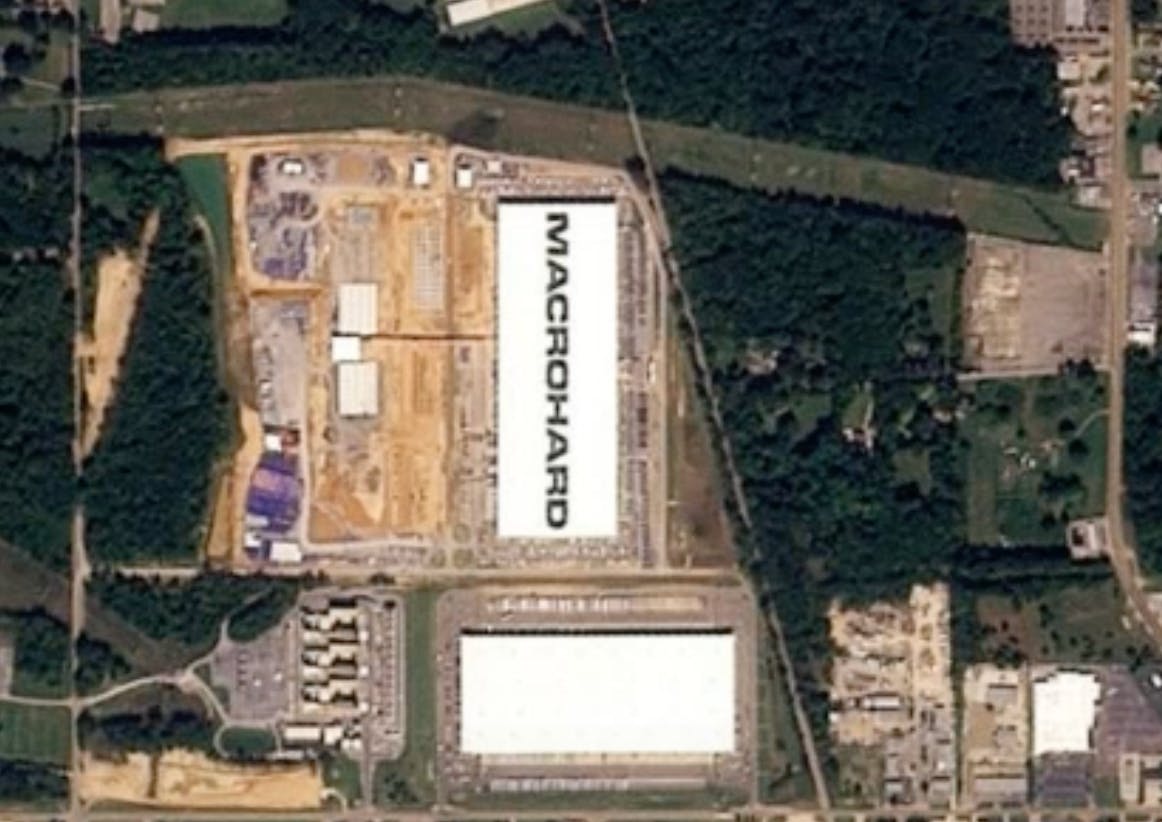
Satellite photo of Colossus 2 MACROHARD
(Planet Labs PBC)

Elon Musk’s Colossus 2 data center is “MACROHARD”

Satellite photos of the roof of xAI’s new Colossus 2 data center shout a message to the world that it aims to take on Microsoft.

You can’t say Elon Musk doesn’t follow through on his weirdest side quests.

In August, Musk posted on X that xAI was going to build software to compete with Microsoft’s ubiquitous productivity apps. As he likes to do, Musk picked a name that would make middle school boys giggle: Macrohard.

Musk explained: “In principle, given that software companies like Microsoft do not themselves manufacture any physical hardware, it should be possible to simulate them entirely with AI.”

Musk’s followers weren’t sure if this was just another meme-worthy gag, but he doubled down on the project in follow-up posts.

Musk posted that xAI was so serious about building the Macrohard software suite that he would emblazon the name on the roof of the company’s 1-gigawatt Colossus 2 data center in South Memphis, Tennessee:

We have been monitoring the Colossus 2 site from satellite photos, and Planet Labs helped us out with some great shots of the new signage, which can in fact be seen from space.

On October 9, the roof of the larger of the two main buildings at the Colossus 2 site was a featureless white. But by October 11, the first large letters appeared on the roof. By October 13, the work was complete.

(Photos: Planet Labs PBC)

The data center sits on the southern border of Tennessee, to take advantage of imported energy from Alabama, coming from the power plant it operates just down the road from Colossus 2.

Musk is reportedly racing to finish construction of the site, but needs another $18 billion to secure the remaining 300,000 Nvidia GPUs to power the facility, which will be used for running and training xAI’s Grok AI model.


More Tech

See all Tech
tech

Google will supply AI models to Pentagon in classified deal, per The Information

Google has become the latest tech company to ink an agreement to supply the Department of Defense (War) with AI, having reportedly closed a classified deal that allows the Pentagon to use its AI for “any lawful government purpose,” according to The Information.

The Information initially reported talks between the Alphabet-owned company and the US government around two weeks ago, following the messy breakdown of the relationship between Anthropic and the Trump administration — and the rushed OpenAI deal that took its place.

The move has reportedly sparked opposition among Google employees, with the Washington Post reporting that over 600 workers signed a letter to CEO Sundar Pichai to ask him to bar the Defense Department from using the company’s AI models for any classified work.

The Information initially reported talks between the Alphabet-owned company and the US government around two weeks ago, following the messy breakdown of the relationship between Anthropic and the Trump administration — and the rushed OpenAI deal that took its place.

The move has reportedly sparked opposition among Google employees, with the Washington Post reporting that over 600 workers signed a letter to CEO Sundar Pichai to ask him to bar the Defense Department from using the company’s AI models for any classified work.

tech

Microsoft loses exclusive access to OpenAI’s models and tools while ending revenue-sharing deal with ChatGPT maker

Microsoft shares dropped as it announced a revised agreement with OpenAI.

The amended agreement ends revenue-sharing payments from Microsoft to OpenAI, and also ends Microsoft’s exclusive access to OpenAI’s intellectual property (i.e. models and products).

OpenAI’s revenue sharing with Microsoft will end in 2030, is subject to a total cap, and is no longer dependent on its achieving artificial general intelligence.

Amazon, a likely beneficiary of this lack of exclusivity, initially popped on the news but erased those gains.

This is a developing story.

tech

China just blew up one of Meta’s key AI bets

China has ordered Meta to unwind its $2 billion acquisition of Manus, a Chinese startup (since relocated to Singapore) that makes AI agents and was central to Meta’s push to turn its massive AI investments into a real business. The move is part of the Chinese government’s effort to stop US firms from gaining access to Chinese talent and intellectual property, as Washington continues to restrict sales of advanced AI chips to Chinese companies.

Unlike its tech peers, which can sell AI through cloud services, Meta mainly uses AI to improve its existing ad business rather than as a stand-alone revenue driver. The decision strips away one of Meta’s clearest paths to monetizing AI — leaving it spending like a hyperscaler, without a hyperscaler business model.

Unlike its tech peers, which can sell AI through cloud services, Meta mainly uses AI to improve its existing ad business rather than as a stand-alone revenue driver. The decision strips away one of Meta’s clearest paths to monetizing AI — leaving it spending like a hyperscaler, without a hyperscaler business model.

Latest Stories

Sherwood Media, LLC produces fresh and unique perspectives on topical financial news and is a fully owned subsidiary of Robinhood Markets, Inc., and any views expressed here do not necessarily reflect the views of any other Robinhood affiliate, including Robinhood Markets, Inc., Robinhood Financial LLC, Robinhood Securities, LLC, Robinhood Crypto, LLC, Robinhood Derivatives, LLC, or Robinhood Money, LLC. Futures and event contracts are offered through Robinhood Derivatives, LLC.