Tech
tech

Tesla’s head of Optimus robots leaves as the company stakes its future on Optimus robots

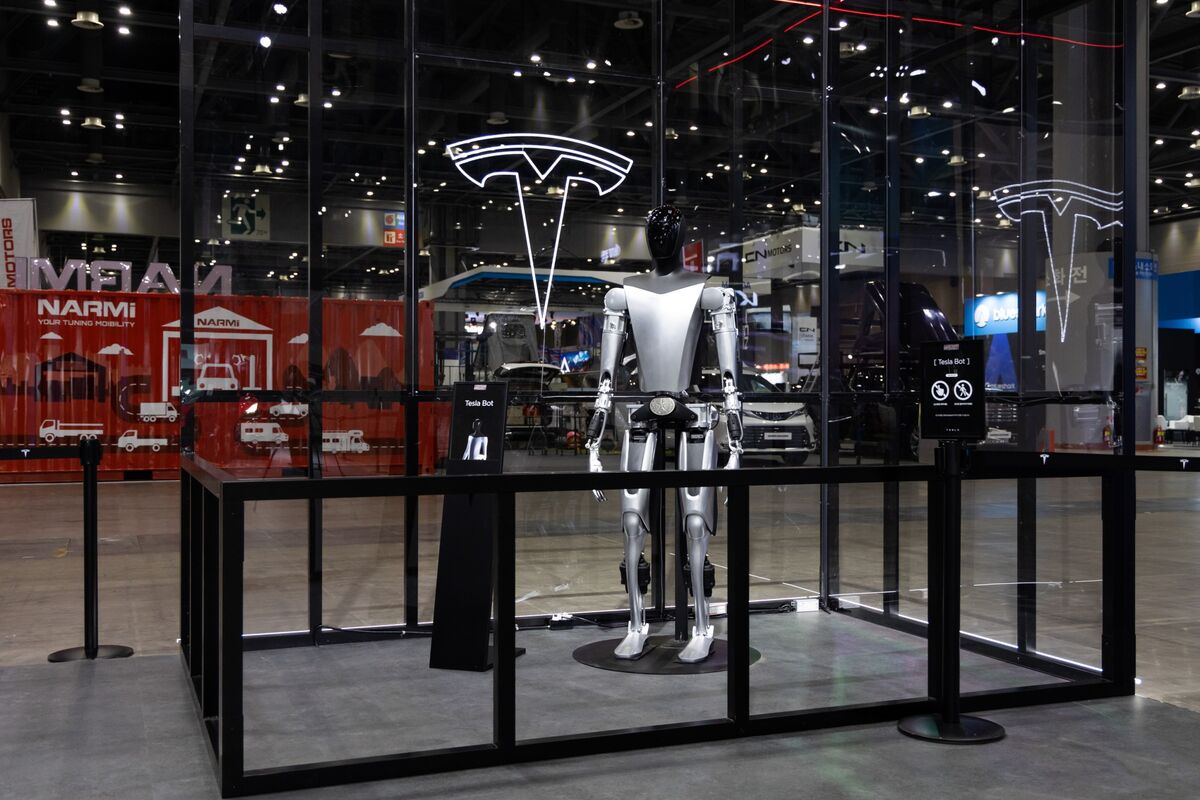
The head of engineering for Tesla’s Optimus AI humanoid robot program, Milan Kovac, is departing the company effective immediately, Bloomberg reports.

Tesla, of course, has had a very bad year, and the current public skirmish between CEO Elon Musk and Donald Trump could cause massive damage. The recent bright spots for the stock have been its impending robotaxi launch and its potential for producing legions of autonomous robots. Indeed, Musk has staked the fate of the company on those two technologies.

“The future of the company is fundamentally based on large-scale autonomous cars and large scale and large volume, vast numbers of autonomous humanoid robots,” Musk said on the company’s latest earnings call.

It’s probably not a good time for an abrupt leadership exit in those departments. Bloomberg reports that the head of Tesla’s Autopilot teams, Ashok Elluswamy, will take over responsibility for Optimus.
“The future of the company is fundamentally based on large-scale autonomous cars and large scale and large volume, vast numbers of autonomous humanoid robots,” Musk said on the company’s latest earnings call.

It’s probably not a good time for an abrupt leadership exit in those departments. Bloomberg reports that the head of Tesla’s Autopilot teams, Ashok Elluswamy, will take over responsibility for Optimus.
More Tech

See all Tech
tech

Report: Microsoft looks to remake Copilot in the image of OpenClaw

Microsoft is feeling the heat from all corners of the tech world as it tries to infuse its productivity apps with useful AI tools.

OpenAI, Anthropic, and now open-source OpenClaw are enabling powerful agentic AI that can do work on your computer for you — including productivity functions like managing emails, spreadsheets, and slide decks.

This is obviously an area where Microsoft needs to compete, or it will be left in the dust by AI startups.

The Information reports that Microsoft is indeed realizing this, and is now trying to reboot its many Copilot tools to act more like the extremely popular DIY agentic AI tool OpenClaw.

OpenClaw is usually set up running on a dedicated personal computer, and given access to all of a user’s permissions and logins. The user issues orders to OpenClaw through messaging apps like Telegram or WhatsApp, and the agent goes off and completes tasks in the background, notifying you when they’re done. But many users have had security disasters with the setup, so Microsoft is looking to borrow the popular concept but implement the strict security controls needed for use in enterprise environments.

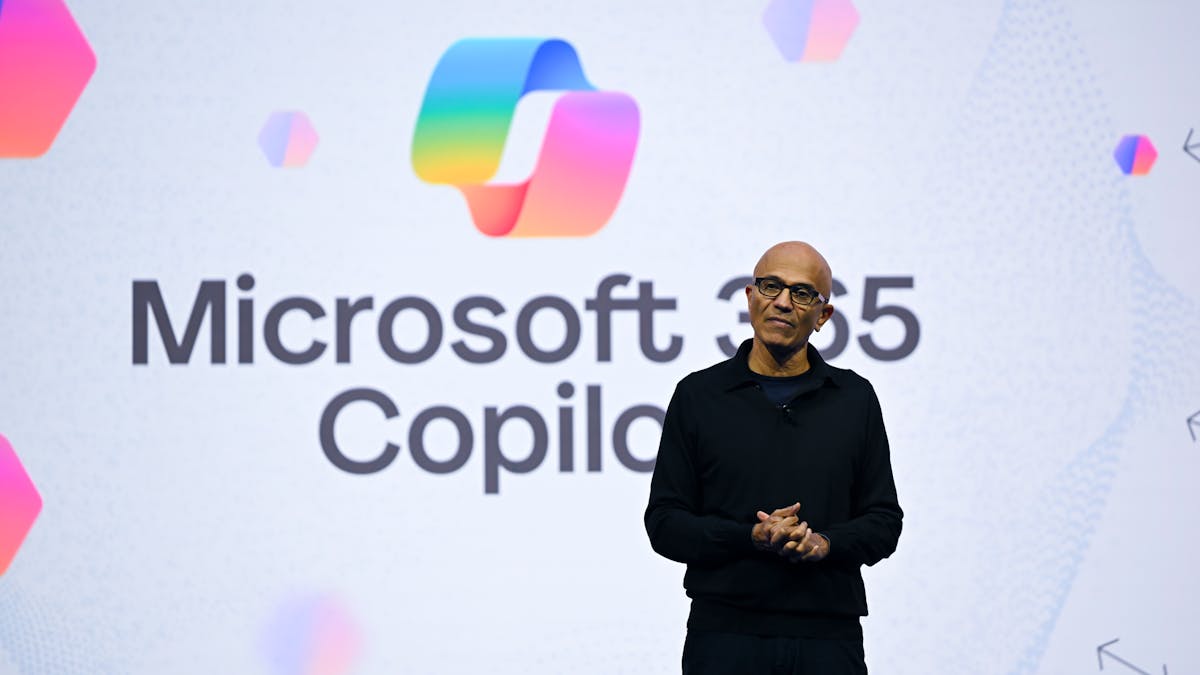
According to the report, Microsoft CEO Satya Nadella has made revamping 365 Copilot a top priority.

This is obviously an area where Microsoft needs to compete, or it will be left in the dust by AI startups.

The Information reports that Microsoft is indeed realizing this, and is now trying to reboot its many Copilot tools to act more like the extremely popular DIY agentic AI tool OpenClaw.

OpenClaw is usually set up running on a dedicated personal computer, and given access to all of a user’s permissions and logins. The user issues orders to OpenClaw through messaging apps like Telegram or WhatsApp, and the agent goes off and completes tasks in the background, notifying you when they’re done. But many users have had security disasters with the setup, so Microsoft is looking to borrow the popular concept but implement the strict security controls needed for use in enterprise environments.

According to the report, Microsoft CEO Satya Nadella has made revamping 365 Copilot a top priority.

tech

Tesla competitor Slate closes $650 million funding round and says 2026 production is “on time and on budget”

Tesla competitor Slate Auto said it closed a $650 million Series C funding round led by TWG Global, giving it the “operating capital to reach the next stage of development.” Slate’s new CEO, Peter Faricy, says it has more than 160,000 reservations, up from 150,000 in December, and is “on time and on budget” to deliver its first mid-$20,000 electric trucks to customers by the end of 2026.

tech
Jon Keegan

Report: SpaceX posted $18.5 billion in revenue and a $5 billion loss last year

All eyes on are SpaceX as it prepares for a blockbuster IPO as soon as this summer, and everyone is eager to get a look at the company’s official numbers for the first time.

The Information is reporting that last year, SpaceX posted $18.5 billion in revenue with a $5 billion loss.

According to the report, the numbers reflect the combined finances of SpaceX and xAI, which it acquired in February.

After acquiring xAI, SpaceX’s successful space launch and satellite business may have been dragged down by xAI’s massive data center spending. Earlier this year, Bloomberg reported that xAI had burned through $8 billion in the first nine months of 2025.

According to the report, the numbers reflect the combined finances of SpaceX and xAI, which it acquired in February.

After acquiring xAI, SpaceX’s successful space launch and satellite business may have been dragged down by xAI’s massive data center spending. Earlier this year, Bloomberg reported that xAI had burned through $8 billion in the first nine months of 2025.

tech
Jon Keegan

Report: Amazon hopes its Project Houdini modular data center plan is the trick to speed up construction

Amazon is looking for a magic trick that can help it get past data center construction bottlenecks so it can work through the $244 billion worth of cloud computing backlogs it wants to deliver.

It may have just pulled a rabbit out of its hat. (I know, groan.)

Business Insider is reporting that Amazon’s Project Houdini seeks to slash labor costs and installation time by building modular “data halls” — the rows of racks of servers that make up the heart of data centers — in factories, and then shipping them fully assembled on trailers to data center sites.

According to the report, the modular plan would save weeks of construction time and tens of thousands of hours of labor costs.

This week in Amazon’s letter to shareholders, CEO Andy Jassy wrote that the company is planning $200 billion in capital expenditure this year, and that it is embracing its tradition of taking big bets on experiments like Project Houdini:

“You need to invent and experiment like crazy. Many of these experiments will fail, and it might feel like you’re getting nowhere. But, your culture must possess the tenacity to keep at it.”

Business Insider is reporting that Amazon’s Project Houdini seeks to slash labor costs and installation time by building modular “data halls” — the rows of racks of servers that make up the heart of data centers — in factories, and then shipping them fully assembled on trailers to data center sites.

According to the report, the modular plan would save weeks of construction time and tens of thousands of hours of labor costs.

This week in Amazon’s letter to shareholders, CEO Andy Jassy wrote that the company is planning $200 billion in capital expenditure this year, and that it is embracing its tradition of taking big bets on experiments like Project Houdini:

“You need to invent and experiment like crazy. Many of these experiments will fail, and it might feel like you’re getting nowhere. But, your culture must possess the tenacity to keep at it.”

Latest Stories

Sherwood Media, LLC produces fresh and unique perspectives on topical financial news and is a fully owned subsidiary of Robinhood Markets, Inc., and any views expressed here do not necessarily reflect the views of any other Robinhood affiliate, including Robinhood Markets, Inc., Robinhood Financial LLC, Robinhood Securities, LLC, Robinhood Crypto, LLC, Robinhood Derivatives, LLC, or Robinhood Money, LLC. Futures and event contracts are offered through Robinhood Derivatives, LLC.