
Power
(Official White House Photo by Molly Riley)
(The White House/Molly Riley)

Here’s what Musk stands to lose from the US government

Tesla, SpaceX, and xAI all could face serious trouble if Trump turns the government on Musk.

Elon Musk’s messy public breakup with President Trump appears to be causing damage to both men’s fortunes, but Musk has more to lose thanks to his companies’ many entanglements with the US government.

Trump has shown that he’s willing to turn the mighty power of the US government against his enemies to settle personal beefs, including law firms, individual cybersecurity experts, and the paper straw industry. Let’s take a look at what Musk and his businesses face to lose if the rift worsens.

SpaceX

SpaceX receives a huge amount of money from the US government. In February, Reuters reported that SpaceX CEO Gwynne Shotwell said the company has about $22 billion in government contracts. Sherwood News’ reporting found that between contracts for launching military satellites for the Department of Defense and ferrying astronauts and supplies to the International Space Station for NASA, the US government had paid SpaceX over $18.5 billion through September 2024.

The government is also a big customer for SpaceX’s Starlink satellite service. The Department of Defense signed a contract for Starlink terminals, which it supplied to Ukrainian forces to defend itself from the Russian troops.

Musk’s long-term goal is to get humans to Mars to make humans an multi-planetary species. SpaceX’s Starship is essential to making that sci-fi dream come true (if they can keep the gleaming rockets from exploding). Musk’s plans involve increasing the frequency of Starship flights from the newly minted town of Starbase, Texas.

The spectacular failures of the rockets have affected US commercial airspace, and the Federal Aviation Administration has the authority to approve or cancel these launches.
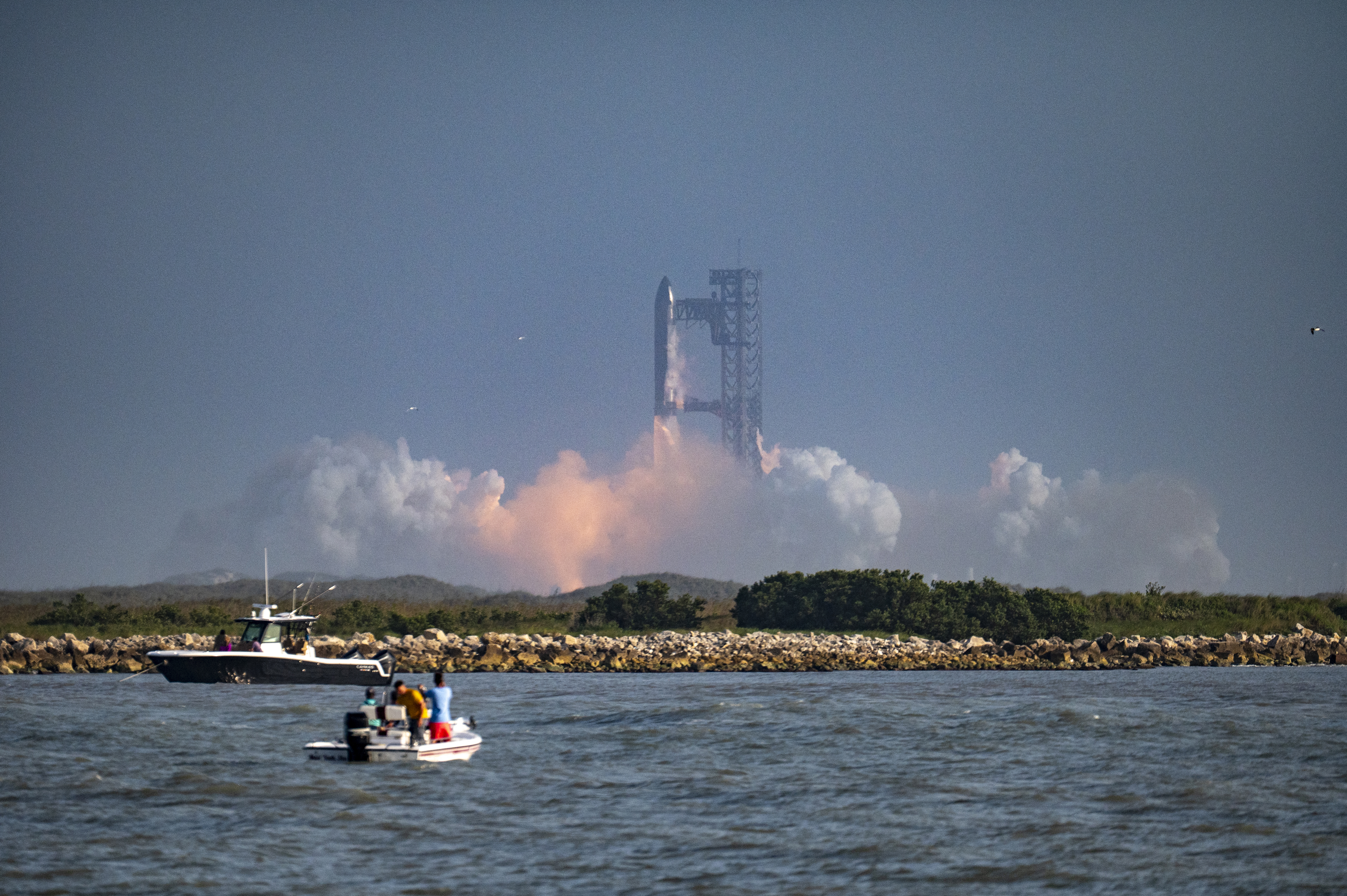
A SpaceX Starship rocket launches from Starbase, Texas on May 27, 2025. (Sergio Flores/AFP via Getty Images)
A SpaceX Starship rocket launches from Starbase, Texas, on May 27, 2025 (Sergio Flores/Getty Images)

Tesla

One of Tesla’s key risks stems from the crucial role that federal regulation plays in the company’s immediate plans: self-driving cars. Musk is betting the business on the yet to be released Cybercab, which could be derailed if the National Highway Traffic Safety Administration decides to take action following alarming videos of fatal crashes using Tesla’s long-promised “full self-driving mode.”

101st Brussels Motor Show 2025
Cybercab (Sjoerd van der Wal/Getty Images)

One of the biggest consumer incentives driving EV sales is the $7,500 rebate available for new EV vehicles. (It’s up to $4,000 for used EVs.) If the Trump administration succeeds in killing these Biden incentives in their “big, beautiful bill,” that would amount to a significant price hike for Teslas at a time when its US sales are down 5%, while EV sales overall are up 17%.

That legislation, which is currently being negotiated in Congress, also includes a provision that charges EV drivers an annual $250 fee for contributions to the Highway Trust Fund, which gas-powered car drivers pay into via gas taxes (though gas car drivers pay far less than that annually).

Tesla’s business is also propped up by regulatory tax credits, which accounted for $595 million last quarter. The credits are sold to automakers that aren’t meeting emissions regulations. If you take away those credits sales, Tesla’s last quarterly profit would have turned into a loss.

While not directly under Trump’s control, state governments also have a lot of say over the tax breaks that Musk’s businesses get, like the $1.3 billion worth of incentives that Nevada offered Tesla for its Nevada Gigafactory.

Investors seem to realize what Tesla could lose as a result of this beef, evidenced by yesterday’s historic drop in Tesla’s stock, wiping out $152 billion in a matter of hours.

xAI and X

There are a lot of X’s flying around here. xAI is Musk’s AI business that created the Grok LLM forged in the heart of the Colossus supercluster’s 100,000 Nvidia GPUs.
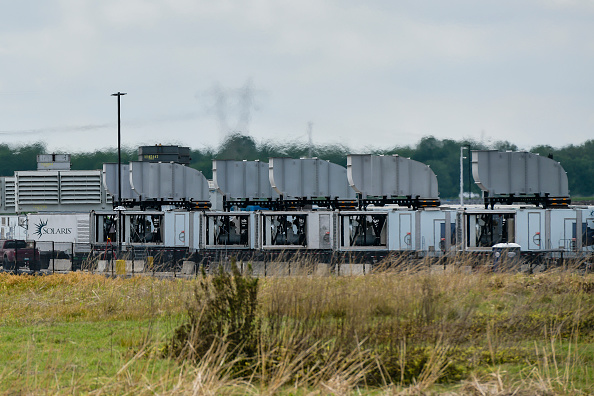
colossus xAI data center
Gas turbines are visible at an xAI data center on Riverport Road in Memphis, Tennessee, on April 25, 2025 (Brandon Dill/Getty Images)

A few months ago, xAI bought X, the social media network formerly known as Twitter. That massive data center near South Memphis, Tennessee, has been spewing methane emissions into the air via unlicensed gas turbines needed to boost the power for the data center, watchdog reports have found.

Federal agencies could give Musk some headaches here, if they suddenly decided clean air was a priority.

Neuralink

When your business is installing hardware in people’s brains, government regulation could make or break you. One call to the Food and Drug Administration and Trump could kill human trials for Neuralink implants currently underway, which are regulated by the agency.

Tariffs touch everything

From the microprocessors in Tesla’s cars to the steel shell of the Starship, all of Musk’s businesses are affected by tariffs on imported materials. The whipsaw back-and-forth on tariffs could continue to cause problems for Musk’s companies. If Trump were to reach for one of his favorite tools to cause pain for Musk, he could target crucial components that Tesla, SpaceX, or xAI needs to grow.

More Power

See all Power
President Trump Hosts Crypto Summit At The White House

Report: White House AI oversight executive order DOA

After weeks of uncertainty, the White House’s plan to review frontier models before release appears dead.

Jon Keegan5/22/26
power
Jon Keegan

Report: White House informed AI companies about plans for government to vet new models

After weeks of uncertainty about what role if any the White House would play in overseeing the release of new foundation models, this week top AI companies have been briefed on its plans, according to a new report from The Information.

The planned executive order describes a voluntary plan in which the National Security Agency, Office of the National Cyber Director, the White House Office of Science and Technology Policy, and Cybersecurity and Infrastructure Security Agency will decide which models to review, per the report.

The plan is reportedly less strict than AI companies had feared, but it does call for a 90-day testing period before release, a window that is substantially longer than the 14-day window that the companies wanted.

The new order could be signed as soon as this week.

The planned executive order describes a voluntary plan in which the National Security Agency, Office of the National Cyber Director, the White House Office of Science and Technology Policy, and Cybersecurity and Infrastructure Security Agency will decide which models to review, per the report.

The plan is reportedly less strict than AI companies had feared, but it does call for a 90-day testing period before release, a window that is substantially longer than the 14-day window that the companies wanted.

The new order could be signed as soon as this week.

power
Rani Molla

Pension leaders overseeing more than $1 trillion in assets call SpaceX’s corporate structure “extreme”

SpaceX is gearing up for what is expected to be the biggest IPO in history — a $75 billion raise at a record $1.75 trillion valuation. But some of Wall Street’s biggest whales aren’t happy with the plan.

Leaders from three of the largest US public pension systems — New York State, New York City, and California — sent a letter to CEO Elon Musk on Wednesday, calling out the company’s planned corporate structure as extreme and the “most management-favorable governance structure ever brought to the US public markets at ⁠this scale.”

Among their concerns: Musk’s inviolability since only he can remove himself as CEO, the elimination of class-action lawsuits, and a Texas shield that could require a staggering 3% of outstanding stock just to file a derivative suit.

While the group has requested a meeting with Musk, it’s not clear if the $1 trillion they oversee is enough to force Musk to entertain their demands. These funds may be caught in an index trap.” As passive benchmark trackers, they’ll be forced to buy the stock once it lists, stripping them of any boycott leverage. And with a tiny ~5% float and the expected massive demand from retail and other investors, Musk may be able to ignore a few whales.

power
Rani Molla

Nvidia, Tesla, Apple, Micron CEOs head to China with Trump

Executives from some of America’s biggest companies, including Apple, Tesla, and Boeing, are joining President Trump on his trip to China this week to help facilitate trade and investment between the countries. After a last-minute invite, Nvidia CEO Jensen Huang, who was initially snubbed, is also part of a trip aimed, in part, at resolving a prolonged import-export standoff between China and the US regarding AI and semiconductor technology.

Meta President and Vice Chairman Dina Powell McCormick is also going. Recently China blew up one of Meta’s major AI bets by unwinding the company’s acquisition of AI agent startup Manus.

In a post on Truth Social, Trump said the group was journeying to China to ask President Xi to “‘open up’ China so that these brilliant people can work their magic, and help bring the People’s Republic to an even higher level!”

He added, “I have never seen or heard of any idea that would be more beneficial to our incredible Countries!”

Here’s the full list of company executives, per Reuters:

power
Jake Lahut

Iran discussing US proposal to reopen Strait of Hormuz, cease hostilities for 30 days: NYT

Iranian officials told The New York Times Thursday that they are discussing a one-page proposal with the United States to temporarily reopen the Strait of Hormuz for 30 days and cease hostilities for the same period of time.

The reopening would come in exchange for the US lifting its naval blockade and halting all hostilities for that period, per the Times. The strait would be open to commercial traffic if both sides agree to the deal, according to three Iranian officials who spoke with the NYT.

The US has not yet commented on this specific proposal.

Shortly after news broke of Iranian consideration of the proposal, the US struck oil ports on the island of Qeshm and the coastal city of Bandar Abbas, a US military official told Jennifer Griffin of Fox News. The strikes do not constitute a restarting of the war, the official said.

The reopening would come in exchange for the US lifting its naval blockade and halting all hostilities for that period, per the Times. The strait would be open to commercial traffic if both sides agree to the deal, according to three Iranian officials who spoke with the NYT.

The US has not yet commented on this specific proposal.

Shortly after news broke of Iranian consideration of the proposal, the US struck oil ports on the island of Qeshm and the coastal city of Bandar Abbas, a US military official told Jennifer Griffin of Fox News. The strikes do not constitute a restarting of the war, the official said.

Latest Stories

Sherwood Media, LLC and Chartr Limited produce fresh and unique perspectives on topical financial news and are fully owned subsidiaries of Robinhood Markets, Inc., and any views expressed here do not necessarily reflect the views of any other Robinhood affiliate, including Robinhood Markets, Inc., Robinhood Financial LLC, Robinhood Securities, LLC, Robinhood Crypto, LLC, Robinhood Money, LLC, Robinhood U.K. Ltd, Robinhood Derivatives, LLC, Robinhood Gold, LLC, Robinhood Asset Management, LLC, Robinhood Credit, Inc., Robinhood Ventures DE, LLC and, where applicable, its managed investment vehicles.