Business
US-LABOR-UNION-STRIKE-STARBUCKS
Photo by Saul Loeb via Getty Images
Red cup rebels

500 Starbucks stores have now unionized across the United States

That’s still only 3% of US Starbucks locations

Tom Jones, David Crowther

On Monday, a group of baristas in Bellingham, Washington were the latest members to join the Starbucks Workers United ranks, as the store became the 500th location to unionize since 2021.

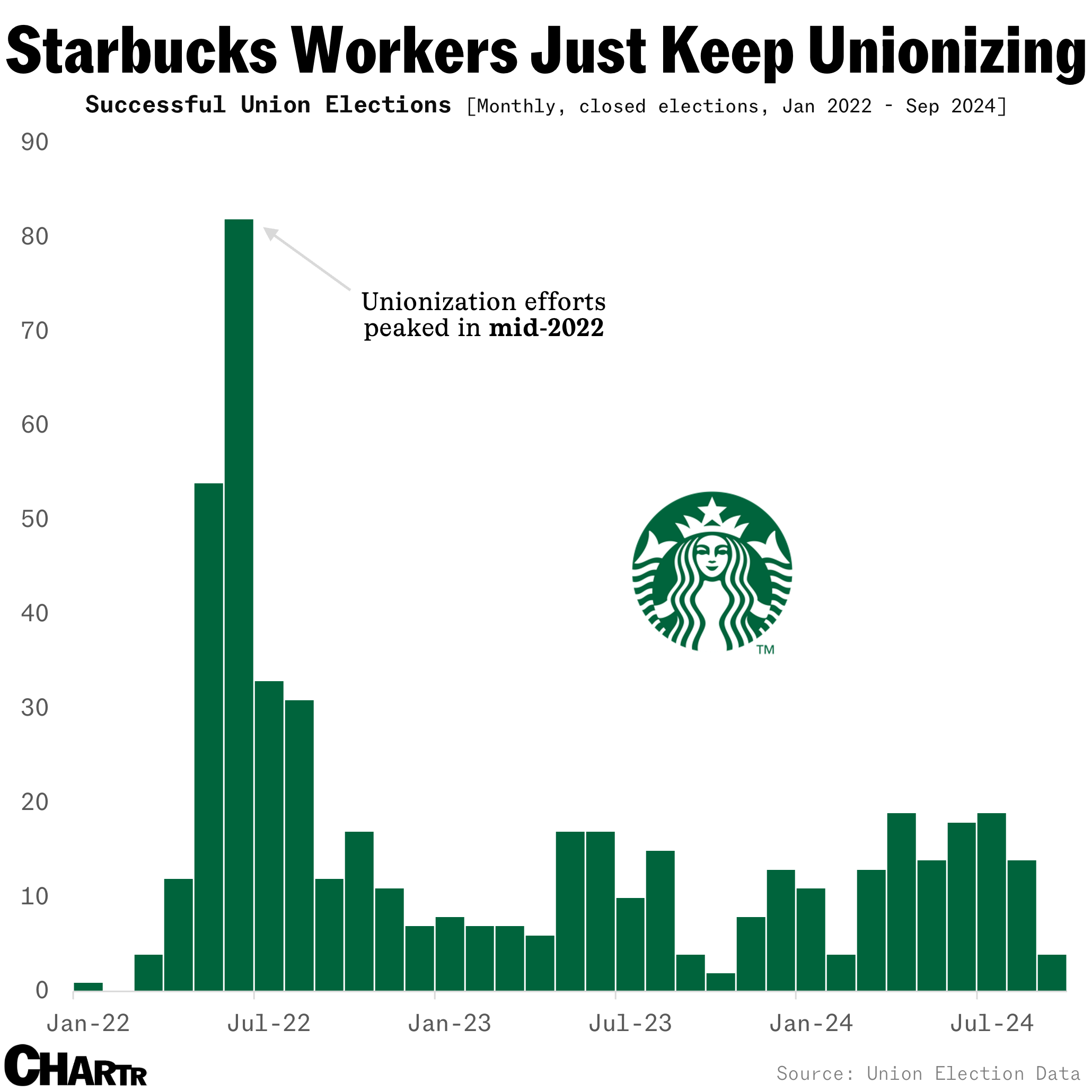
Back then, in the relatively brief interim between Howard Schultz’s second and third terms as the company’s CEO, it was a store in Buffalo, New York that made history by becoming the first Starbucks branch to organize officially. These days, a new location unionizing is a weekly, or even daily, occurrence, with data from Unionelections.org tracking the steady trickle of successful Starbucks votes.
Sherwood Starbucks
Sherwood News

The red cup rebels

While Starbucks has long been known for referring to employees as “partners”, it seems like many of the issues that its coffee makers have expressed through the years have largely fallen on deaf ears. In September, for example, workers at the Washington branch and 8 other organizing stores sent a letter to Brian Niccol, the company’s new $20 billion boss, expressing concerns over staffing, scheduling, better benefits, and wages. The Buffalo, New York unionists were making many of the same complaints back in December 2021.

Despite the constant flow of labor complaints and the recent milestone, just 3% of Starbucks stores have now unionized.

Interestingly, while American industrial action has been on the rise as of late, especially during the Hot Strike Summer of 2023, just 10% of US workers reportedly belonged to a union last year, the lowest membership rate since records began in 1983.

More Business

See all Business
The entrance of Allbirds seen from Hayes St. in San Francisco, Calif.

Allbirds, the once buzzy multibillion-dollar sneaker startup, is selling up for $39 million

That’s less than 1% of its peak market cap about four years ago.

Tom Jones3/31/26
business

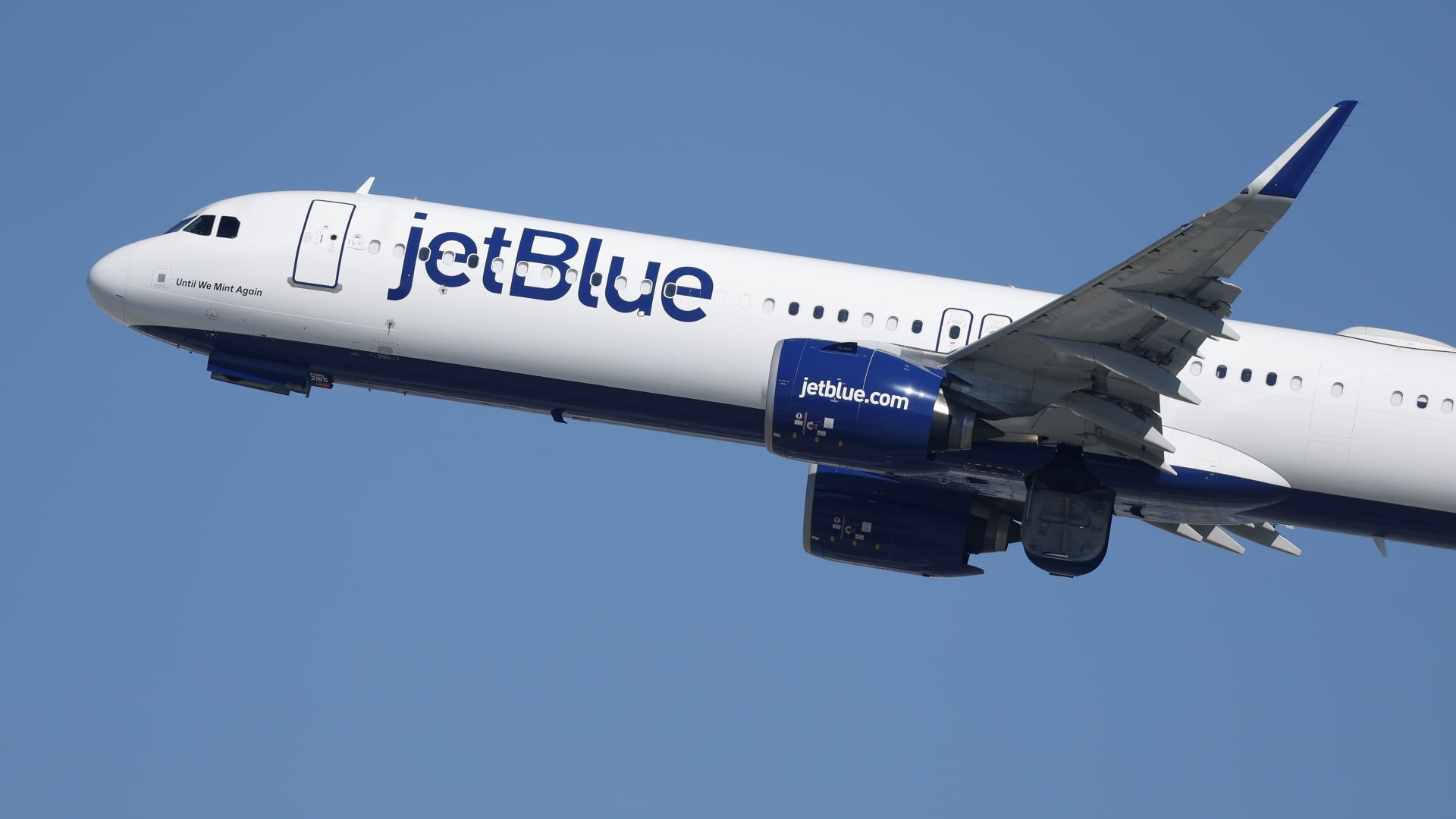
JetBlue is raising its bag fees as fuel costs squeeze airlines

JetBlue will reportedly hike its bag fees, as the cost of jet fuel continues to climb amid the war in Iran. It’s the latest example of carriers finding ways to push rising costs onto travelers.

Last week, United Airlines CEO Scott Kirby said that if fuel prices remain elevated, fares would need to rise another 20% for his airline to break even this year.

As CNBC reported, when one airline raises fees, others tend to follow.

Earlier this month, JetBlue hiked its first-quarter outlook for operating revenue per seat mile to between 5% and 7%, saying that strong Q1 demand helped “partially offset additional expenses realized from operational disruptions and rising fuel costs.” Now, the carrier appears to be making moves to further boost revenue to offset those costs.

Earlier on Monday, JetBlue rival Alaska Air lowered its Q1 profit forecast. The refining margins for the carrier’s cheapest fuel option — sourced from Singapore and representing about 20% of Alaska’s overall supply — have spiked 400% since February.

JetBlue did not immediately respond to a request for comment.

As CNBC reported, when one airline raises fees, others tend to follow.

Earlier this month, JetBlue hiked its first-quarter outlook for operating revenue per seat mile to between 5% and 7%, saying that strong Q1 demand helped “partially offset additional expenses realized from operational disruptions and rising fuel costs.” Now, the carrier appears to be making moves to further boost revenue to offset those costs.

Earlier on Monday, JetBlue rival Alaska Air lowered its Q1 profit forecast. The refining margins for the carrier’s cheapest fuel option — sourced from Singapore and representing about 20% of Alaska’s overall supply — have spiked 400% since February.

JetBlue did not immediately respond to a request for comment.

Latest Stories

Sherwood Media, LLC produces fresh and unique perspectives on topical financial news and is a fully owned subsidiary of Robinhood Markets, Inc., and any views expressed here do not necessarily reflect the views of any other Robinhood affiliate, including Robinhood Markets, Inc., Robinhood Financial LLC, Robinhood Securities, LLC, Robinhood Crypto, LLC, Robinhood Derivatives, LLC, or Robinhood Money, LLC. Futures and event contracts are offered through Robinhood Derivatives, LLC.