

CashMoney
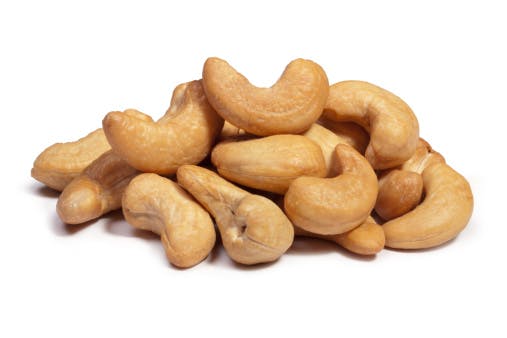
Cashews are the hot new cash crop, but they come at a cost.
Increased demand indicates that consumers are becoming more health-conscious. Cashew production, however, can be grueling
Almonds tend to dominate the headlines when it comes to tree nuts. But consider the cashew, the creamy nut rich in healthy fats and protein. This more expensive and eccentric cousin has its own economic story, with roots in early examples of globalization. The increased demand for it represents the rise of a more health-conscious, vegetarian consumer — but not without the ethical issues that can arise from sudden shifts in consumption and cultivation.
In the US, the world’s largest cashew consumer and end destination of nearly a third of the global supply, growth is set to skyrocket. Cashew milk is forecast to nearly triple its current $62 million market in eight years, and demand for nondairy cheese, often made from cashews, is similarly predicted to explode, doubling from $4 billion to $8 billion over the next decade. Globally, the market is expected to grow by $3 billion between now and 2030. The nut can command a premium price — currently $10 to $15 a pound retail in the US — especially as more and more higher-income, health-conscious, and vegetarian consumers emerge.
A recent report from the Plant Based Foods Association found that cashews remain “a powerhouse ingredient for plant-based cheese,” as the number of cheese products that use the nut grew 52% between 2022 and 2023.
“Cashew continues to be a key ingredient used across key plant-based dairy categories such as ice cream, butter, spreads, sauces, and cheese,” said Linette Kwon, consumer and data insights analyst for the Plant Based Foods Association. “As of right now, we are seeing cashew growing in the plant-based milk, ice cream, butter, and yogurt categories, as well as dips. Cashews also continue to be popular as not only healthy snack options, but are also commonly used to enhance chocolate.”
Nondairy cheese, which helped propel cashews to their current popularity, has been around for more than a century. But the challenge in faux cheese has always been the replication of casein, a protein in cow’s milk that allows for gooeyness and stretchiness as it melts. The modern solution has been the cashew, which, when blended into a paste, fermented, and accented with different ingredients, creates a variety of textures and flavors.
One of the pioneers of using cashews in vegan products was Miyoko Schinner, a longtime vegan entrepreneur turned “Queen of Vegan Cheese.” She started Miyoko’s Creamery in 2014 to make better vegan cheese. The company’s rounds of cultured cashew paste, such as an aged cheddar that sells for around $10, now grace store shelves across the nation.
“In those earlier days, our vision was to redefine the consumer experience with nondairy cheese, striving to offer an alternative that didn't compromise on quality or flavor,” Miyoko’s CEO Stuart Kronauge said. “Cashews played a pivotal role in this transformation, contributing significantly to the creamy texture, rich taste, and superior performance of our products.”
In fact, the processes and techniques behind vegan, cashew-based cheese have come so far, a blue cheese from Climax Foods won the highly regarded Good Foods competition earlier this year, despite being the only plant-based option in a field of dairy-based competitors. (It was later disqualified when its vegan origins became clear.)
Cashews tell a story of global agribusiness trends. Cashew trees made their way from Brazil to India in the 16th century on the boats of Portuguese explorers, who helped spread them around the world. They’re relatively hearty, drought- and heat-tolerant, do well in frost-free areas and sandy soil, and tend to be grown in large plantations.
The steady rise in demand has spurred a robust international trade. Many crops get raised in West Africa and then processed in Vietnam, which has invested in automation and processes more than half of the world’s cashews, or India, where a growing middle class has created strong domestic demand. The Ivory Coast, which is the largest producer of cashews in the world, has heavily invested in the nut to give itself an economic boost. There, cashews are called “gray gold,” and a part of each year’s crop gets diverted to neighboring countries due to smuggling. By the time roasted and salted cashews make it to European or American consumers, they’ve already hopscotched across multiple continents.
But like so many expensive commodities, popularity quickly leads to worries of exploitation, boom-and-bust overproduction, and environmental issues. Climate change is forecast to damage prime cashew regions, though some parts of Central America affected by drought are turning to cashews to resuscitate struggling rural economies.
The vast majority of cashews originate in West Africa, India, Sri Lanka, and Vietnam. Their cultivation and harvesting rely on exhausting manual labor. Of the same family as poison ivy, cashew trees’ leaves and shells contain enough of the toxic chemical urushiol to cause blisters and burns, requiring careful harvesting and roasting to remove the offending chemical. This labor is often done by impoverished farmers. A 2021 video from France 24 showed cashew harvesters in India at work, their fingers black from the nuts’ poison. Gloves, one said, slow them down.
The growth of the cashew market, and increased awareness of the pains behind production, has created a push for more responsible suppliers and sourcing. Last November, global environmental group Mighty Earth launched a campaign to create better ways to track where nuts are coming from to help prevent deforestation and questionable labor practices. Kronauge says that Miyoko’s sources cashews from self-irrigating, organic farms in Asia in order to “maintain standards of excellence with ingredients that are ethically traded while supporting a local community.”
The area most prone to cashew booms and busts might be Africa. Between 1980 to 2020, the amount of land used for cashews increased by a factor of 13, from approximately 2,000 square miles to 27,000 square miles. The continent now accounts for 58% of the global harvest.
In the Ivory Coast, the business boomed for years as forests were felled to make way for cashew farms. Mighty Earth found via satellite analysis that some cashew-growing regions in the country lost a quarter of their forest cover between 2019 and 2023. According to Amourlaye Touré, a human rights advocate from the Ivory Coast who works with Mighty Earth, vast swaths of the country have become a cashew monoculture due to the race to profit, and “cashew fever” has pushed many to cut down other trees to plant this new cash crop.
The ramp-up has been seen as a potential economic stepping stone for the Ivory Coast, with government plans to invest in processing rather than shipping in order to capture more returns. But recently, that attempt to ride the nut’s popularity has proven challenging. Overproduction in 2023 led to a market crash that devastated poor rural farmers, and in May, the country temporarily paused exports to help support local processors.
The global competition for this crop seems poised to continue. However, if there isn’t more of a focus on traceability and better growing and sustainability practices, Touré fears less biodiversity, more economic dependence on a fluctuating commodity, and even subsequent market crashes like the country has experienced with cocoa.
“A few decades ago, when I was young, you could travel through these regions and see colorful birds and small animals crossing the road,” Touré said. “And now, to your left and your right, all you see are cashews.”
Patrick Sisson is a reporter covering cities, technology, and business.




