

Del Monte’s bankruptcy is a reflection of just how much America’s eating habits have changed
Once a pantry staple, the brand has been squeezed by a costly postpandemic reset and softening demand.
Del Monte Foods, the 138-year-old canned goods giant, has filed for Chapter 11 bankruptcy and is seeking a buyer.
The bankruptcy follows Del Monte's miscalculated bet on the Covid boom, when it ramped up production to meet record-high demand for shelf-stable goods. But as that buying frenzy tapered off, the company was left with excess inventory it had to store, write off, or sell at “substantial losses,” per its court filing. That, combined with rising interest rates that nearly doubled its annual interest expense since 2020, drove the company’s liquidity to historic lows.
Saddled with more than $1.2 billion in secured debt, the company has secured financing to continue operations during the sale process. But, even if the company had weathered the postpandemic period more prudently, it’s hard to escape the reality that’s been eating away at its core business: canned food just isn’t what America wants.
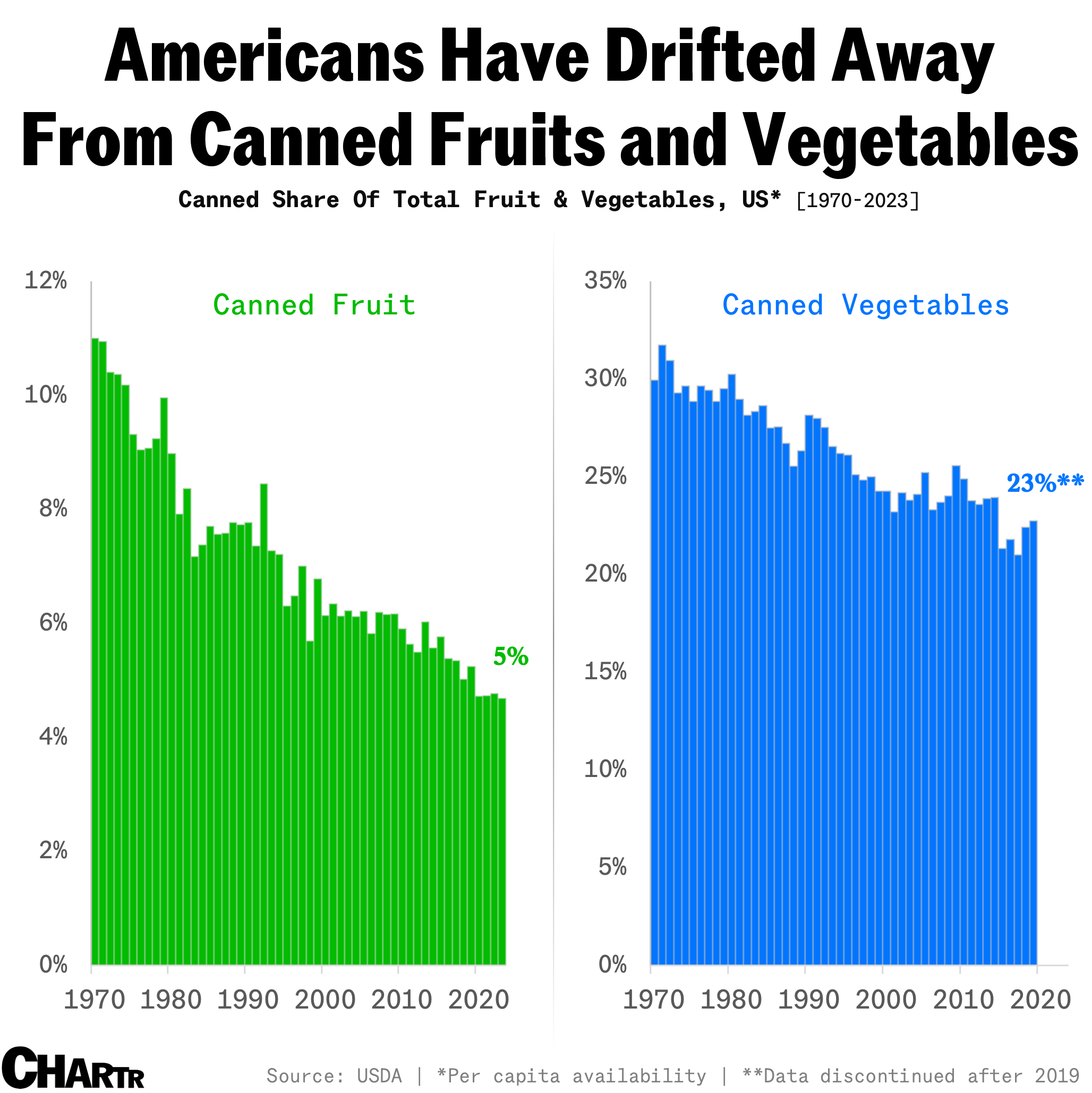
According to the USDA, canned vegetables accounted for just 23% of total US vegetables available for consumption in 2019 — down from 30% five decades earlier. The decline is even steeper for canned fruit, whose share more than halved, from 11% to 5% by 2023.
Consumers are increasingly opting for fresher, healthier options — and with inflation still biting, many are also trading down to cheaper store-brand alternatives, leaving legacy packaged goods companies like Del Monte struggling to keep up.
Meanwhile, newly imposed 50% tariffs on imported steel and aluminum — the key materials used to make cans — could put pressure on margins, especially since ~80% of US can-grade steel is sourced from abroad.