Business
Close-up of cheeseburger
Yum!

McDonald’s pivoted to value and won. Now it's taking a big, beefy gamble on the Big Arch

The fast food giant’s biggest-ever burger has a premium price tag in a value-driven time. Can it deliver a big bump in sales or will it be a repeat of McDonald’s most famous flop?

Adam Chandler

Thirty years ago, McDonald’s released its most infamous and expensive flop, the Arch Deluxe. Marketed as a burger with a “grown-up” taste, it promised culinary transcendence through premium ingredients, years of research and testing, and the then exotic siren scent of dijonnaise sauce. To the shock of the company brass, American consumers didn’t fall over themselves to pay for something at McDonald’s that was more expensive than a Big Mac. (A $150 million advertising campaign that involved children being grossed out by the adult-themed burger probably didn’t help.) Within a few years, the sandwich unceremoniously disappeared from menu boards. 

Decades later, former McDonald’s Head Chef Andrew Selvaggio also shared that the Arch Deluxe was an operational nightmare for an industry built on thrift, speed, and uniformity. “It was a new burger that required a new sauce, new buns, new lettuce, seasoning.” 

The specter of the Arch Deluxe disaster, which has since become legendary material for MBA case studies and corporate cautionary tales, will no doubt serve as nightmare fuel for McDonald’s executives when the company releases the Big Arch on March 3. 

In addition to bearing an eerily similar name to Mickey D’s biggest commercial calamity, the Big Arch shares a lot of the Arch Deluxe’s positioning: it’s a more expensive burger (well over $9 for the burger alone in many markets) and features a new sauce (tangy mustard), a fancy new bun (toasted and topped with poppy and sesame seeds), a new topping (crispy onions), and three slices of a new cheese (white cheddar). Following the Quarter Pounder, it will also be the second burger on the McDonald’s menu to be made to order with fresh beef. 

Still, more surprising than its spiritual resemblance to the ill-fated Arch Deluxe is the timing of the Big Arch’s debut. After alienating its core consumer base with the continuation of higher prices from the pandemic, McDonald’s and several other fast-food chains have just begun to see diners returning. On February 11, McDonald’s reported that it had smashed analysts’ expectations at the end of 2025, with same-store sales rising 5.7%, beating the projected 3.7%. Anchoring the surges in sales and traffic were discounts, including value-enhanced combo meals priced 15% lower than their individual items. In a rare and controversial move, McDonald’s even helped subsidize the discounts by splitting the costs with franchisees. “By listening to customers and taking action, we have improved traffic and strengthened our value & affordability scores,” McDonald’s CEO Chris Kempczinski said in a company statement unpacking the good numbers.

So then why would McDonald’s introduce a fast-food burger with a fast-casual price tag at the very moment that fancy burger chains and slop bowl purveyors are seeing demand drastically shrink? Well, to start, the Big Arch tested well in select US markets as well as across Canada and Europe; the burger has already become a permanent menu fixture in the United Kingdom and Ireland. (Out of journalistic duty, I tried the burger in Canada, where the shock and awe of a half-pound burger carries a bit less metric meaning, and thought it was great.)

As culinary trends go, a burger with more meat and less bread than a Big Mac also fits naturally within an American consumer culture that is in a sustained fit of protein-maxxing. “Customers are responding to this more satisfying burger that meets demand for something heartier while still feeling distinctly McDonald’s,” Global Chief Restaurant Experience Officer Jill McDonald (of no relation to the chain’s founding brothers) said of the Big Arch’s performance abroad.

McDonald’s isn’t the only burger chain hulking up its burgers. In October, Shake Shack introduced its own half-pounder — the Big Shack — and in November, Carl’s Jr. released the Cali XL, a $5.99 burger that explicitly boasted having more than twice the beef of a Big Mac for about the same price. In a particularly hostile gambit, Carl’s Jr. even offered customers the burger for free if they showed the receipt from a previous Big Mac purchase. 

Of course, there’s almost always an economic case to be made for anything that a goliath like McDonald’s does. The ongoing narrative of how lower-income diners have been avoiding fast food or rediscovering casual restaurants like Chili’s as their respective prices have become comparable has a McNugget hiding in the data to digest: quick-service chains like McDonald’s have also enjoyed a boost from higher-income diners who are either unfazed by the high cost of fast food or might be trading down from pricier options.

Even as McDonald’s introduced discounts and brought its lower-priced Snack Wrap out of retirement last summer, it acknowledged how the winners in the bifurcated US economy have helped keep its losses from becoming supersized. In a call with analysts in November, Kempczinski observed a double-digit drop in traffic from less affluent diners across all of fast food in the third quarter of 2025. “In contrast,” he added, “traffic growth among higher-income consumers remains strong, increasing nearly double digits in the quarter.” For those not feeling the jitters of economic anxiety, a $9 burger may not arch their eyebrows.

In many ways, Mickey D’s investment in the Big Arch speaks to its outsized fixture in the world of food. The American monoculture may be on its last legs, but McDonald’s is still McDonald’s. Part of the company’s late-year rally was fueled by its ability to persistently train its marketing firehose on consumers through value menus. Through sheer force of will, it also found success by reviving its “Monopoly” promotion and, in December, briefly held the title of the world’s largest seller of socks through a hugely successful holiday meal promotion featuring the Grinch. Even as the Big Arch sounds a lot like the same corporate hubris that gave us the Arch Deluxe, anyone witnessing the re-proliferation of cargo pants and digital cameras knows that even the most disastrous elements of the 1990s have the potential to break through in 2026.


Adam Chandler is a journalist based in New York and the author of “Drive-Thru Dreams” and “99% Perspiration.”

More Business

See all Business
business
Tom Jones

Prime Day is here again and Amazon’s subscription service has never been more popular

Well, it’s that time of year again: many have made their wish lists, people are scraping together the money they’ve saved to pick out a perfect gift, some are presumably leaving out refreshments for the weary delivery drivers and, more and more, drones.

It’s Amazon Prime Day — meaning that it’s the second day of the four-day promotional event that Amazon still calls Prime Day — of course, and it’s even come early this year, with the company bringing the period into late June from July, when it’s been traditionally held for the last five years.

The Prime Age

Alongside the eyes and endless clicks that the arbitrary stream of listicles on “The Best Prime Day Deals” that almost every media outlet pours into, Amazon will also be cheering the fact that there’s now more Prime users than ever before to devour the retailer and its sellers’ sometimes-contested “discounts.” Indeed, according to the latest annual estimates from Consumer Intelligence Research Partners (CIRP), there were just over 200 million American shoppers using Amazon’s massive subscription service at the end of 2025.

business

Electronic Arts launches a platform to put more ads in its games

Video game publishing giant EA launched a new platform on Monday designed to make the process of selling immersive ad space in its popular games easier.

The company says the platform, called EA Advertising, allows brands to “integrate directly into gameplay through dynamic, real-time placements, from stadium signage to custom in-game content.”

More so than other studios, EA has incorporated advertising into its most popular titles. As Kotaku points out, the company’s ad efforts stretch as far back as 2006. Several of its sports franchises already feature partnerships with brands like Visa, Lowe’s, Red Bull, and PepsiCo.

In-game advertising hasn’t exactly been embraced by fans, but industry experts expect it to ramp up as companies seek more revenue to offset higher games budgets and surging memory costs. EA rival Take-Two has taken a different approach, with CEO Strauss Zelnick recently saying the company was “not at risk of doing brand partnerships” in the forthcoming “Grand Theft Auto VI,” and that ads in full-price games seems “unfair.”

The $55 billion deal to take EA private, led by Saudi Arabia’s Public Investment Fund, is set to close at the end of this month. Being the largest leveraged buyout in history, EA will likely look for more ways to boost revenue to cover interest payments.

More so than other studios, EA has incorporated advertising into its most popular titles. As Kotaku points out, the company’s ad efforts stretch as far back as 2006. Several of its sports franchises already feature partnerships with brands like Visa, Lowe’s, Red Bull, and PepsiCo.

In-game advertising hasn’t exactly been embraced by fans, but industry experts expect it to ramp up as companies seek more revenue to offset higher games budgets and surging memory costs. EA rival Take-Two has taken a different approach, with CEO Strauss Zelnick recently saying the company was “not at risk of doing brand partnerships” in the forthcoming “Grand Theft Auto VI,” and that ads in full-price games seems “unfair.”

The $55 billion deal to take EA private, led by Saudi Arabia’s Public Investment Fund, is set to close at the end of this month. Being the largest leveraged buyout in history, EA will likely look for more ways to boost revenue to cover interest payments.

business

JM Smucker says it sold $1 billion worth of Uncrustables in FY2026

After years of booming sandwich sales, JM Smucker has finally earned a billion-dollar crust.

On Tuesday, the company reported results for fiscal year 2026, highlighting better-than-expected profits driven by higher prices for coffee and sweet baked goods. However, at another point on the earnings call, CEO Mark Smucker pointed to one particularly jammy figure: in line with previous forecasts, the company sold $1 billion worth of its (almost always) crustless sandwiches, Uncrustables, in the last year alone.

business

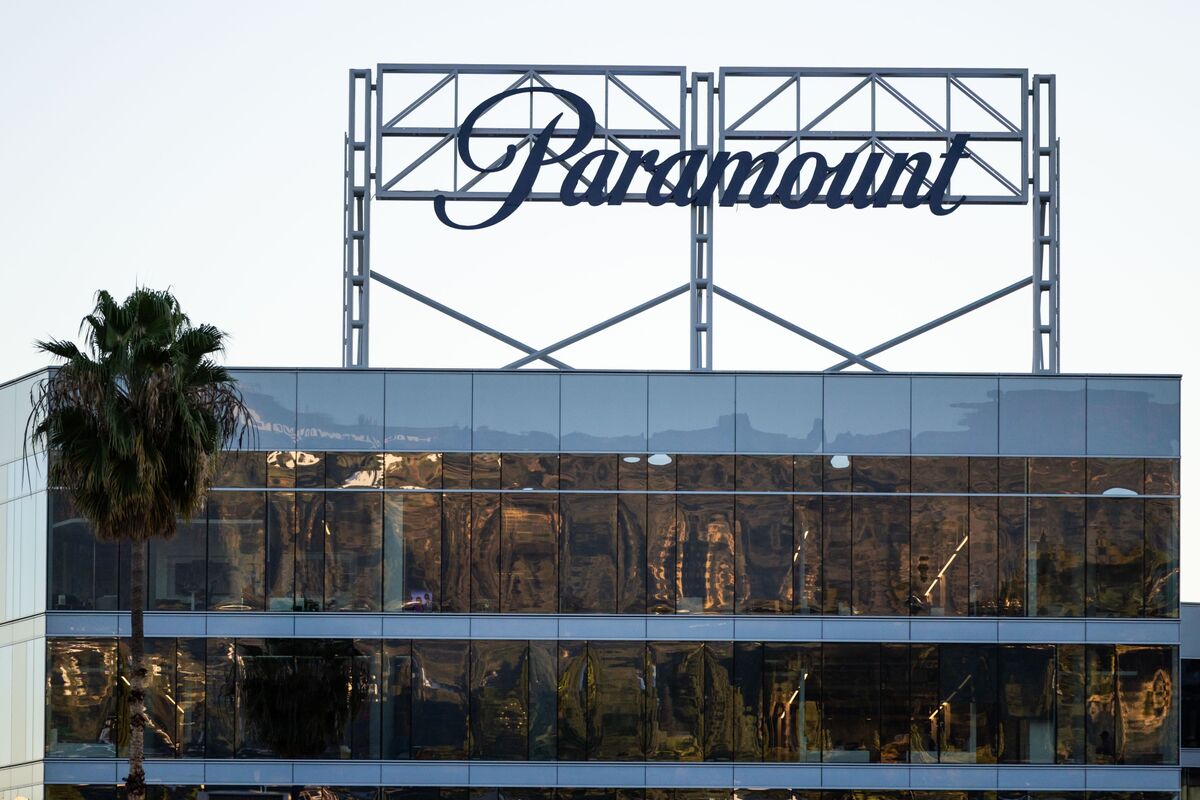
Paramount reportedly offers concessions to resolve multistate antitrust investigation

Paramount has reportedly offered up some concessions in an effort to prevent an antitrust lawsuit by California and about 10 other states, according to Bloomberg reporting on Monday.

Reuters first reported on the potential suit from a group of unnamed states last week, which could throw a wrench in Paramount’s plans to buy rival Warner Bros. Discovery in a Hollywood megamerger.

The list of concessions is unknown, though Bloomberg previously reported that Paramount is open to divesting some of its kids TV assets to appease EU regulators.

Late last month, reports said US regulators appeared likely to approve the $110 billion merger, following a meeting between Paramount CEO David Ellison and DOJ antitrust staffers.

The list of concessions is unknown, though Bloomberg previously reported that Paramount is open to divesting some of its kids TV assets to appease EU regulators.

Late last month, reports said US regulators appeared likely to approve the $110 billion merger, following a meeting between Paramount CEO David Ellison and DOJ antitrust staffers.

$98B ⛽

The IATA released its latest financial outlook for the airline industry over the weekend, forecasting a $98 billion jump in the sector’s collective fuel bill. The world’s largest trade group representing airlines expects the oil spike to halve profits by 49% from last year to $23 billion.

The group also expects profit margins to halve year over year, falling from 2025’s 4.2% to 2%. Still, revenue is expected to climb to $1.17 trillion from $1.07 trillion.

A surge in the cost of jet fuel has rocked US and global airlines this year, leading Delta Air Lines, United Airlines, American Airlines, Southwest Airlines, JetBlue, and others to raise fares and ancillary charges like bag fees. Low-cost carriers, which operate on smaller margins, have been squeezed the hardest, resulting in Spirit’s shutdown.

“It’s a tough year for all airlines, especially those whose balance sheets had not yet recovered from COVID. And, of course, for those operating in the Gulf,” said IATA Director General Willie Walsh, who added that demand is holding up and about half of passengers expect to spend more on travel this year. “That bodes well for a strong northern summer peak season. The big unknown is how long travelers and shippers can tolerate the higher costs of connectivity.”

Latest Stories

Sherwood Media, LLC and Chartr Limited produce fresh and unique perspectives on topical financial news and are fully owned subsidiaries of Robinhood Markets, Inc., and any views expressed here do not necessarily reflect the views of any other Robinhood affiliate, including Robinhood Markets, Inc., Robinhood Financial LLC, Robinhood Securities, LLC, Robinhood Crypto, LLC, Robinhood Money, LLC, Robinhood U.K. Ltd, Robinhood Derivatives, LLC, Robinhood Gold, LLC, Robinhood Asset Management, LLC, Robinhood Credit, Inc., Robinhood Ventures DE, LLC and, where applicable, its managed investment vehicles.