Business
St. Patrick's Park, Dublin, Ireland
St. Patrick's Park, Dublin (Getty Images)

Ireland’s embarrassment of riches

In the 1990s, Ireland cut its corporation tax, planting the seeds for a tax regime that is now hauling in billions from multinationals every month

Yesterday, the European Commission ruled that Apple owes the Irish government €13 billion ($14.4 billion) in unpaid taxes from 2003 to 2014, plus interest. The ruling caps off a lengthy legal battle that began in 2016 — which has been appealed multiple times following various court rulings — and it marks a significant victory for EU antitrust chief Margrethe Vestager.

Most remarkable in this otherwise dry bit of tax-related news is that the Irish government has been spending millions on ensuring that it didn’t get paid the tax. Indeed, Irish officials have spent years sticking to the party line: that they don’t give preferential tax treatment to companies and that they didn’t think Apple owed them anything.

The emerald isle

With a population of 5.3 million, making it slightly larger than Alabama, Ireland now finds itself in the enviable position of figuring out how to spend this windfall. And policymakers have already been debating what to do with their third consecutive budget surplus, which was some $9.5 billion last year, because Ireland’s corporate tax receipts continue to soar.

Ireland corporate tax receipts
Sherwood News
Last year the Irish government collected some €23.8 billion in corporate tax, 416% more than it collected in 2014.

And the country is on track to collect even more this year.

On Sunday, the Irish Times reported that Ireland’s corporate tax receipts are tracking 28% higher in 2024 than they were at the same time last year, as the country continues to experience what one economist, Dermot O’Leary, described as “an embarrassment of riches.”

There goes that dream

In the late 1990s, Ireland began cutting its corporation tax, a policy that transformed it into a haven for multinational corporations like Meta, Alphabet, Apple and Pfizer. In the intervening years, the country’s economy has become one of the most interesting in the world.

The influx of corporate activity has been so extreme that it’s led to a distortion in the country’s GDP figures, as these companies often generate huge paper profits within Ireland. In 2015, a simple shift of Apple's intellectual property assets resulted in a 26% GDP gain for Ireland — the highest ever recorded in post-war Europe.

Ireland is a wealthy country, but this phenomenon paints a somewhat deceptive picture of the nation's true economic reality. For most countries, GDP is the go to measure of output. That measure is often similar to Gross National Income (which excludes profits sent abroad). Not so for Ireland.

Ireland’s GNI vs. GDP
Sherwood News

Ireland’s Central Statistics Office has gone even further, developing a bespoke index called GNI* (GNI Star) in an attempt to strip away the outsized influence of multinationals on its economic figures. This strips out depreciation on Intellectual Property, leased aircraft, and the income of redomiciled PLCs. Those adjustments make a very big difference: Ireland’s GNI* is estimated to be about a quarter lower than regular GNI.

Spending spree

Although many of the profits that flow through Irish multinational bank accounts have no real impact on the lives of everyday Irish folks, the taxes collected on (some) of those profits are very real.

Ireland’s finance minister said the government would “carefully consider” what to do with the sudden windfall from Apple, but, as you might imagine, politicians already have big ideas for what to do with the enormous sum, which is equivalent to some €2,450 (~$2,700) per Irish citizen. Some want to spend it on housing, education, or infrastructure, while others are advocating to save more of it for the future.

In August, Ireland’s Finance Minister signed a commencement order to set up the country’s new sovereign wealth fund, an arrangement not dissimilar to Norway, which is one of the world’s largest investors thanks to its national fund.

In case you were concerned about Apple in all of this... don’t worry. There aren’t many entities in the world that can brush off a bill of this size, but Apple is one of them — analysts expect the company to report more than $100 billion in profit this fiscal year.

More Business

See all Business
business

Electronic Arts launches a platform to put more ads in its games

Video game publishing giant EA launched a new platform on Monday designed to make the process of selling immersive ad space in its popular games easier.

The company says the platform, called EA Advertising, allows brands to “integrate directly into gameplay through dynamic, real-time placements, from stadium signage to custom in-game content.”

More so than other studios, EA has incorporated advertising into its most popular titles. As Kotaku points out, the company’s ad efforts stretch as far back as 2006. Several of its sports franchises already feature partnerships with brands like Visa, Lowe’s, Red Bull, and PepsiCo.

In-game advertising hasn’t exactly been embraced by fans, but industry experts expect it to ramp up as companies seek more revenue to offset higher games budgets and surging memory costs. EA rival Take-Two has taken a different approach, with CEO Strauss Zelnick recently saying the company was “not at risk of doing brand partnerships” in the forthcoming “Grand Theft Auto VI,” and that ads in full-price games seems “unfair.”

The $55 billion deal to take EA private, led by Saudi Arabia’s Public Investment Fund, is set to close at the end of this month. Being the largest leveraged buyout in history, EA will likely look for more ways to boost revenue to cover interest payments.

More so than other studios, EA has incorporated advertising into its most popular titles. As Kotaku points out, the company’s ad efforts stretch as far back as 2006. Several of its sports franchises already feature partnerships with brands like Visa, Lowe’s, Red Bull, and PepsiCo.

In-game advertising hasn’t exactly been embraced by fans, but industry experts expect it to ramp up as companies seek more revenue to offset higher games budgets and surging memory costs. EA rival Take-Two has taken a different approach, with CEO Strauss Zelnick recently saying the company was “not at risk of doing brand partnerships” in the forthcoming “Grand Theft Auto VI,” and that ads in full-price games seems “unfair.”

The $55 billion deal to take EA private, led by Saudi Arabia’s Public Investment Fund, is set to close at the end of this month. Being the largest leveraged buyout in history, EA will likely look for more ways to boost revenue to cover interest payments.

business

JM Smucker says it sold $1 billion worth of Uncrustables in FY2026

After years of booming sandwich sales, JM Smucker has finally earned a billion-dollar crust.

On Tuesday, the company reported results for fiscal year 2026, highlighting better-than-expected profits driven by higher prices for coffee and sweet baked goods. However, at another point on the earnings call, CEO Mark Smucker pointed to one particularly jammy figure: in line with previous forecasts, the company sold $1 billion worth of its (almost always) crustless sandwiches, Uncrustables, in the last year alone.

business

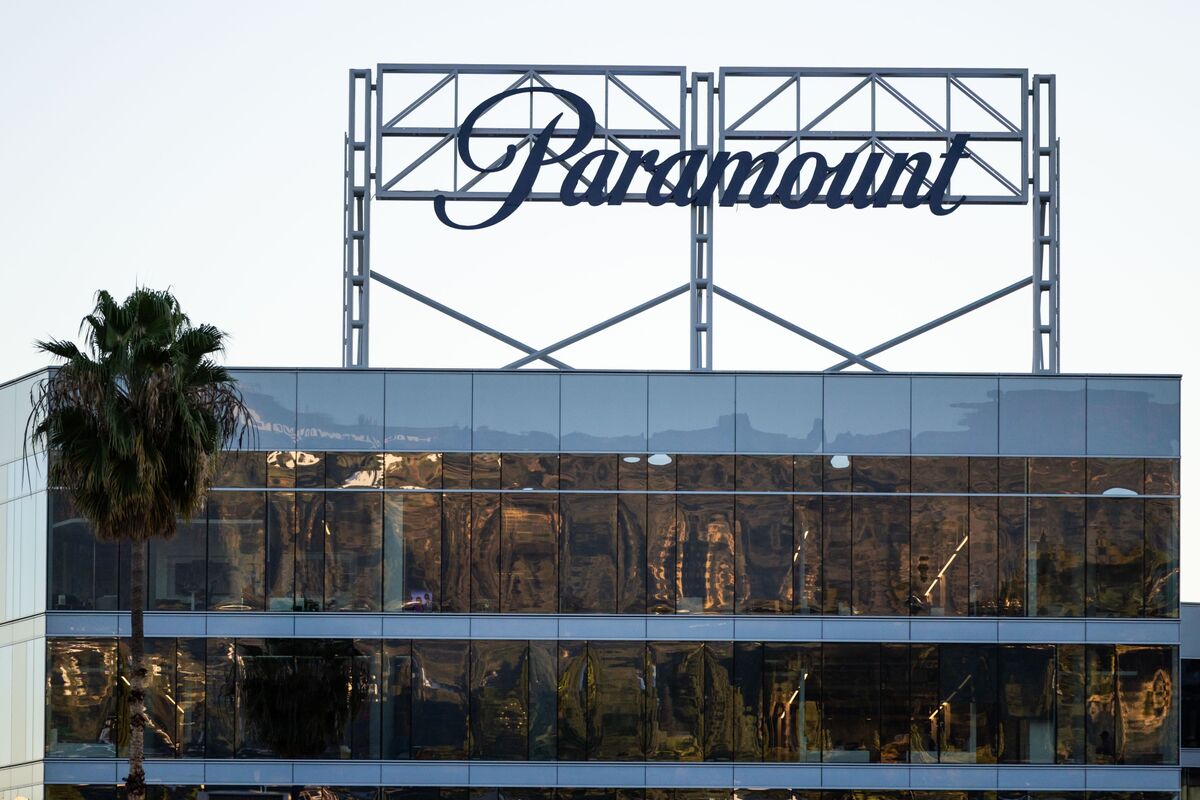
Paramount reportedly offers concessions to resolve multistate antitrust investigation

Paramount has reportedly offered up some concessions in an effort to prevent an antitrust lawsuit by California and about 10 other states, according to Bloomberg reporting on Monday.

Reuters first reported on the potential suit from a group of unnamed states last week, which could throw a wrench in Paramount’s plans to buy rival Warner Bros. Discovery in a Hollywood megamerger.

The list of concessions is unknown, though Bloomberg previously reported that Paramount is open to divesting some of its kids TV assets to appease EU regulators.

Late last month, reports said US regulators appeared likely to approve the $110 billion merger, following a meeting between Paramount CEO David Ellison and DOJ antitrust staffers.

The list of concessions is unknown, though Bloomberg previously reported that Paramount is open to divesting some of its kids TV assets to appease EU regulators.

Late last month, reports said US regulators appeared likely to approve the $110 billion merger, following a meeting between Paramount CEO David Ellison and DOJ antitrust staffers.

$98B ⛽

The IATA released its latest financial outlook for the airline industry over the weekend, forecasting a $98 billion jump in the sector’s collective fuel bill. The world’s largest trade group representing airlines expects the oil spike to halve profits by 49% from last year to $23 billion.

The group also expects profit margins to halve year over year, falling from 2025’s 4.2% to 2%. Still, revenue is expected to climb to $1.17 trillion from $1.07 trillion.

A surge in the cost of jet fuel has rocked US and global airlines this year, leading Delta Air Lines, United Airlines, American Airlines, Southwest Airlines, JetBlue, and others to raise fares and ancillary charges like bag fees. Low-cost carriers, which operate on smaller margins, have been squeezed the hardest, resulting in Spirit’s shutdown.

“It’s a tough year for all airlines, especially those whose balance sheets had not yet recovered from COVID. And, of course, for those operating in the Gulf,” said IATA Director General Willie Walsh, who added that demand is holding up and about half of passengers expect to spend more on travel this year. “That bodes well for a strong northern summer peak season. The big unknown is how long travelers and shippers can tolerate the higher costs of connectivity.”

Hollywood Exteriors And Landmarks - 2025

1 year into the Switch 2, we might’ve seen the top of the console market

The Switch 2 launched on this day in 2025. Amid a rough year for consoles, Nintendo has logged a good one.

Latest Stories

Sherwood Media, LLC and Chartr Limited produce fresh and unique perspectives on topical financial news and are fully owned subsidiaries of Robinhood Markets, Inc., and any views expressed here do not necessarily reflect the views of any other Robinhood affiliate, including Robinhood Markets, Inc., Robinhood Financial LLC, Robinhood Securities, LLC, Robinhood Crypto, LLC, Robinhood Money, LLC, Robinhood U.K. Ltd, Robinhood Derivatives, LLC, Robinhood Gold, LLC, Robinhood Asset Management, LLC, Robinhood Credit, Inc., Robinhood Ventures DE, LLC and, where applicable, its managed investment vehicles.