
Business
Unicorns: They're meant to be rare, but increasingly they seem everywhere

Unicorns: They're meant to be rare, but increasingly they seem everywhere

Unicorns are rare. Kids know that, and it's why the name stuck as the descriptor for private startup companies that were valued at more than $1bn. But recently, amidst a frenzy of funding activity, unicorns have become a lot less special. Data from a new CB Insights report reveals that 136 unicorns were created in the second quarter of this year — which is more than for all of 2017, when 85 companies made it into the "three comma club".

FOMO

With stock markets near record highs, economic activity returning (kinda) and interest rates still at historic lows it's no surprise that there is a lot of money sloshing around trying to find a home in the next Facebook, Google or Amazon. As competition intensifies for the hottest deals the "fear of missing out" (FOMO) gets pretty real, and investors are willing to give the same money for a smaller slice of the equity pie — which means higher valuations for the startups themselves.

Data from another source (Pitchbook) finds that it's a similar story in early-stage investing. A decade ago the median early-stage pre-money valuation for a startup was somewhere around $10m. Today it's more like $40m. If you would like to fund Chartr at this kind of valuation please get in touch.

More Business

See all Business
business

Ford reportedly in talks to buy hybrid vehicle batteries from Chinese auto giant BYD

Detroit’s Ford and China’s BYD are said to be in ongoing talks to partner on an agreement that would see Ford buy hybrid vehicle batteries from BYD, according to reporting from The Wall Street Journal.

The report comes just days after President Trump toured a Ford factory in Michigan and implied openness to Chinese automakers coming to the US.

“If they want to come in and build a plant... that’s great, I love that,” Trump said on January 13. “Let China come in, let Japan come in.”

Last week, China’s Geely Automobile Holdings said it expects to make an announcement about expanding into the US within the next three years. Chinese carmakers currently face huge tariffs and software restrictions, effectively barring their vehicles from the US.

Ford has doubled down on hybrid vehicles amid high EV costs and the end of federal EV tax credits. The automaker is currently building a battery plant in Michigan where it plans to use tech from Chinese battery maker CATL.

“If they want to come in and build a plant... that’s great, I love that,” Trump said on January 13. “Let China come in, let Japan come in.”

Last week, China’s Geely Automobile Holdings said it expects to make an announcement about expanding into the US within the next three years. Chinese carmakers currently face huge tariffs and software restrictions, effectively barring their vehicles from the US.

Ford has doubled down on hybrid vehicles amid high EV costs and the end of federal EV tax credits. The automaker is currently building a battery plant in Michigan where it plans to use tech from Chinese battery maker CATL.

Still life of Ozempic and Wegovy with weight scale.

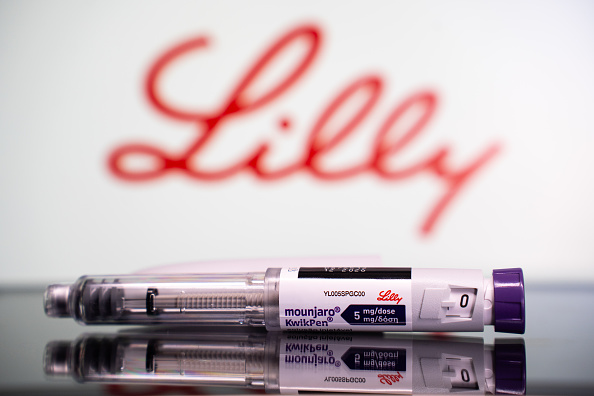
Lawsuit alleges Lilly, Novo locked up telehealth to kill compounded GLP-1s

Novo Nordisk CEO Mike Doustdar estimated that around 1.5 million US patients are using compounded versions of the company’s drugs.

Handshake

Big Pharma enters 2026 with an appetite for deals

At the JPMorgan Healthcare Conference, biotechs and Big Pharma signaled they’re primed for M&A this year, after a big year for deals in 2025.

Latest Stories

Sherwood Media, LLC produces fresh and unique perspectives on topical financial news and is a fully owned subsidiary of Robinhood Markets, Inc., and any views expressed here do not necessarily reflect the views of any other Robinhood affiliate, including Robinhood Markets, Inc., Robinhood Financial LLC, Robinhood Securities, LLC, Robinhood Crypto, LLC, or Robinhood Money, LLC.
