Starbucks’ China problem is actually getting worse
The store count keeps rising while sales flatline.
Yeah, Starbucks just posted results that were a little less bad than analysts expected. Sure, CEO Brian Niccol has brewed some broadly nice-sounding ideas about wanting to make the chain a “community coffeehouse” and “reclaim the third space” as part of his “Back to Starbucks” initiative. And maybe reserving bathrooms for paying customers only and bringing baristas all the markers they need to get your name wrong might help reinvigorate sales.
But that bevy of ideas, as well as some notable leadership changes, show that Niccol (who’s earned almost as much in four months as his predecessors were paid over ~six years) is mostly focused on turning the US business around. The steps that the chain needs to take to fix operations in its second-biggest market, China, seem a little more grande.
Grounds down
Despite adding almost 100 stores in China in its first quarter of FY25, Starbucks’ sales in the nation actually fell more than 5% from the quarter before, as the chain continues to struggle through its China dichotomy: opening new coffee shops does not mean making more money. In fact, the opposite is often the case.
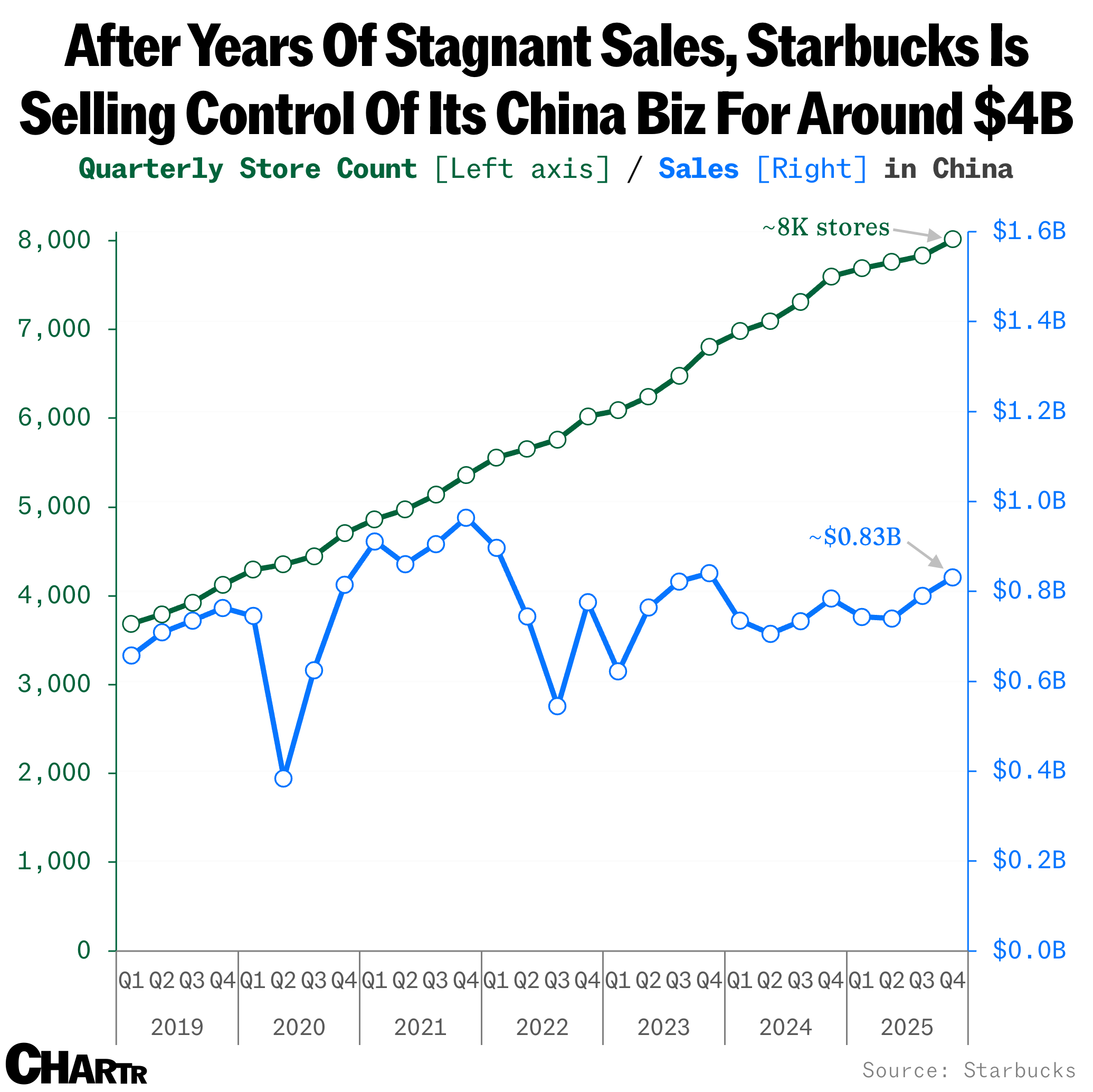
The coffee giant not only welcomed fewer customers, as transactions fell 2% from the same quarter last year, but the patrons who visited Chinese branches were also spending less, with the average ticket size down 4% in the same period.
Starbucks opened its first branch in China in 1999 and grew to become a coffee behemoth in a country better known for its taste for tea. Still, cheaper offerings from local competition like Luckin, growing Chinese nationalism, and a wider shift away from Western brands have coalesced to leave the American giant looking a little off the boil in one of its key regions.