Business
2023 Bring Change To Mind Gala
BIG
MONEY
Dimitrios Kambouris/Getty Images

How 8 celebs created successful businesses

From makeup to gin, these stars are making bank

Allie Jones

It’s not enough to be an actress or a pop star anymore. Celebrities have been convinced they must also be entrepreneurs. Ever since George Clooney and Rande Gerber sold their tequila brand, Casamigos, to Diageo for a rumored $1 billion in 2017, everyone who’s ever appeared in film and on television has suddenly discovered a passion for distilling tequila (among them: Dwayne “The Rock” Johnson, Kendall Jenner, Nick Jonas, Bryan Cranston and Aaron Paul, Mark Wahlberg, Eva Longoria, Adam Levine and Behati Prinsloo, and Michael Jordan). 

But not every celebrity business is heading for a billion-dollar valuation or even baseline profitability. Some seem too niche to ever find enough consumers: Take Jessica Biel’s protein shakes for children, or Naomi Watts’ menopause-themed skincare line or Machine Gun Kelly’s nail polishes for men. Then there are the celeb brands like Jennifer Lopez’s line of vaguely European bottled cocktails and Brad Pitt’s wine-inspired face serums . Launching a successful celebrity business is not as easy as simply filing the paperwork. 

A few stars, however, have made real money from their entrepreneurial endeavors. And how did they do it? Read on.

If you’re not first, you’re last

Jessica Alba, the Honest Company

One of the first big successes in this era of celebrity brands. Alba launched The Honest Company, which started as an organic baby-products line and has come to encompass everything from diapers to cleaning supplies to makeup for adults, in 2012. By 2021, the company went public with a $1.44 billion valuation. his month Alba announced she was finally stepping down as chief creative officer in an Instagram post with not one but two Eleanor Roosevelt quotes. She can relax knowing she made a ton of money and inspired a whole mommy group’s worth of competitors, from Hello Bello by Kristen Bell and Dax Shepard to Proudly by Gabrielle Union and Dwyane Wade.

Pick the right company to partner with

Rihanna, Fenty Beauty

Pretty much every pop star, from Ariana Grande to Lady Gaga to Selena Gomez to Halsey to Ciara, has a beauty line now. And that’s because of Rihanna, who founded Fenty Beauty in 2017. The brand made her America’s youngest self-made billionaire in 2021 and has allowed her to go eight years without releasing an album. Now it’s even selling in China! 

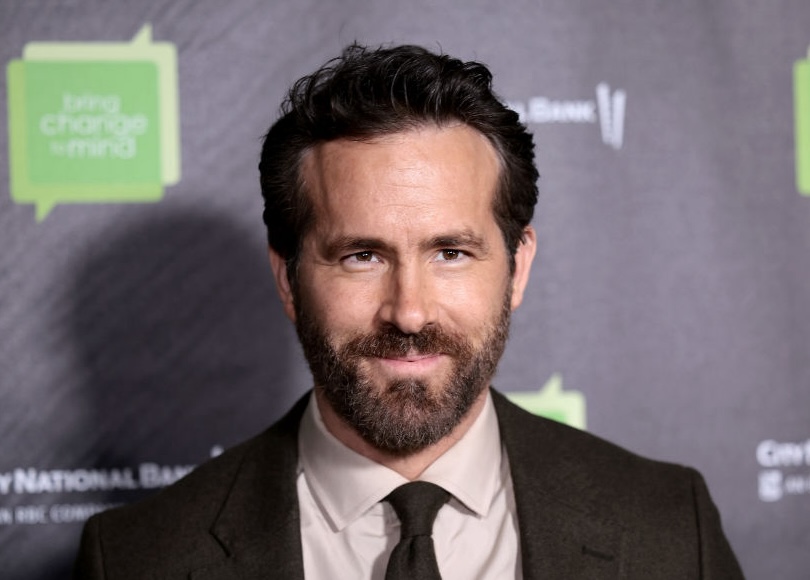
Ryan Reynolds, Aviation Gin

Reynolds’s whole thing these days is “business.” He just sold his  mobile-network company, Mint, to T-Mobile; he owns a Welsh soccer team; and he even has his own marketing firm (known for viral successes like getting Travis Kelce’s mom to sit with “Jake from State Farm” at an NFL game — woohoo). But his biggest success is behind him: He sold his liquor brand, Aviation Gin, to Diageo for $610 million in 2020. Just like George Clooney, almost! Now perhaps he can help his wife, Blake Lively, do something (anything?) with her line of nonalcoholic mixers, Betty Buzz. 

Find a good brand and buy into it

Jennifer Garner, Once Upon a Farm

The actress joined this baby-food brand in 2017 and, according to the company, has taken annual revenue from $1 million to over $100 million. This year, Once Upon a Farm expanded to food for bigger kids, including oat bars. “It was a big deal for us to leave the pouch and go to a bar — bars are huge,” Garner told Fortune. “There’s just an enormous market…it’s really insane.” Insane or not, the brand is one of the most successful celebrity-fronted baby companies and is exploring an IPO. Cheers to bars! 

Maria Sharapova, Supergoop

The tennis star didn’t found this upscale sunscreen label, but she came on board as a co-owner in 2015 (announcing her new role with a spread in Vogue, naturally). This proved to be a savvy business decision: Blackstone acquired a majority stake in the company in 2021, valuing it at between $600 million and $700 million. Sharapova’s line of sexy, lip-themed gummy candy, Sugarpova, didn’t do so well (it closed the same year). Oh well! 

If at first you don‘t succeed, try again

Shay Mitchell, Beis

The “Pretty Little Liars” actress started this line of mid-priced luggage in 2018 and reportedly cracked $120 million in profitable revenue this year. It turns out that making suitcases that look like they’re from the popular startup brand Away but about $100 cheaper is a good business model. Mitchell created the brand with Beach House Group, which is also responsible for the somewhat less successful celebrity-fronted brands like Moon (Kendall Jenner’s toothpaste line) and Florence by Mills (Millie Bobby Brown’s fashion, beauty, coffee, and pet accessories line). Mitchell also has a tequila brand, but we don’t need to talk about that here. 

Kim Kardashian, Skims

The reality star tried her hand at several different promotions and businesses before launching Skims, a shapewear company that’s come to offer loungewear and swimsuits as well as a men’s line. Remember Millions of Milkshakes in Dubai? The disastrous Kardashian prepaid Mastercard? KIMOJI? Nevertheless, she persisted, and now Skims is worth $4 billion, according to The New York Times. All that’s left is to go public (maybe then Kardashian can buy some real Donald Judd tables). 

Invest against the cycle — and never give up

Jessica Simpson, the Jessica Simpson Collection

It was hard to imagine back in 2005, when pop star and “Newlywed” Jessica Simpson launched her eponymous fashion line, that it would still exist two decades later. But Simpson has succeeded where pretty much every other celebrity has failed (save the Olsen twins). It’s been a journey: Simpson grew the company to $1 billion in annual sales, sold it to a private-equity firm in 2015, and then rescued it from bankruptcy with a $65 million bid in 2021 (financed mostly with her own money). This year she announced a new collaboration with Walmart, which means her reasonably priced dresses, shoes, and swimwear will once more reach the masses. She told CNBC in 2022, “I’m always the type that thinks slow and steady wins the race.” 

Allie Jones is a writer in New York City.

More Business

See all Business
business

Electronic Arts launches a platform to put more ads in its games

Video game publishing giant EA launched a new platform on Monday designed to make the process of selling immersive ad space in its popular games easier.

The company says the platform, called EA Advertising, allows brands to “integrate directly into gameplay through dynamic, real-time placements, from stadium signage to custom in-game content.”

More so than other studios, EA has incorporated advertising into its most popular titles. As Kotaku points out, the company’s ad efforts stretch as far back as 2006. Several of its sports franchises already feature partnerships with brands like Visa, Lowe’s, Red Bull, and PepsiCo.

In-game advertising hasn’t exactly been embraced by fans, but industry experts expect it to ramp up as companies seek more revenue to offset higher games budgets and surging memory costs. EA rival Take-Two has taken a different approach, with CEO Strauss Zelnick recently saying the company was “not at risk of doing brand partnerships” in the forthcoming “Grand Theft Auto VI,” and that ads in full-price games seems “unfair.”

The $55 billion deal to take EA private, led by Saudi Arabia’s Public Investment Fund, is set to close at the end of this month. Being the largest leveraged buyout in history, EA will likely look for more ways to boost revenue to cover interest payments.

More so than other studios, EA has incorporated advertising into its most popular titles. As Kotaku points out, the company’s ad efforts stretch as far back as 2006. Several of its sports franchises already feature partnerships with brands like Visa, Lowe’s, Red Bull, and PepsiCo.

In-game advertising hasn’t exactly been embraced by fans, but industry experts expect it to ramp up as companies seek more revenue to offset higher games budgets and surging memory costs. EA rival Take-Two has taken a different approach, with CEO Strauss Zelnick recently saying the company was “not at risk of doing brand partnerships” in the forthcoming “Grand Theft Auto VI,” and that ads in full-price games seems “unfair.”

The $55 billion deal to take EA private, led by Saudi Arabia’s Public Investment Fund, is set to close at the end of this month. Being the largest leveraged buyout in history, EA will likely look for more ways to boost revenue to cover interest payments.

business

JM Smucker says it sold $1 billion worth of Uncrustables in FY2026

After years of booming sandwich sales, JM Smucker has finally earned a billion-dollar crust.

On Tuesday, the company reported results for fiscal year 2026, highlighting better-than-expected profits driven by higher prices for coffee and sweet baked goods. However, at another point on the earnings call, CEO Mark Smucker pointed to one particularly jammy figure: in line with previous forecasts, the company sold $1 billion worth of its (almost always) crustless sandwiches, Uncrustables, in the last year alone.

business

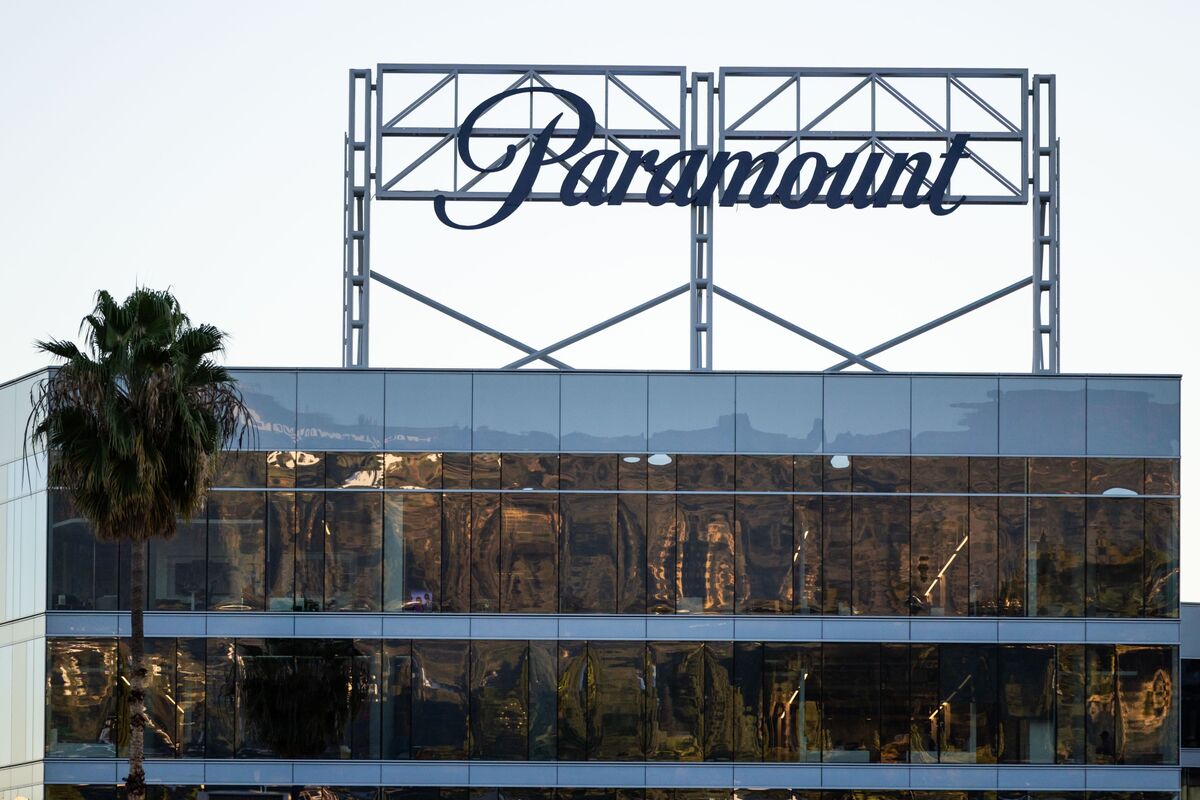
Paramount reportedly offers concessions to resolve multistate antitrust investigation

Paramount has reportedly offered up some concessions in an effort to prevent an antitrust lawsuit by California and about 10 other states, according to Bloomberg reporting on Monday.

Reuters first reported on the potential suit from a group of unnamed states last week, which could throw a wrench in Paramount’s plans to buy rival Warner Bros. Discovery in a Hollywood megamerger.

The list of concessions is unknown, though Bloomberg previously reported that Paramount is open to divesting some of its kids TV assets to appease EU regulators.

Late last month, reports said US regulators appeared likely to approve the $110 billion merger, following a meeting between Paramount CEO David Ellison and DOJ antitrust staffers.

The list of concessions is unknown, though Bloomberg previously reported that Paramount is open to divesting some of its kids TV assets to appease EU regulators.

Late last month, reports said US regulators appeared likely to approve the $110 billion merger, following a meeting between Paramount CEO David Ellison and DOJ antitrust staffers.

$98B ⛽

The IATA released its latest financial outlook for the airline industry over the weekend, forecasting a $98 billion jump in the sector’s collective fuel bill. The world’s largest trade group representing airlines expects the oil spike to halve profits by 49% from last year to $23 billion.

The group also expects profit margins to halve year over year, falling from 2025’s 4.2% to 2%. Still, revenue is expected to climb to $1.17 trillion from $1.07 trillion.

A surge in the cost of jet fuel has rocked US and global airlines this year, leading Delta Air Lines, United Airlines, American Airlines, Southwest Airlines, JetBlue, and others to raise fares and ancillary charges like bag fees. Low-cost carriers, which operate on smaller margins, have been squeezed the hardest, resulting in Spirit’s shutdown.

“It’s a tough year for all airlines, especially those whose balance sheets had not yet recovered from COVID. And, of course, for those operating in the Gulf,” said IATA Director General Willie Walsh, who added that demand is holding up and about half of passengers expect to spend more on travel this year. “That bodes well for a strong northern summer peak season. The big unknown is how long travelers and shippers can tolerate the higher costs of connectivity.”

Hollywood Exteriors And Landmarks - 2025

1 year into the Switch 2, we might’ve seen the top of the console market

The Switch 2 launched on this day in 2025. Amid a rough year for consoles, Nintendo has logged a good one.

Latest Stories

Sherwood Media, LLC and Chartr Limited produce fresh and unique perspectives on topical financial news and are fully owned subsidiaries of Robinhood Markets, Inc., and any views expressed here do not necessarily reflect the views of any other Robinhood affiliate, including Robinhood Markets, Inc., Robinhood Financial LLC, Robinhood Securities, LLC, Robinhood Crypto, LLC, Robinhood Money, LLC, Robinhood U.K. Ltd, Robinhood Derivatives, LLC, Robinhood Gold, LLC, Robinhood Asset Management, LLC, Robinhood Credit, Inc., Robinhood Ventures DE, LLC and, where applicable, its managed investment vehicles.