Business
Frack to the future: America is now a major exporter of natural gas

Frack to the future: America is now a major exporter of natural gas

Frack to the future

The shale revolution is often credited with much of the progress in America’s newfound oil boom, as hydraulic fracturing (or fracking) unlocked a wave of previously inaccessible, or at least uneconomical, oil and gas reserves. Fracking involves forcing liquid — usually water mixed with sand and chemicals — into fissures in shale rock, cracking and expanding the gaps, allowing the once-trapped oil and gas to find its way to the surface.

As fracking got more efficient, it wasn’t just the crude oil industry that benefited: America’s natural gas production has also exploded over the last 15 years.

Gassed up

Oil and natural gas now join the ranks of heavy machinery, semiconductor chips, and cultural exports like TV & movies, as one of America’s most important trading markets. In December 2023, the US exported ~400bn cubic feet more natural gas than it imported, a dramatic shift from a decade earlier. Driving much of the boom is America’s liquefied natural gas (LNG) export industry, which — as recently as 2015 — basically didn’t exist.

By liquefying the gas, at a frosty -260° Fahrenheit, shipping and storage becomes a lot easier, with the volume of natural gas in its liquid state roughly 1/600th of the volume in its gaseous state — enabling America’s newfound fracking success to be shipped all over the world. 

Upheaval in energy markets, particularly after Russia’s invasion of Ukraine, further boosted demand for American LNG. Indeed, over the past 2 years more than 60% of US LNG exports have found their way to Europe, where buyers have been looking to replace lost supply from Russia. The overall result? From what was pretty much a standing start at the beginning of 2016, America’s LNG industry is now shattering records, with the US becoming the largest exporter of LNG in 2023, unseating Australia and Qatar.

More Business

See all Business
business

Paramount reportedly receives $24 billion from Gulf funds to back its Warner Bros. takeover

Three Middle East sovereign wealth funds have agreed to back Paramount’s takeover of Warner Bros. Discovery to the tune of roughly $24 billion, according to Wall Street Journal reporting.

The company’s triumph over Netflix in the bidding war came thanks in part to financial backing from Oracle cofounder Larry Ellison, billionaire father of Paramount CEO David Ellison.

Saudi Arabia’s PIF, which last year led the $55 billion deal to take Electronic Arts private, will provide about $10 billion in the deal. The Qatar Investment Authority and Abu Dhabi’s L’imad Holding Co. is also involved.

According to the WSJ, the funds will not receive voting rights in the combined Paramount-Warner company. Those working on the deal don’t expect the Gulf funds’ involvement to spark any additional regulatory reviews.

The company’s triumph over Netflix in the bidding war came thanks in part to financial backing from Oracle cofounder Larry Ellison, billionaire father of Paramount CEO David Ellison.

Saudi Arabia’s PIF, which last year led the $55 billion deal to take Electronic Arts private, will provide about $10 billion in the deal. The Qatar Investment Authority and Abu Dhabi’s L’imad Holding Co. is also involved.

According to the WSJ, the funds will not receive voting rights in the combined Paramount-Warner company. Those working on the deal don’t expect the Gulf funds’ involvement to spark any additional regulatory reviews.

The entrance of Allbirds seen from Hayes St. in San Francisco, Calif.

Allbirds, the once buzzy multibillion-dollar sneaker startup, is selling up for $39 million

That’s less than 1% of its peak market cap about four years ago.

Tom Jones3/31/26
business

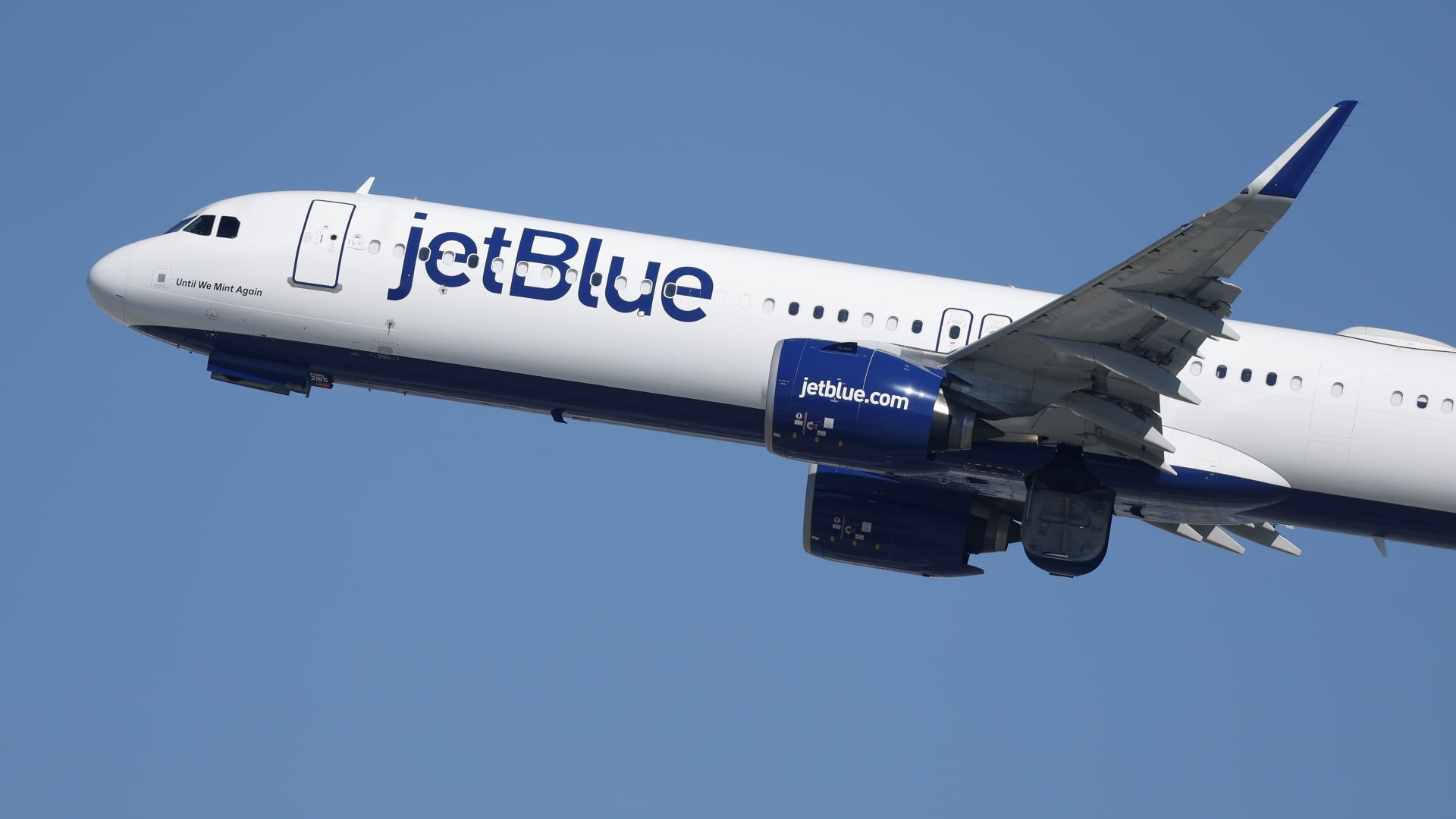
JetBlue is raising its bag fees as fuel costs squeeze airlines

JetBlue will reportedly hike its bag fees, as the cost of jet fuel continues to climb amid the war in Iran. It’s the latest example of carriers finding ways to push rising costs onto travelers.

Last week, United Airlines CEO Scott Kirby said that if fuel prices remain elevated, fares would need to rise another 20% for his airline to break even this year.

As CNBC reported, when one airline raises fees, others tend to follow.

Earlier this month, JetBlue hiked its first-quarter outlook for operating revenue per seat mile to between 5% and 7%, saying that strong Q1 demand helped “partially offset additional expenses realized from operational disruptions and rising fuel costs.” Now, the carrier appears to be making moves to further boost revenue to offset those costs.

Earlier on Monday, JetBlue rival Alaska Air lowered its Q1 profit forecast. The refining margins for the carrier’s cheapest fuel option — sourced from Singapore and representing about 20% of Alaska’s overall supply — have spiked 400% since February.

JetBlue did not immediately respond to a request for comment.

As CNBC reported, when one airline raises fees, others tend to follow.

Earlier this month, JetBlue hiked its first-quarter outlook for operating revenue per seat mile to between 5% and 7%, saying that strong Q1 demand helped “partially offset additional expenses realized from operational disruptions and rising fuel costs.” Now, the carrier appears to be making moves to further boost revenue to offset those costs.

Earlier on Monday, JetBlue rival Alaska Air lowered its Q1 profit forecast. The refining margins for the carrier’s cheapest fuel option — sourced from Singapore and representing about 20% of Alaska’s overall supply — have spiked 400% since February.

JetBlue did not immediately respond to a request for comment.

Latest Stories

Sherwood Media, LLC produces fresh and unique perspectives on topical financial news and is a fully owned subsidiary of Robinhood Markets, Inc., and any views expressed here do not necessarily reflect the views of any other Robinhood affiliate, including Robinhood Markets, Inc., Robinhood Financial LLC, Robinhood Securities, LLC, Robinhood Crypto, LLC, Robinhood Derivatives, LLC, or Robinhood Money, LLC. Futures and event contracts are offered through Robinhood Derivatives, LLC.