
Culture
Harvard admissions rate
Sherwood News

Consultants are making millions from the fierce competition to get into elite colleges

Applying to college is a level playing field... if your parents have $200,000 to spend on a consultant

For a 29 year-old, Jamie Beaton is a man of many hats: a Rhodes scholar, a graduate with six degrees from elite colleges, and a millionaire entrepreneur of a college consulting company that is attracting attention from eager parents and investors alike. 

A great article in The Wall Street Journal outlines how Beaton’s clientele pays his company tens of thousands of dollars, or even as much as $200,000, for a program that can offer everything from tutoring for exams to advice for getting stellar teacher recommendations. All with one goal in mind: get kids into elite schools. And, so far, it’s working, with clients of “Crimson Education” accounting for nearly 2% of the students accepted to the undergraduate class of 2028 at elite schools like Harvard, Brown, and Columbia.

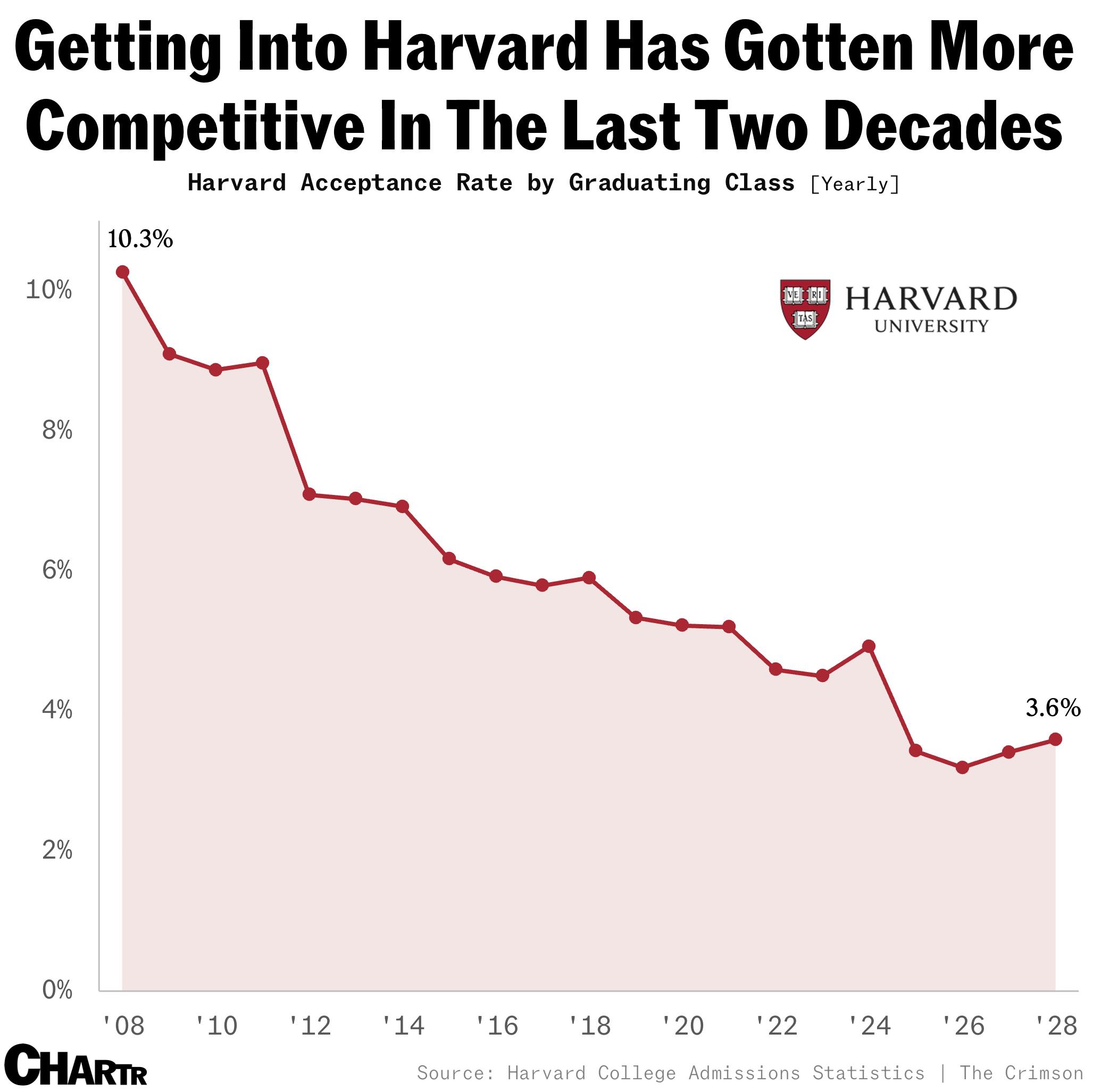
Crimson is part of the college consulting market that’s now estimated to be worth ~$2.9 billion as competition for top-tier universities has intensified, according to market research firm IBISWorld. Indeed, admissions rates for top universities like Harvard have plummeted since 2006, falling from around 10% for the class of 2008 to 3.6% for the most recent 2028 batch.

Experts warn that students — or, more accurately, their parents — continue to be drawn to services like Crimson to navigate the competitive and confusing admissions process in the US primarily because they have limited understanding of the black box of admissions. The college counseling world that lives off the complex process is also bound by few regulations, as recently highlighted by the celebrity-fueled Varsity Blues college admissions cheating scheme headed by Rick Singer. 

Last year, Harvard’s student newspaper The Harvard Crimson reported that 26% of its incoming freshmen worked with a private admissions counselor. This share rose to 48% for freshmen from families with incomes over $500,000. Even institutional investors have taken note — after launching in 2013, the company is now valued at more than $550 million, winning investment from VC giant Tiger Management.

More Culture

See all Culture
culture
Saleah Blancaflor

Prediction markets give slight edge to Netflix in Warner Bros. battle after eventful week

The ongoing bidding war between Paramount and Netflix for the acquisition of Warner Bros. Discovery had some significant news this week that could change the outcome:  

  • Things kicked off Tuesday, when WBD said in a statement it would resume talks with Paramount Skydance to consider its best and final offer after Netflix allowed a seven-day waiver. The WBD board continues to “unanimously recommend” the merger with Netflix, while the streaming service will retain its rights to match or exceed any forthcoming offer from Paramount. The negotiation period ends on February 23.

  • IndieWire reporter Brian Welk talked to a few experts about whether the new developments bring clarity to the ongoing bidding war. One professor said without Paramount offering its “best and final offer,” the company loses credibility, while another professor said it makes Netflix look even more confident. 

  • Lightshed Partners analyst Richard Greenfield said on his podcast that Paramount will have to raise its offer to as high as $36 to $37 per share. (The company has stuck to $30.) In comparison, Netflix’s initial offer is for $27.75 a share to buy the studio and streaming service, while Paramount is bidding to buy the whole company. 

  • Semafor reported Thursday morning that some Democratic senators are “unhappy” with the fact that Paramount Skydance CEO David Ellison refused to attend a hearing two weeks ago, and could launch an investigation into the deal if they retake the Senate.

  • Meanwhile, Reuters reported that Netflix has “ample cash” and could increase its offer for WBD if Paramount beefs up its own offer, according to sources. 

  • Netflix co-CEO Ted Sarandos recently appeared on a recent episode of “The Town with Matthew Belloni” to reiterate that he doesn’t plan on ruining WBD’s theatrical business model and promised to keep the 45-day theatrical window for WBD films, which could appease opposition from theater owners.

  • Variety reported that there’s been a shift among WBD employees who now support Netflix’s acquisition, though there’s still some skepticism among others.

WBD shareholders are still set to vote on the proposed Netflix merger next month, on March 20. Despite the renewed talks with Parmount, as of Friday at 12:45 p.m. ET, prediction markets speculating on who will ultimately come out on top have recently flipped to give the edge back to Netflix, pricing in a 46% chance over Paramount’s 44% odds. 

(Event contracts are offered through Robinhood Derivatives, LLC — probabilities referenced or sourced from KalshiEx LLC or ForecastEx LLC.)

Loading...
 
Loading...
 

Latest Stories

Sherwood Media, LLC produces fresh and unique perspectives on topical financial news and is a fully owned subsidiary of Robinhood Markets, Inc., and any views expressed here do not necessarily reflect the views of any other Robinhood affiliate, including Robinhood Markets, Inc., Robinhood Financial LLC, Robinhood Securities, LLC, Robinhood Crypto, LLC, or Robinhood Money, LLC.