

The “kidulting” economy is still booming as more grown-ups yearn for playtime
This wasn’t just a pandemic fad — nostalgic adults are still flocking to Build-A-Bear and Lego.
What’s fluffy, has big ears, and is seeing its stock outpace the likes of Nvidia, Palantir, and Microsoft?
It’s Build-A-Bear Workshop, of course. The almost 28-year-old mall staple where one can stuff, name, dress, and accessorize a cuddly toy has seen its stock price soar more than 2,000% over the last five years, as reported by The Washington Post on Monday, placing it in the top 20 market gainers for that period.
Build-A-Bull market
With BBW’s stock more than doubling last year and up ~66% year to date, this places Build-A-Bear ahead of some of the hottest names in AI and technology.
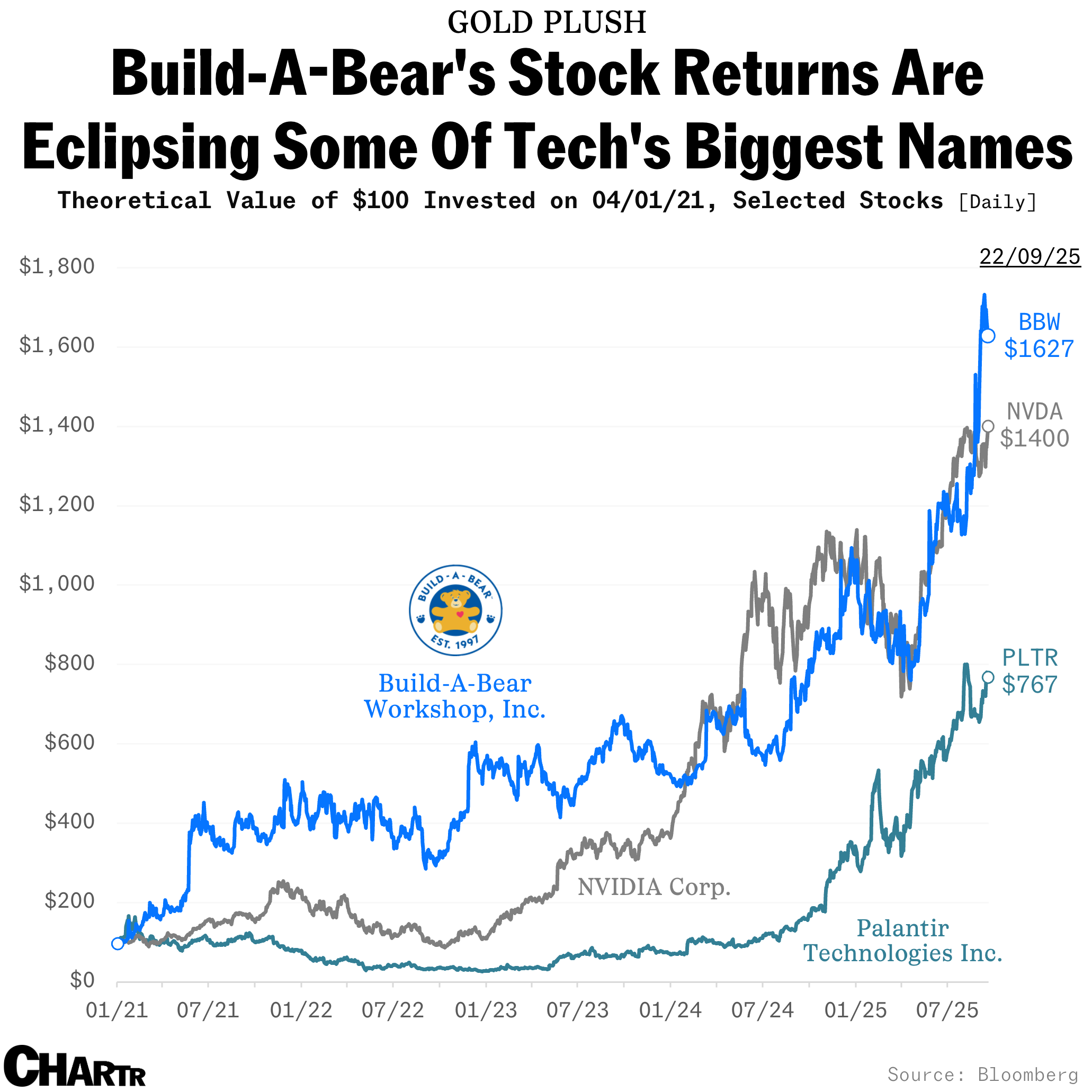
Indeed, a theoretical $100 invested into BBW stock at the start of 2021 would be worth ~$1,600 today — about $200 more than the theoretical value of the same amount of Nvidia stock.
After sales plunged in 2020, with many of its stores shuttering during lockdown, Build-A-Bear has only gone from strength to strength. The company reported its best Q1 results ever in May, with revenue rising 11% to $128.4 million, having emerged as a surprise postpandemic winner since tapping into a lucrative market for its stuffed animals: grown adults.
Nostalgia power
Today, analysts estimate that about 40% of the company’s business is from adults. And it’s not just Build-A-Bear; several toy companies that have pivoted to regression are showing some serious progression.
Lego, the world’s biggest toymaker, recently reported record sales of 34.6 billion Danish kroner (~$5.4 billion) for the first half of the year, driven by the overwhelming success of its adult-focused Botanicals and Formula One themed sets.
Other plushie brands like Jellycat and Squishmallows (which has been under Berkshire Hathaway’s control since 2022) have seen plumped-up sales since their products have taken off with older consumers — and you would’ve been hard pressed to have missed this summer’s Labubu craze. Classic childhood toys like Barbie and Hot Wheels are similarly flying off the shelves, increasingly by way of those tall enough to reach.
Beyond the growing trend for nostalgic tchotchkes and collectibles, it also seems that adults — bogged down by work, responsibilities, and the news — are just craving some lighthearted playtime. Whether it be through theme parks, ball pits, or building bears in workshops, the latest form of grown-up self-care is some carefree growing down.