

Final Boss

Upstart Holdings CEO Dave Girouard on the rise of the AI lender
The latest edition of our Final Boss series of CEO Q&As features Dave Girouard of Upstart Holdings.
Upstart Holdings is OG AI.
No, seriously.
In the key SEC filing ahead of its IPO way back in December 2020 — two years before ChatGPT took the world by storm — Upstart Holdings described itself as “a leading, cloud-based artificial intelligence lending platform.”
Cofounded in 2012 by ex-Google executive and current Upstart CEO Dave Girouard, along with Paul Gu and Anna Counselman, the company is an online lending platform that uses artificial intelligence modeling technology, rather than traditional underwriting, to quickly assess creditworthiness of borrowers and approve loans.
The company says for the last five consecutive quarters, more than 90% of its loans were “fully automated, with no human intervention by Upstart.”
But the performance of the stock has been a volatile example of the euphoria and business risks that the cutting edge of tech can create.
The shares exploded in the months after debuting on the Nasdaq, arcing higher by a healthy (or perhaps unhealthy) 1,200% in the fall of 2021.
Upstart and options plays on the stock became a hot topic on the r/wallstreetbets subreddit. At its height, the company’s market topped $30 billion, putting it in the same neighborhood — in the market’s view — as corporate icons like Corning, Southwest Airlines, and HP.
It didn’t last. As the Fed moved to raise interest rates to crimp pandemic-era inflation, the stock collapsed, falling more than 90% in a matter of months. High interest rates dissuaded would-be borrowers from borrowing. High inflation eroded the ability of some of its previous borrowers to repay. The result? Six straight quarters of falling sales and red ink.
But Upstart is once again on the upswing. Sales growth has been better than expected in recent quarters. A return to profitability is seemingly within view. Retail traders are once again sniffing around the stock, which has doubled over the last 12 months.
Girouard recently sat down with Sherwood News to talk about where the company has adjusted in recent years and where it’ll go from here.
This interview has been edited for clarity and length.
Sherwood News: Thanks a lot for taking the time. So, Upstart is a marketplace model, right? Could you dive into that a bit?
Dave Girouard: Our system largely works like an auction. If somebody applies for a loan, effectively 100 or so bidders are bidding to provide the best credit to that person. The real magic of all of it is the core technology. Our risk models allow more people to be approved at lower rates, all else being equal. That’s the kind of technology we just keep pushing forward and forward. And we feel like we’re kind of out there by ourselves, in the sense that there aren’t others sitting next to us. It’s not like Uber and Lyft. We don’t have a Lyft, from our perspective, who do what we’re doing.
Sherwood: What’s the profitability plan for the company going forward? I always look at GAAP just because I don’t know everyone’s adjusted numbers, but in terms of profitability, how are you doing and what’s your goal?
Girouard: Well, when we were a private company, we were profitable — GAAP profitable, the real kind — and then I think as our first six quarters as a public company. So we have a lot of good history. We were very high growth and very profitable.
In 2022, we just got our clock cleaned, frankly, by deteriorating consumer health, interest rates going through the roof, inflation, all the things that I think a lot of those in fintech got hit by.
Since then, we’ve been working back to it and we’re right at the doorstep. We were within a couple million dollars last quarter of being GAAP profitable. The nature of our business is largely relatively low fixed expenses, really good contribution margins on processing. So, we have no question; we’ve guided that we’ll be profitable in the second half of this year.
Sherwood: All these ideas are so powerful right now about AI, about modeling, large-scale models. When you look at 2022, we had this interest rate spike, which nobody saw coming. That probably wasn’t in the dataset that you were looking at to create your models. Does it give you a sense of humility going forward about how these prediction engines interact with new developments, which are, let’s face it, always happening?
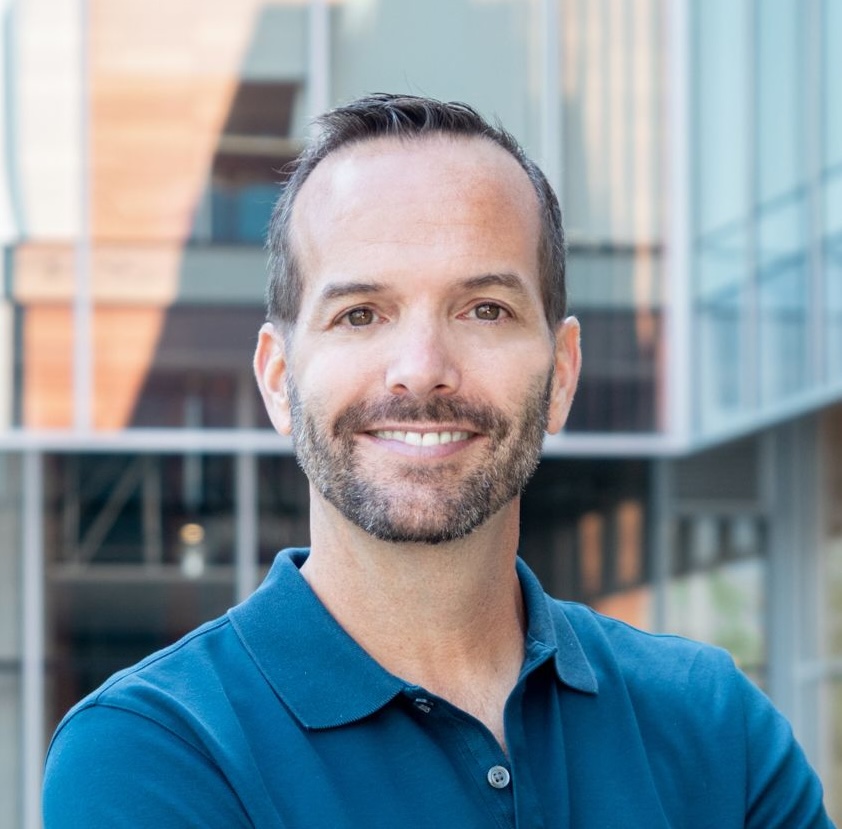
Girouard: I think humility is a great word for the situation, in terms of understanding, at that time, the limitations of our models.
But it’s not so much that we needed to better predict the direction of interest rates or anything else in the economy, because a lot of things can impact consumer credit performance.
We had so much focus on risk separation, which is the very important foundational problem of building better risk models in credit. But the other part, calibration, we were just slow.
Part of the reason is we just didn’t ship models fast enough. We had a regulator that needed to approve all of our new models. We, at times, would go six months without a new model in production, which honestly was hitting us at the worst possible time.
What we’ve done since then is radically upgrade how quickly our model adapts to any kind of deterioration. It doesn’t matter whether it’s caused by interest rates, inflation, unemployment — we’re neutral to that. We closely watch when credit starts degrading anywhere. It could be people that work for the government, it could be people that live in the state of Texas, or just take your pick anywhere in that data. The model very quickly responds today.
You can’t be perfect. There are surprises out of nowhere. But the best tool possible, I think, is one that reacts very precisely and very quickly to changes in the environment. And I think we’re as good as anybody at that today.
Sherwood: Risk separation, can you translate that for me? Does that mean just determining who should get what interest rate, depending on their credit risk?
Girouard: Imagine a thousand people apply for a loan. Risk separation really means how would you order them one through 1,000 in terms of their relative risk and how much space there is between each of them. That’s called risk separation.
When your risk separation gets better, you sort of rank those thousand people in a better way so that those more likely to default actually go down to the bottom. That separation inevitably moves toward being able to approve more people at the same loss rate.
Because what the system is really doing is just more clearly and confidently identifying people it does not want to lend to and raising the rates for them appropriately. The natural effect is that everybody else gets a bit of a lower rate because they don’t have to subsidize those people who are more likely to default as much.
Sherwood: Have your interactions with regulators changed recently with the new administration? I know you were working fairly closely with the CFPB at one point, to have them approve your models. But I don’t know if the CFPB even exists anymore.
Girouard: The CFPB is still there. They’ve been certainly a little slowed down with the current administration. We’ve worked with them through three administrations. There is some difference between the behavior of the CFPB during the different administrations, but mostly the working-level people we dealt with didn’t change much.
But the big point is, in the early days, we needed to do it because no bank would work with us without having answers to obvious questions about consumer fairness and all these kinds of things.
In 2022, we’d already been under this agreement for about four years, and we decided that it had served its purpose and we really needed to go faster. And this was when the economy was deteriorating. So we actually requested to terminate the agreement with the CFPB in 2022 because we were waiting for them to approve new models, as I mentioned, and that was harmful to us. That was the best thing we ever did.
But to answer your question more directly, I feel like this area of AI — meaning credit, fairness in lending, explainability — we fought that battle for a lot of years and we kind of won. It’s over. We don’t get a lot of questions about it.
I’ve testified in front of Congress multiple times, but that’s all kind of in the past. I think this is one area where they see that the advantages to AI are so damn obvious. We have testing for fairness and explainability, and frankly, all the things you would worry about AI seem to be solved problems. So, the people in Congress don’t really want to talk to me anymore. And I’m totally cool with it.
Sherwood: In other words, Congress probably isn’t getting a lot of incoming complaints about some kind of unfairness issue.
Girouard: Under the Biden administration, the CFPB was notoriously overactive. Even they got bored of trying to pick fights with us, to be honest. Our story was too good. I would go and explain, “Which part of higher approvals and lower rates for everybody don’t you like?”
Sherwood: Your technology sits between the borrowers and the sources of the capital, right? What do the people that you employ do? Are they coding the credit models?
Girouard: Over half of our salaried employees are technical in nature, so they’re building product or they’re designers or product managers. That’s a number we’re proud of. When I was at Google years ago, Larry and Sergey always wanted to have ~40% of employees to be technical, and ours is over 50%. The rest of salaried people are just the kind of things you’d expect: data analytics, finance, and things of that nature.
The other fact about Upstart is that in 92% of our loans last quarter, there was no human involvement in them. They were approved in a moment. You can just think of the machines turning in the dark, approving loans and generating revenue.
But that 8% means there is some human intervention. Now, we try to, of course, reduce that by improving the models constantly, but there will always be some human involvement in that. That’s what they do. It’s really focused on improving the technology, and then everyone else is just trying to support that effort.
Sherwood: To press on that point for a moment about the 92% with no human involvement, the model would have made the loans, but the model is made by people, right? So in that sense, there are people there.
Girouard: We’re a 1,200-person company. The technology org, at large, is probably 600 to 700 of that.
The hardcore machine learning part — which are people that build models, write code, and use Python — that’s probably a hundred or so, or something like that.
Even at OpenAI and Anthropic, the giants, the real numbers of people building models that are hardcore machine learning engineers is quite small, because they’re just quite rare.
There are a lot of software engineers out there, but I would say for every 10 software engineers, there might be one machine learning engineer. So even at a place like OpenAI, they probably have a few hundred; they don’t have 5,000. That’s kind of the point. If you have really, really good people, the models you can build are extraordinary, and it’s a rare person and a rare talent to find.
Sherwood: How is it to pay those people at the moment? They must be very much in demand.
Girouard: One of the things we did during Covid, and we have no regrets, is we decided that we were going to go hire around the country. Trying to compete in the Bay Area for machine learning talent against Meta and against Alphabet? Forget it. You’re getting 25-year-olds making a million dollars a year. We just couldn’t compete.
We made the move back then and never regretted it. I know there’s a lot of vibe that serious companies have to be back in the office. But the more companies that move back in the office and force people back, the better it is for companies like us, who have not done that. Because the talent pool out there across the country is exceptional.
Sherwood: It sounds like you can pick up some interesting granularity in the flow of information through your pipes, for lack of a better term. Are there any geographies, anything interesting that you’ve noticed in terms of loan performance or behavior of potential borrowers that would shed some light on where the economy is at the moment?
Girouard: Loss rates are still high relative to a long-term norm. So our models assume something like loss rates today are 50% above long-term normal expectations, and that’s what’s priced in to our credit.
I still think that is the US consumer dealing with the loss of [Covid-related] stimulus payments, which seems like very old news now, as well as inflation, which turned them upside down a little bit. This is a very slow normalization. But we don’t see anything like deterioration going on right now.
If consumers spend a little less, retailers freak out and their stocks go down, and that’s what everybody talks about on CNBC.
But in our case, we’re like, “Great.” Because personal financial health is what matters to us and to the performance of our credit. We’re always in the camp that a little slowdown in the economy, particularly if it’s driven by consumer caution, is a good thing.
Sherwood: That’s great, Dave. I really appreciate your time. Thanks so much walking me through through this.
Girouard: That was great. Appreciate it.




